

Maddy summaryThe Adult Education WORKS Act creates a new role for "college and career navigators" who help adults access workforce development programs, postsecondary education, and career services. It requires states and local workforce boards to promote the employment of these navigators in one-stop centers, with $135 million authorized for library-based and community-based programs starting in 2026. The bill emphasizes developing digital literacy and information literacy skills as core components of adult education, and includes new performance metrics to track outcomes related to these skills. This legislation directly affects adult education programs, workforce development systems, and the individuals seeking career advancement through these services.
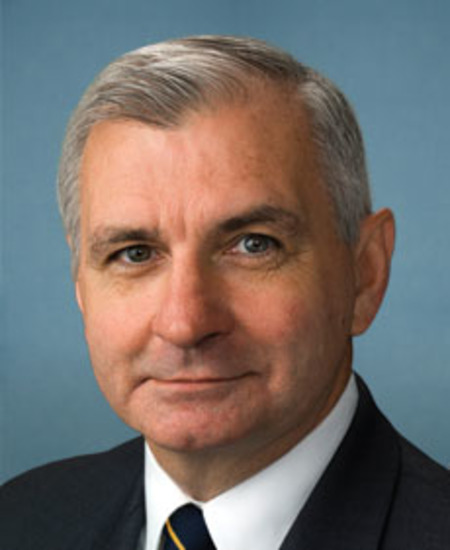
Sen. Jack Reed
Sponsored bills
Maddy summaryThe BRAIN Act creates new research initiatives to improve brain tumor treatment and care. It establishes a searchable database of NIH-funded brain tumor biospecimens, funds a Glioblastoma Therapeutics Network with $50 million annually, and supports cellular immunotherapy research with $10 million annually. The bill also mandates a national awareness campaign about clinical trials and biomarker testing, and funds pilot programs to improve care coordination for brain tumor survivors. These provisions directly affect over 1 million Americans living with brain tumors and aim to improve research coordination, treatment options, and quality of life through concrete funding and policy changes.
Maddy summaryThe Raise the Wage Act of 2025 gradually increases the federal minimum wage from $9.50 to $17.00 per hour over six years, with future annual increases tied to median wage growth. It eliminates the separate lower minimum wage for tipped workers (currently $2.13/hour base), requiring employers to pay the full minimum wage to all tipped employees starting in 2031. The bill also ends the special $4.25/hour starting wage for workers under 20, phasing it out by 2030. Additionally, it prohibits new special wage certificates for disabled workers under Section 14(c) and requires their phaseout by 2030, while providing transition support for affected employers and workers.
Maddy summaryThis bill creates a new $30 million annual Weatherization Readiness Fund (2026-2030) to help states fix structural defects in low-income homes before weatherization can be installed. It directly affects low-income households in states receiving Weatherization Assistance Program funds, by requiring states to use these funds to repair hazards that block weatherization work. The bill also raises the maximum per-unit cost limit for fully weatherized homes from $6,500 to $15,000 and adds flexibility for the Secretary to adjust costs based on market conditions. These changes aim to streamline the weatherization process and increase funding efficiency for eligible homes.
Maddy summaryThe Public Service Freedom to Negotiate Act of 2025 establishes federal minimum standards for collective bargaining rights for public employees and supervisory employees. The Federal Labor Relations Authority will determine if states' laws "substantially provide" these rights, and if not, the federal standards will apply to affected workers. The bill guarantees rights like forming labor organizations, negotiating wages and working conditions, and resolving disputes through mediation or arbitration, while prohibiting strikes that would disrupt emergency services. Existing collective bargaining agreements and units are protected from the bill's implementation.
Maddy summaryThis resolution (SRES 159) is a ceremonial Senate measure honoring the late Senator John Bennett Johnston, Jr. (1932-2024), who represented Louisiana in the U.S. Senate from 1972 to 1997. It commemorates his career, including his work on energy policy, flood control, and Louisiana conservation efforts, and requests the Senate adjourn in his memory while sending condolences to his family. As a non-binding resolution, it has no policy impact or direct effect on any individuals or laws.
Maddy summaryS 1310, the No Tax Breaks for Union Busting (NTBUB) Act, denies tax deductions for employer spending aimed at influencing workers' decisions about union organizing or collective bargaining. It amends the tax code to block deductions for expenses like anti-union consultant fees, captive audience meetings, and other tactics that interfere with labor rights under the National Labor Relations Act. Employers must report such spending on tax returns with specific details, including dates, amounts, and whether activities relate to unfair labor practice charges. This directly affects businesses that engage in anti-union organizing tactics, removing a tax incentive for these activities while preserving deductions for standard union negotiations.
Maddy summaryS 1274 prohibits U.S. exports of liquefied natural gas and petroleum products to entities operating in China, Russia, North Korea, or Iran, or to entities controlled by those countries. It requires exporters to comply with existing sanctions and allows limited waivers only for imminent national security emergencies, with mandatory congressional notice. Violations face civil penalties up to $250 million per incident or double the transaction value, plus potential criminal fines of up to $100 million. The bill does not address domestic energy costs for American households, as its focus is solely on restricting specific international energy exports.
Maddy summaryThe IDEA Full Funding Act (S 1277) mandates specific annual funding levels for the Individuals with Disabilities Education Act (IDEA) starting in fiscal year 2026. It sets fixed dollar amounts or percentage-based funding (ranging from 11.6% to 40% of a calculated base) for states providing special education services to children with disabilities aged 3-21. Funding becomes available on July 1 each year and remains accessible through September 30 of the following year, with amounts increasing annually through 2035. This directly affects all states receiving IDEA grants by guaranteeing minimum federal funding tied to the number of eligible students and national per-pupil spending averages.
Maddy summaryS 1289 authorizes the U.S. Mint to produce and sell commemorative $5 gold and $1 silver coins to mark the 25th anniversary of the September 11, 2001, terrorist attacks. The bill specifies coin specifications (e.g., 90% gold/silver content, design requirements including "Never Forget"), sets a one-year issuance window (January 1, 2027-2028), and requires surcharges of $35 per gold coin and $10 per silver coin. These surcharges will be paid directly to the National September 11 Memorial and Museum to support its operations and maintenance, with coins sold at a price covering face value, surcharge, and production costs. The legislation does not impose new regulations or affect public policy but focuses on commemoration and funding for the museum.