Maddy summaryThis bill defines "buy now, pay later" (BNPL) loans under federal law as short-term payment plans for retail purchases repaid in four or fewer interest-free installments with no fees. It extends existing consumer protections from the Truth in Lending Act to BNPL loans, requiring lenders to follow the same rules as credit card issuers regarding dispute resolution, account protections, and customer rights. The bill directly affects BNPL lenders (who must now comply with these rules) and consumers using BNPL services for retail purchases. The Consumer Financial Protection Bureau must issue implementing rules within one year of the law’s enactment.
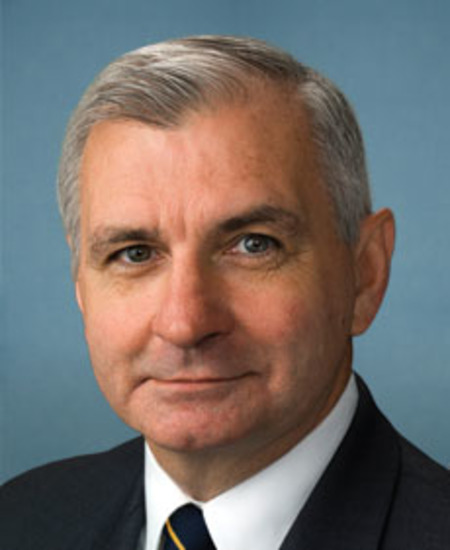
Sen. Jack Reed
Sponsored bills
Maddy summaryThe Shadow Docket Sunlight Act of 2025 would require the U.S. Supreme Court to publish written explanations and disclose each justice's vote when issuing emergency orders about temporary court orders that block government actions (preliminary injunctions) or stays of such orders. The written explanation must address specific factors, such as whether the applicant is likely to succeed on the merits and whether the order serves the public interest. This rule does not apply to routine administrative decisions or requests to hear full cases. The bill also mandates biennial reports to Congress on how well the Court follows these transparency requirements.
Maddy summaryThe Schedules That Work Act would require employers in retail, food service, cleaning, hospitality, and warehouse sectors to provide workers with at least 14 days' advance notice of their schedules and pay predictability pay for last-minute changes. It gives employees the right to request schedule changes for reasons including health conditions, caregiving responsibilities, or enrollment in career training programs. Employers must engage in a good-faith process to address these requests unless they have a legitimate business reason to deny them. The bill aims to address widespread problems with unpredictable schedules that make it difficult for low-wage workers to manage family responsibilities, access healthcare, and secure stable housing and child care.
Essential Caregivers Act of 2025 This bill prohibits certain health care facilities from limiting the access of essential caregivers to residents of those facilities, including during designated emergency periods. Specifically, the bill generally prohibits Medicare skilled nursing facilities, Medicaid nursing facilities, Medicaid intermediate care facilities, and associated inpatient rehabilitation facilities from restricting the access of essential caregivers to residents of the facilities, including during emergency periods in which visitation rights are otherwise restricted. During emergency periods, facilities may restrict access for an initial period of up to seven days and for one additional maximum seven-day period (if the additional period is approved by the state health department). Facilities may restrict access for a total of 7 days (or 14 days with the approval of the state health department) during an emergency period. Essential caregivers must agree to comply with any safety protocols set by the facility, which may be no more stringent for caregivers compared to those for staff. Caregivers who fail to comply with these requirements may be denied access, subject to an appeals process.
Maddy summaryThis bill amends federal law to remove a specific deadline for completing background checks on firearm purchases. It deletes the requirement that background checks must be completed within 10 business days, as previously established under the Brady Handgun Violence Prevention Act. The change directly affects firearm sellers (such as licensed dealers) who conduct these checks, removing a strict timeline for completing the process. The bill focuses on technical adjustments to existing background check procedures without altering the underlying requirements for the checks themselves.
Maddy summaryThis bill increases federal funding for disaster resilience projects. It requires the federal government to cover at least 90% of costs for small hazard prevention projects under $1 million and potentially more than 90% for critical facilities like hospitals, schools, and emergency centers. The bill also makes hazard mitigation planning mandatory for states and local governments (changing "may" to "shall") and ensures Indian Tribes can directly access funds or apply through states for resilience projects. These changes apply to all eligible communities and tribes receiving federal disaster relief under the Stafford Act.
Maddy summarySRES 533 is a non-binding Senate resolution condemning white supremacy, hate, and antisemitism, with specific focus on the promotion of these ideologies by white supremacist Nick Fuentes and his platforming by Tucker Carlson. It highlights Fuentes' Holocaust denial, antisemitic conspiracy theories (like the "Great Replacement" myth), and use of dog whistles, while criticizing Carlson for hosting Fuentes without challenge and Heritage Foundation's Kevin Roberts for defending such views. The resolution urges all elected officials and leaders to reject these ideologies whenever they occur, and affirms condemnation of Nazism and the Holocaust. As a formal expression of Senate opinion, it does not create new laws but serves as a public stance against harmful rhetoric.
Maddy summarySRES 531 is a non-binding Senate resolution celebrating the 50th anniversary of the Individuals with Disabilities Education Act (IDEA) on November 29, 2025. It recognizes IDEA's historical role in guaranteeing children with disabilities access to free appropriate public education in inclusive settings, transforming educational opportunities for millions. The resolution honors students, families, educators, and advocates who advanced IDEA's principles since its 1975 enactment. It does not create new policy but formally acknowledges the law's enduring impact on educational equity.
Maddy summaryS 3347, the Flight Delay and Cancellation Compensation Act, requires airlines to provide $750 in cash compensation, free rebooking, meals, and for overnight delays, lodging and transportation when flights are delayed or canceled due to the airline's fault. The bill mandates the Transportation Secretary to form a committee within 90 days - including airline, airport, and consumer representatives - to develop recommendations for these standards, including aligning with international rules like Canada's Air Passenger Protection Regulations. An interim rule implementing these requirements will take effect two years after enactment, mandating the compensation and services for affected passengers. This legislation standardizes passenger protections across U.S. airlines to align with global practices.
Right to Read Act of 2025 This bill expands access to school libraries and literacy skills support for elementary and secondary school students. It also outlines certain constitutional rights and liability protections related to school libraries. Specifically, the bill reauthorizes through FY2030 (1) the Comprehensive Literacy State Development Program, which provides grants to ensure high-quality instruction and effective strategies in reading and writing for children through 12th grade; and (2) the Innovative Approaches to Literacy Program, which provides grants to support the development of literacy skills in low-income communities. Additionally, the bill allows Supporting Effective Instruction State Grants to be used to assist local educational agencies (LEAs) and schools in recruiting, hiring, and retaining state-certified school librarians. Further, the bill authorizes states and LEAs to use Student Support and Academic Enrichment grants for programs and activities that promote the development of digital literacy and information literacy skills. The Department of Education (ED) must direct the National Center for Education Statistics to biennially collect data on school libraries. ED must require an assurance from each state and LEA receiving certain funds confirming that it will (1) protect the First Amendment rights of students in school libraries, and (2) provide equal protection in the conduct of school libraries in compliance with the requirements of the Fourteenth Amendment and nondiscrimination laws. The bill also provides liability protection to teachers, school librarians, school leaders, paraprofessionals, and other staff for actions that conform with state or local policies regarding the right to read.