Maddy summaryThis bill requires the Department of Veterans Affairs (VA) to conduct research on how cannabis affects veterans with chronic pain or PTSD. It mandates an 18-month observational study (using existing VA health records and surveys) to compare health outcomes - like pain levels, opioid use, mental health, and sleep - between veterans who use cannabis and those who don’t. If the study supports it, the VA could later run clinical trials on cannabis use for these conditions. The research directly involves VA-enrolled veterans with chronic pain or PTSD, but does not change access to cannabis or VA benefits.
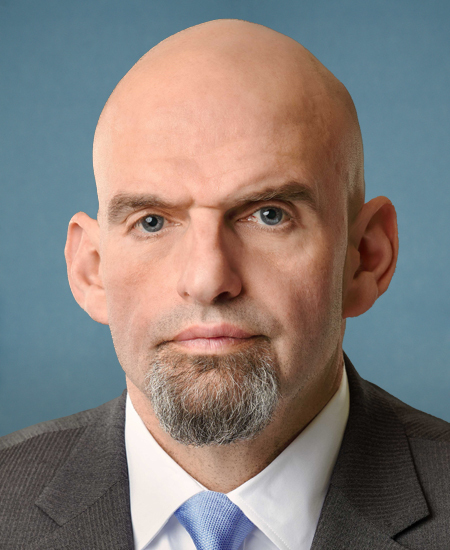
Sen. John Fetterman
Sponsored bills
Maddy summaryThe Love Lives On Act of 2023 restores survivor benefits for veterans' spouses who remarried before age 55 and before the bill's enactment, which they previously lost due to remarriage. It removes an expiration date for the Marine Gunnery Sergeant John David Fry Scholarship for surviving spouses and expands access to military commissaries and exchanges for remarried surviving spouses. The bill also extends TRICARE coverage to include remarried widows or widowers whose subsequent marriage ended.
Maddy summaryThe SMART Prices Act changes how Medicare negotiates drug prices. It repeals a rule blocking Medicare from negotiating with drugmakers and accelerates the process, requiring negotiations for 40 drugs starting in 2027 (up from 10 annually). It shortens the time drugs must be single-source to qualify for negotiation (from 7 to 3 years) and adjusts price negotiation formulas, setting new caps like 76% of the drug's average price for some medications. This directly affects Medicare beneficiaries (by lowering their out-of-pocket costs) and pharmaceutical companies (by requiring price negotiations for more drugs faster).
Maddy summaryS.1252, the Uyghur Policy Act of 2023, requires the U.S. State Department to develop a strategy within 180 days to pressure China to release Uyghurs and other ethnic minorities detained in Xinjiang. It mandates U.S. diplomats to seek access to detention facilities, support Uyghur advocacy in Muslim-majority countries through public diplomacy programs, and provide Uyghur language training for Foreign Service officers. The bill also directs the U.S. to advocate at the United Nations for unimpeded access to Xinjiang and to oppose efforts limiting discussion of human rights issues there. It directly affects U.S. diplomatic operations, international advocacy efforts, and the State Department’s engagement with China on Xinjiang. The legislation focuses on concrete policy actions rather than speculative outcomes.
Maddy summaryThe Defend Our Networks Act transfers $3.08 billion in unused pandemic relief funds (from bills like the CARES Act and American Rescue Plan) to the Commission for its Secure and Trusted Communications Networks Program. These funds will merge with existing program appropriations and remain available until spent, following the same rules as current funding. The bill also adjusts a funding cap in the 2019 law, increasing it from $1.9 billion to $4.98 billion. This is a procedural funding transfer, directly affecting the Commission's program operations, not the public or new policy changes.
Maddy summaryThe SMART Prices Act (S 1246) repeals a provision blocking states from negotiating Medicare drug prices and accelerates the Medicare Drug Price Negotiation Program. It increases the annual number of drugs eligible for negotiation from 10 to 40 starting in 2027, shortens the timeframes for qualifying drugs from 7 to 3 years, and adjusts price ceiling percentages (e.g., raising the maximum fair price cap for some drugs from 75% to 76%). These changes directly affect Medicare beneficiaries by potentially lowering drug costs and pharmaceutical companies by altering negotiation timelines and pricing rules. The bill aims to reduce Medicare drug spending through faster, more aggressive price negotiations.
Maddy summaryThe Local Farms and Food Act of 2023 reforms the Local Agriculture Market Program to better support local food systems. It redefines "food hub" to include businesses coordinating local food distribution and creates simplified grant applications for projects under $100,000, such as farmers market staffing or equipment purchases. The bill increases annual funding for the program to $75 million (2024-2028) and expands the Seniors Farmers' Market Nutrition Program with $20.6 million annually for the same period. It also raises the federal share for nutrition incentive programs from 50% to 75% and adds a healthcare-experienced panel to review produce prescription applications. These changes directly affect local food hubs, farmers, seniors accessing nutrition benefits, and community food system projects.
Maddy summaryThe Do No Harm Act amends the Religious Freedom Restoration Act (RFRA) to clarify that RFRA does not apply when federal laws protect against discrimination (like the Civil Rights Act of 1964), guarantee workplace protections (such as the Family and Medical Leave Act), prevent child exploitation, or ensure health care access. It specifically prevents religious freedom claims from blocking enforcement of these existing laws. The bill directly affects individuals or entities attempting to use RFRA to challenge such federal protections in court. This amendment ensures that religious freedom arguments cannot override established civil rights, workplace, child safety, or health care regulations.
Maddy summaryThe Health Equity for People with Disabilities Act amends Section 330 of the Public Health Service Act to ensure people with disabilities are explicitly included in federal health programs serving medically underserved populations. Key provisions require community health centers and related programs to provide accessible services - such as communication devices, aids, and disability-focused planning - while defining "disability" per the Americans with Disabilities Act. The bill updates existing program language to mandate inclusion without altering current funding mechanisms, ensuring people with disabilities have equal access to care under existing health initiatives.
Maddy summaryS.1190, the "End the Threat of Default Act," repeals the statutory debt ceiling (Section 3101 of Title 31, U.S. Code), eliminating the legal limit on federal borrowing. This directly affects how the U.S. Treasury manages debt issuance, as it removes the requirement for Congress to vote on raising the debt limit. The bill replaces all references to "debt subject to limit" with terms like "face value of obligations" to align with the repealed ceiling mechanism, preventing future government shutdowns or default risks tied to debt ceiling negotiations.