

Maddy summaryThis bill strengthens protections and administrative processes for whistleblowers who report violations to the Commodity Futures Trading Commission. It expands the definition of a whistleblower to include individuals reporting misconduct to supervisors or internal investigators, while also adding a right to a jury trial for those facing retaliation. The legislation requires registered entities to provide mandatory training to employees about whistleblower rights and mandates that the Commission issue preliminary decisions on award claims within one year. Additionally, the bill creates a separate account within the Commission's customer protection fund to finance education initiatives and administrative expenses, and it increases the fund's total capacity.
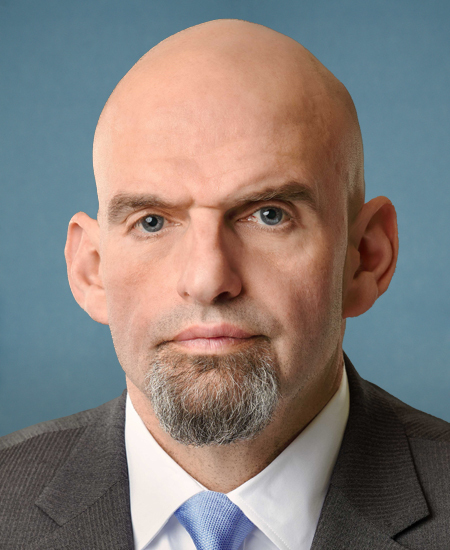
Sen. John Fetterman
Sponsored bills
Maddy summaryThe Pacific POWER Act directs the U.S. State Department to launch an international program aimed at expanding geothermal energy use in Indo-Pacific allies to strengthen national security ties and reduce reliance on Chinese energy technology. This initiative involves selecting at least five partner countries, including several in the Indo-Pacific region, to collaborate on developing geothermal resources and next-generation technologies like enhanced geothermal systems. The bill authorizes the creation of public-private partnerships, financial tools, and technical assistance to help these partners build geothermal capacity while establishing standards for community engagement and environmental safety. To oversee this effort, the legislation requires the Secretary of State to submit detailed reports to Congress outlining the strategy, resource needs, and progress of the program over a five-year funding period.
Maddy summaryThe Iran Human Rights, Internet Freedom, and Accountability Act of 2026 aims to support Iranian citizens' access to information and human rights by expanding U.S. government efforts to promote internet freedom in Iran. The bill requires the State Department to coordinate internet freedom initiatives, develop technologies to circumvent internet blackouts (including satellite internet and mesh networks), and increase funding for programs that provide Iranians with tools to access open internet services. It also establishes procedures for identifying and sanctioning individuals who support the Iranian regime's human rights abuses. The legislation directly affects U.S. government agencies, Iranian citizens seeking to access information, and organizations working to support internet freedom in Iran.
Maddy summaryThis bill amends the Passport Act to allow qualified public libraries to collect and keep passport application fees. Specifically, it authorizes nonprofit or charitable public libraries (that meet State Department regulations) to serve as passport acceptance facilities and retain the standard execution fee. Existing libraries that previously processed passport applications automatically gain this authority within 30 days of the bill's enactment. The change updates the Passport Act to explicitly include such libraries as authorized entities alongside government offices and the U.S. Postal Service.
Maddy summaryThe Patients Deserve Price Tags Act requires hospitals, clinical diagnostic laboratories, imaging services providers, and ambulatory surgical centers to publicly disclose detailed pricing information for healthcare services in machine-readable formats. This includes standard charges, discounted cash prices, payer-specific negotiated rates, and other relevant pricing data that consumers can easily access and compare. The law applies to all facilities that provide services to Medicare beneficiaries, with implementation dates starting in 2026 for hospitals and 2027 for other providers. Non-compliant facilities face daily civil monetary penalties ranging from $300 to $10,000 per day, depending on facility size and duration of non-compliance.
Maddy summaryThis Senate resolution recognizes the importance of independent living and economic self-sufficiency for individuals with disabilities, emphasizing their right to live in their own homes and communities. It calls on the Department of Justice to rescind a recent opinion that the Senate views as undermining the legal requirement to provide community-based services instead of institutional care. The document also urges various federal agencies to improve funding for home and community-based services, increase accessible housing and transportation, and promote competitive employment opportunities for people with disabilities. Additionally, the resolution pledges bipartisan efforts to address barriers faced by individuals with disabilities, including those of color, and opposes cuts to the Medicaid program that could limit access to essential support services.
Maddy summaryThe Seeds and Breeds for the Future Act directs the U.S. Department of Agriculture to allocate at least $75 million annually toward developing new plant cultivars and animal breeds that are publicly funded and available for commercial use. This funding prioritizes research on climate-resilient crops, nutritionally improved varieties for local populations, and breeds adapted to specific regional conditions or dual-use energy systems. The bill also establishes a new coordinator role to oversee breeding research across the department and mandates that any public breed developed with federal funds must be produced substantially within the United States if sold under exclusive rights. Additionally, the legislation requires the implementation of strategic plans to assess and utilize national collections of plant and animal genetic resources, ensuring these materials remain accessible for future agricultural needs.
Maddy summaryThe Right to IVF Act of 2026 establishes federal protections to ensure individuals can access assisted reproductive technology and intrauterine insemination without state-imposed restrictions, while also mandating that health insurance plans, Medicare, Medicaid, and the Federal Employees Health Benefits program cover these services. The bill defines these procedures broadly to include treatments like egg and embryo freezing and requires coverage regardless of whether a patient has been diagnosed with infertility. It further directs the Department of Defense and the Department of Veterans Affairs to provide fertility preservation and reproductive assistance to uniformed service members and veterans, including funding for egg or sperm retrieval and storage. Additionally, the legislation grants federal courts the authority to challenge and block any state laws that limit access to these reproductive treatments or discriminate against providers and patients based on protected characteristics.
Maddy summaryThis concurrent resolution formally recognizes the significant wage gap between Black women and white, non-Hispanic men in the United States. The document cites data showing that Black women earn roughly 65 cents for every dollar earned by white men and highlights how this disparity impacts their ability to support families and accumulate wealth. By referencing existing laws like the Equal Pay Act and the Civil Rights Act, the bill reaffirms Congress's support for equal pay for equal work without proposing new legislation or policy changes. Ultimately, the measure serves as a symbolic acknowledgment of the economic challenges faced by Black women due to dual discrimination based on race and gender.
Maddy summaryThis bill reauthorizes and modifies the American Battlefield Protection Program through 2035, extending funding deadlines and increasing grant percentages for battlefield preservation. It raises the maximum federal share for battlefield acquisition, interpretation, and restoration grants from 50% to 75% and sets a $2 million annual appropriation for these programs. The bill also mandates new studies to identify, assess, and propose preservation options for sites tied to the French and Indian War (1754-1763) and Mexican-American War (1846-1848), requiring consultation with states, tribes, and preservation groups. The studies must be completed within two years and reported to Congress, focusing on site significance, threats, and potential preservation strategies.