Maddy summaryS 3534, the Fire Island AIDS Memorial Establishment Act, authorizes the Pines Foundation to establish a memorial at Fire Island National Seashore to honor residents of Fire Island Pines and Cherry Grove, New York, who died from AIDS during the epidemic. The memorial, located along a specific walkway near Carrington House, must be funded entirely through non-Federal contributions, as federal funds cannot be used for its design, installation, or maintenance. The bill aims to preserve the memory of those affected and educate future generations about the AIDS epidemic's impact on these communities.
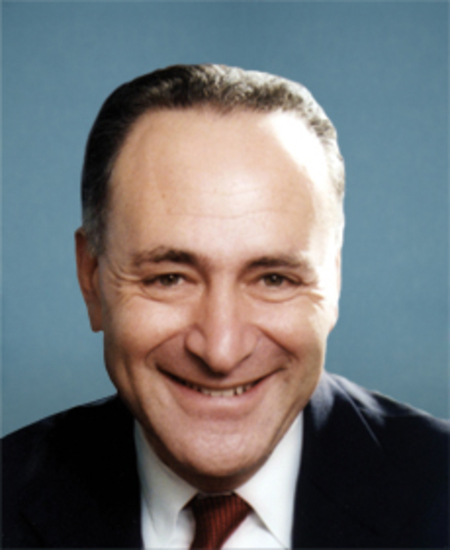
Sen. Charles E. Schumer
Sponsored bills
Maddy summarySRES 897 is a Senate resolution designating November 2024 as National Native American Heritage Month and recognizing the Friday after Thanksgiving as Native American Heritage Day, as established by the 2009 Native American Heritage Day Act. It formally acknowledges the contributions of Native Americans to U.S. history, culture, and society, including their roles in agriculture, environmental stewardship, military service, and the influence of Indigenous governance concepts on the U.S. Constitution. The resolution encourages the public to observe these designations through educational programs and activities. As a ceremonial resolution, it does not create new laws or directly affect any individuals or communities.
Maddy summaryThis resolution authorizes former Senate employee Daniel Schwager to provide testimony in the federal case *United States v. Baez* (criminal case No. 21-507 in the District of Columbia) and directs the Senate Legal Counsel to represent him regarding evidence production. It is based on Senate privileges under Rule XI and the Ethics in Government Act of 1978, which allow the Senate to protect its employees' official responsibilities. Testimony is permitted except for matters where Senate privileges (such as confidential communications) would apply. This is a procedural resolution addressing a specific legal request, not a policy change.
Maddy summaryThis resolution designates October 30, 2024, as a national day of remembrance for workers in the U.S. nuclear weapons program, including uranium miners, millers, plutonium processors, and participants in atmospheric nuclear tests. It directly recognizes the contributions and health sacrifices of these workers, who developed serious illnesses while supporting national defense. The key provision is the formal designation of the date, encouraging public commemoration through ceremonies and activities. This follows a series of similar Senate resolutions recognizing these workers since 2009. As a procedural resolution, it does not create new laws or funding but serves as a symbolic acknowledgment.
Maddy summarySRES 888 is a ceremonial Senate resolution honoring the late James Ralph Sasser, a former U.S. Senator from Tennessee (served 1976-1993). It formally expresses the Senate’s "profound sorrow" over his death and requests the Secretary of the Senate transmit the resolution to his family. The resolution has no policy impact or direct effect on any individuals or entities - it is solely a commemorative gesture. As a procedural resolution, it does not create new laws or alter existing policies.
Maddy summaryThis bill adjusts the premium tax credit program under the Affordable Care Act to make health insurance more affordable for lower-income households. It establishes a new sliding scale for the percentage of income people pay toward premiums based on household income relative to the federal poverty line (ranging from 150% to 400% of the poverty line). For example, households earning 150-200% of the poverty line would pay 0-2% of income, while those earning 300-400% would pay 6-8.5%. The changes apply to tax years beginning after December 31, 2025, and directly affect individuals purchasing health insurance through marketplace plans who qualify for these tax credits.
Maddy summaryThis bill authorizes a Congressional Gold Medal to honor the "Hello Girls" - 223 women who served as Army Signal Corps telephone operators in WWI. They connected 26 million calls in France, worked 12-hour shifts under combat conditions, and were denied veteran benefits for 60 years despite wearing uniforms and facing combat hazards. The medal recognizes their pioneering military service, devotion to duty, and the decades-long struggle for recognition as soldiers. It directs the Treasury to strike the medal and place it in the Smithsonian for public display at institutions like the National WWI Museum.
Maddy summaryThis resolution authorizes former Senate employee Daniel Schwager to provide testimony in the criminal case *United States v. Kelley* (Case No. 22-408), which is pending in the U.S. District Court for the District of Columbia. It specifically permits testimony on non-privileged matters related to his official Senate duties. The Senate Legal Counsel is also authorized to represent Schwager and other current or former Senate staff in connection with this testimony. The resolution aligns with Senate rules protecting its privileges and the Ethics in Government Act, ensuring Senate-held evidence is handled per judicial and procedural standards.
Maddy summarySRES 855 authorizes former Senate employee Daniel Schwager to provide testimony in the criminal case *United States v. Cudo* (Cr. No. 24-007), excluding matters protected by Senate privileges. It also directs the Senate Legal Counsel to represent Schwager and other current or former Senate employees regarding evidence related to this case. The resolution addresses a subpoena request without altering substantive law or creating new policy. This procedural action aligns with Senate rules governing the protection of official Senate records and testimony.
Maddy summarySRES 828 is a non-binding Senate resolution expressing the chamber’s position that every person has the right to emergency health care, including abortion care, during medical emergencies. It highlights that abortion restrictions in emergencies force providers to choose between treating patients or risking criminal charges, disproportionately harming Black, Indigenous, people of color, immigrants, low-income individuals, and LGBTQI+ patients. The resolution specifically notes that such bans create dangerous uncertainty for life-threatening conditions like severe hemorrhage, sepsis, or placenta previa. As a symbolic statement, it does not create new law or alter existing policies.