

Safe Line Speeds During COVID-19 Act of 202 1 This bill directs the Food Safety and Inspection Service of the Department of Agriculture (USDA) to temporarily suspend any waivers and not issue new waivers related to line speeds in meat and poultry establishments and inspection staffing requirements for such establishments through 90 days after the date on which the COVID-19 (i.e., coronavirus disease 2019) emergency period is lifted. Additionally, the implementation of, and conversion to, the New Swine Slaughter Inspection System must be suspended. No funds made available to USDA during such emergency period shall be used to develop, propose, finalize, issue, amend, or implement any policy, regulation, directive, constituent update, or any other agency program that would increase line speeds at meat and poultry establishments. Not later than 90 days after the end of the emergency period, the Government Accountability Office shall conduct a review of actions taken by specific federal departments or agencies, including USDA, in response to the COVID-19 pandemic to determine the effectiveness of such actions in protecting animal, food, and worker safety.
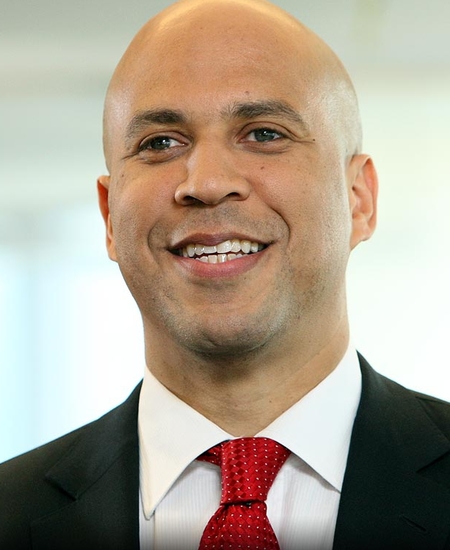
Sen. Cory A. Booker
Sponsored bills
This bill requires that the provision of Wi-Fi access on school buses be made eligible for support under the E-Rate program, which allots broadband discounts to schools and libraries.
This resolution recognizes the centennial of the Tulsa Race Massacre of 1921. The resolution acknowledges the historical significance of this event as one of the largest single instances of state-sanctioned violence against Black people in American history; honors the lives and legacies of the estimated 300 Black individuals who were killed during the massacre and the nearly 9,000 who were left homeless and penniless; condemns efforts to cover up the truth and shield the white community, especially government officials, from accountability; condemns the continued legacy of racism and white supremacy against Black people in the United States, particularly in the form of police brutality; encourages education about the massacre, the history of white supremacy that fueled the massacre, and subsequent attempts to deny or cover up the massacre, in all elementary and secondary education settings and in institutions of higher education; and recognizes the commitment of Congress to acknowledge and learn from the history of racism and racial violence to reverse the legacy of white supremacy and fight for racial justice.
Hello Girls Congressional Gold Medal Act of 2021 This bill provides for the award of a single Congressional Gold Medal in honor of the female telephone operators of the Army Signal Corps, commonly known as the Hello Girls , in recognition of their military service, devotion to duty, and 60-year struggle for veterans' benefits and recognition as soldiers.
COVID-19 in Immigration Detention Data Transparency Act This bill requires U.S. Immigration and Customs Enforcement (ICE), U.S. Customs and Border Protection (CBP), and the Office of Refugee Resettlement (ORR) to collect and report various information about detained individuals, including data on COVID-19 (i.e., coronavirus disease 2019) testing. During the COVID-19-related declared public health emergency and for one year after, ICE, CBP, and ORR shall publicly post on a website certain data about its detention facilities, including COVID-19 testing numbers for detained individuals and detention facility staff, COVID-19 case outcomes, vaccinations, and COVID-19-related information about detained individuals who were released or removed from the United States. The Centers for Disease Control and Prevention (CDC) shall issue guidance as to the COVID-19-related data that ICE, CBP, and ORR must collect and report weekly to the CDC. The CDC shall periodically report to Congress a summary of this data and an analysis of the trends and pattern of the spread of the disease. ICE, CPB, and ORR shall ensure that each detained individual receives all medical records related to any COVID-19 test administered to the individual. ICE, CPB, and ORR shall also report to Congress on (1) the COVID-19 safety protocols in its facilities, and (2) information relating to their efforts to ensure that each detained individual has access to legal counsel. This bill's data collection and reporting requirements that apply to ICE, CPB, and ORR shall also apply to any contract facilities that they use to hold detained individuals.
This bill directs the Joint Committee on the Library to accept from the Harriet Tubman Statue Commission of Maryland the donation of a statue of Harriet Tubman, which the Architect of the Capitol shall place in a prominent, permanent location in the U.S. Capitol.
American Dream Employment Act of 2021 This bill permits the compensation of congressional employees who hold a current employment authorization document that was issued pursuant to a grant of (1) deferred action, including under the Deferred Action for Childhood Arrivals Program; (2) deferred enforced departure; or (3) temporary protected status. (Generally, these programs and statuses allow eligible aliens to remain and work in the United States.)
Methane Emissions Reduction Act of 2021 This bill requires the Department of the Treasury to estimate annual methane emissions from each oil and natural gas producing basin and levy a fee for such emissions on each company that produces, gathers, processes, or transmits oil or natural gas. The fees must be used to provide grants through the National Coastal Resilience Fund of the National Fish and Wildlife Foundation.
Landowner Fairness Act This bill limits the use of eminent domain to take private property for the construction and operation of a natural gas pipeline facility. Specifically, this bill ends the legal presumption that natural gas exports are by definition in the public interest. In addition, the Federal Energy Regulatory Commission must consider certain factors in issuing certificates of public convenience and necessity for natural gas projects. Finally, the bill prohibits the holder of a certification of public convenience and necessity from exercising the right of eminent domain for a pipeline designed to export liquefied natural gas to a foreign country.
Energy Storage Tax Incentive and Deployment Act of 2021 This bill allows tax credits for (1) energy storage technologies, and (2) battery storage technology. The bill expands the tax credit for investments in energy property to include equipment that (1) receives, stores, and delivers energy using batteries, compressed air, pumped hydropower, hydrogen storage (including electrolysis), thermal energy storage, regenerative fuel cells, flywheels, capacitors, superconducting magnets, or other technologies identified by the Internal Revenue Service; and (2) has a capacity of at least five kilowatt hours. The bill also expands the tax credit for residential energy efficient property to include expenditures for battery storage technology that (1) is installed on or in connection with a dwelling unit located in the United States and used as a residence by the taxpayer, and (2) has a capacity of at least three kilowatt hours.