Maddy summarySRES 89 is a symbolic Senate resolution designating February 15-22, 2025, as "National FFA Week." It recognizes the National FFA Organization’s role in developing student leadership through agricultural education and celebrates two milestones: the 90th anniversary of New Farmers of America (a historically Black agricultural youth group) and the 75th anniversary of the Federal charter for Future Farmers of America (signed by President Truman in 1950). The resolution does not create new laws or obligations but formally expresses congressional support for these observances. It affects no specific group or policy, serving solely as a ceremonial acknowledgment.
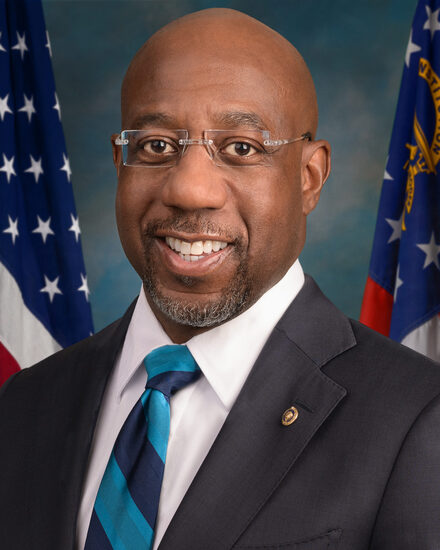
Sen. Raphael G. Warnock
Sponsored bills
Maddy summaryThe Broadband Grant Tax Treatment Act (S 674) excludes specific federal and state broadband grants from being counted as taxable income for recipients. It applies to grants from programs like the Broadband Equity, Access, and Deployment Program (under the Infrastructure Investment and Jobs Act) and similar state/local initiatives funded by federal broadband grants. The law prevents double tax benefits by disallowing deductions for expenses covered by the excluded grant and reducing the property’s cost basis by the grant amount. This directly affects broadband providers and local governments receiving these grants, making the funds tax-free without allowing additional tax deductions for the same spending.
Maddy summaryThe ENABLE Act permanently extends two key provisions for ABLE accounts, which are tax-advantaged savings accounts designed for people with disabilities. It removes expiration dates for higher contribution limits (previously set to end in 2026) and for rolling over funds from 529 college savings plans into ABLE accounts. The bill also makes the savers credit applicable to ABLE account contributions, allowing eligible individuals to claim tax credits for their savings. These changes directly benefit people with disabilities who use ABLE accounts to save for qualified expenses without risking eligibility for government benefits.
Maddy summarySRES 80 is a Senate resolution introduced on February 13, 2025, expressing gratitude to the Joint Congressional Committee on Inaugural Ceremonies, the Architect of the Capitol, the Sergeant at Arms, the Secretary of the Senate, law enforcement officers, emergency personnel, and volunteers. It specifically acknowledges their work during the January 20, 2025 inauguration of President Donald J. Trump, noting their efforts to adapt to cold weather challenges that required relocating events indoors. The resolution has no policy impact and serves solely as a ceremonial acknowledgment of their contributions to the inauguration's security and success.
Maddy summaryThis bill creates a 5-year pilot program for U.S. Customs and Border Protection (CBP) to hire two new image technician roles (Image Technician 1 and 2) to review scanning images of cargo and containers at ports of entry. Image Technician 1s assess images for anomalies indicating contraband or unauthorized persons, recommending release or further inspection to CBP officers, while Image Technician 2s also analyze intelligence on smuggling tactics and report to the National Targeting Center. Supervisory CBP officers retain final decision-making authority, and all technicians must undergo annual training on privacy rights, image analysis, and identifying threats like drugs or weapons. The program establishes five regional command centers, requires detailed quarterly reports to Congress on metrics like seizure rates and wait times, and ends after five years with potential for staff transfers to permanent CBP roles.
Maddy summaryThis bill amends the Securities Exchange Act of 1934 to include "rural-area small businesses" in existing exemptions that currently apply to women-owned small businesses. It directly affects rural small businesses by expanding their access to certain capital-raising provisions under federal securities law. The key change inserts "rural-area small businesses" into two specific sections of the law, allowing them to qualify for the same capital access exemptions previously reserved for women-owned businesses. This is a technical adjustment to existing securities rules, not a new funding program.
Maddy summaryThe Simplifying Subcontracting Act requires prime contractors (companies winning federal government contracts) to use clear, plain language in all subcontract solicitations and subcontracts. This ensures small businesses seeking subcontracting opportunities can easily understand the requirements, as defined by the Plain Writing Act of 2010. If the Small Business Administration finds a contractor failed to use plain language, the contractor must resend the solicitation in plain language within 30 days. The Small Business Administration must issue implementing regulations within 90 days of the law's enactment.
Maddy summaryThis bill directs the Secretary of Agriculture to develop voluntary, industry-led technical standards for precision agriculture equipment within two years, coordinating with NIST and the FCC. It requires these standards to address connectivity needs, cybersecurity, and compatibility across devices like GPS systems, soil sensors, and data management tools used by farmers. The bill also mandates a GAO assessment every two years for eight years to evaluate whether the standards are truly voluntary, developed with industry input, and successfully encourage wider adoption of precision agriculture. The policy affects farmers, ag-tech companies, and equipment manufacturers by creating common technical rules to reduce adoption barriers, without imposing new regulations or costs.
Maddy summaryThe Forest Data Modernization Act of 2025 updates how the U.S. Forest Service collects and reports forest data. It requires the agency to modernize its data collection methods - including adding timber product studies and woodland owner surveys - to better track forest carbon (including below-ground carbon), land use changes, and biomass supplies. The bill mandates nationally consistent data protocols, improved transparency in reporting, and regular updates to a strategic plan (submitted to Congress every 5 years) detailing how the agency will integrate remote sensing technologies and collaborate with partners. These changes directly affect the Forest Service’s inventory program and make forest data more accessible to researchers, landowners, and industries while protecting confidential plot locations and owner information.
Credit Union Board Modernization Act This bill revises the required frequency of meetings held by a credit union's board of directors. Specifically, new credit unions and credit unions with a low soundness rating must meet monthly. All other credit unions must hold at least six meetings annually, with at least one meeting held during each fiscal quarter. Currently, all credit union boards must meet at least once a month.