Maddy summaryThis bill amends the tax code to exclude certain loan repayment assistance from taxable income for veterinary students participating in qualifying programs. It specifically expands the exclusion to cover assistance provided under the National Agricultural Research, Extension, and Teaching Policy Act of 1977 and similar state programs designed to increase veterinary access in rural areas. Veterinary students who receive this assistance through these designated programs will not owe income tax on the funds. The change applies to assistance received in taxable years beginning after December 31, 2025.
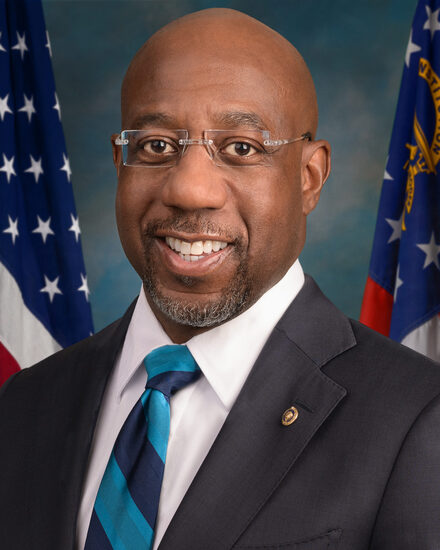
Sen. Raphael G. Warnock
Sponsored bills
Maddy summaryThis bill allows landowners who own timber as part of a business (not passive activity) to claim a tax deduction for losses from disasters like fire, storms, insects, or drought. It changes how the deduction is calculated by requiring the deduction to be based on the timber's pre-loss appraised value minus salvage value, rather than lower market value. Landowners must use appraisals by certified professionals within one year of the loss, and can initially estimate the value if the appraisal isn't ready by tax filing. Crucially, to keep the deduction, landowners must reforest the affected area with hardwoods or softwoods within five years of the loss.
Maddy summaryThis bill amends the Senior Farmers' Market Nutrition Program by expanding the list of eligible foods. It replaces "and herbs" with "herbs, and tree nuts (including shelled tree nuts)" in the program's provisions. This change directly affects seniors participating in the program, allowing them to receive tree nuts as part of their benefits when purchasing fresh produce at farmers' markets. The policy change is a technical update to the program's food eligibility list, with no new funding or administrative requirements.
Maddy summaryThe SEC Whistleblower Reform Act of 2025 expands protections for employees who report securities law violations by allowing them to make internal reports to supervisors or colleagues with authority to address misconduct - without losing whistleblower status. It requires the Securities and Exchange Commission (SEC) to process award claims within one year (with limited 180-day extensions for complex cases) and mandates written notification to whistleblowers about delays. The bill also prohibits companies from forcing employees to waive whistleblower rights or use pre-dispute arbitration for related disputes, ensuring these protections apply to claims filed after enactment.
Maddy summaryThe Paycheck Fairness Act strengthens equal pay protections by modifying the Equal Pay Act of 1963 to require employers to prove that non-sex factors used in pay decisions are job-related, consistent with business necessity, and account for the entire pay difference. It prohibits employers from relying on salary history when setting pay for new hires and enhances protections for workers who discuss wages or file pay discrimination claims. The bill requires the Equal Employment Opportunity Commission to collect and publish compensation data disaggregated by sex, race, and ethnicity to better enforce pay discrimination laws. These provisions directly affect workers in the private and public sectors, particularly women and women of color who face the largest pay gaps. The act also establishes a National Award for Pay Equity to recognize employers making significant efforts to eliminate pay disparities.
Maddy summaryS 1119, the FRIDGE Act of 2025, authorizes $1 million annually (2026-2030) for technical assistance to improve cold chain and port infrastructure in developing countries. This directly supports U.S. agricultural exporters by reducing the loss of food and exports due to inadequate infrastructure. The bill requires the Secretary to provide needs assessments, training, and technical help to enhance infrastructure capabilities, specifically targeting cold chain systems that prevent spoilage during transport. Funding is strictly limited to these infrastructure improvements for U.S. agricultural commodities. The law amends the Agricultural Trade Act of 1978 to establish this new program.
Maddy summaryThe BAH Restoration Act changes how the Basic Allowance for Housing (BAH) is calculated for military members stationed in the United States. It requires BAH amounts to equal the actual monthly cost of adequate housing in a member's area, as determined by the Secretary of Defense, adjusted for the member's pay grade and dependency status (e.g., whether they have a spouse or children). This policy directly affects all uniformed service members receiving BAH while serving in the U.S., replacing previous calculation methods with a standard tied to local housing expenses. The bill ensures housing allowances more closely reflect real-world costs in each location.
Maddy summaryThis Senate resolution expresses strong support for public K-12 schools and condemns any efforts to defund public education or dismantle the Department of Education. It highlights the federal government’s critical role in providing equitable funding - particularly for students in underserved communities, including those with disabilities, from low-income families, and in rural areas - and opposes diverting funds to private schools. As a non-binding resolution, it does not create new laws but formally states the Senate’s position on protecting public education funding and oversight.
Maddy summaryThis bill, the Major Richard Star Act (S 1032), allows veterans with combat-related disabilities to receive both their military retired pay and Veterans Affairs disability compensation simultaneously. It amends U.S. Code sections to remove the automatic reduction in retired pay that previously forced these veterans to choose between the two payments. The key change ensures veterans with combat-related disabilities qualify for full retired pay without offset against their VA disability benefits, effective for payments starting after the bill's enactment date. This directly affects veterans receiving military retired pay under Chapter 61 who also qualify for VA disability compensation for combat-related injuries.
Aviation Funding Stability Act of 2025 This bill provides continuing appropriations to the Federal Aviation Administration (FAA) if (1) an appropriations bill for the FAA has not been enacted before a fiscal year begins, or (2) a joint resolution making continuing appropriations for the FAA is not in effect. Specifically, the bill provides appropriations from the Airport and Airway Trust Fund at the rate of operations that was provided for the prior fiscal year to continue programs, projects, and activities for which funds were provided in the preceding fiscal year.