

Global Magnitsky Human Rights Accountability Reauthorization Act This bill permanently authorizes the President to impose visa- and property-blocking sanctions based on violations of human rights, and it revises the President's authority to impose these sanctions. The bill expands the actors and abuses currently eligible for these sanctions by implementing the standard of serious human rights abuse for the imposition of sanctions. The bill authorizes the President to impose sanctions on any foreign person (or any immediate family member of a person) who (1) is responsible for serious human rights abuse, (2) is a current or former government official who is responsible for or complicit in corruption, (3) is or has been a leader or official of an entity that has engaged in any of these activities, (4) has provided support for any of these activities, or (5) is owned or controlled by a person subject to these sanctions. The President must report on additional steps taken through diplomacy, international engagement, and assistance to foreign or security sectors to address causes of serious human rights abuse and corruption.
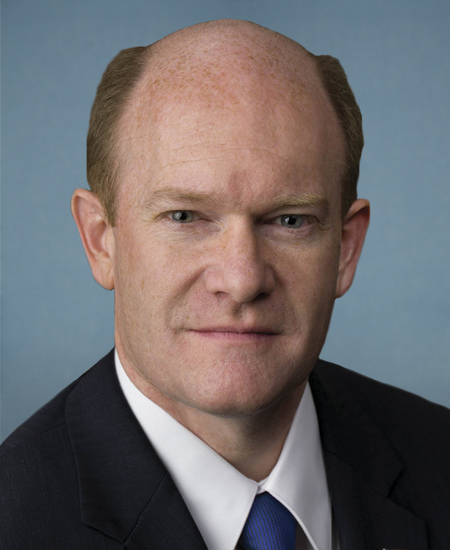
Sen. Christopher A. Coons
Sponsored bills
Combating Global Corruption Act of 2021 This bill requires the Department of State to develop a program to combat corruption in foreign countries. The State Department must annually report to Congress a tiered list of all foreign countries. The first tier shall contain countries that meet minimum standards for combating public corruption, while the second tier shall contain countries that do not yet meet these standards but are making significant efforts to do so. Third-tier countries do not meet the minimum anti-corruption standards and are not making significant efforts to do so. Factors for assessing efforts to address corruption include a country's compliance with specified relevant international agreements. The State Department must report on whether, for purposes of potential sanctions, foreign persons are engaged in significant corruption in third-tier countries or in relation to the planning, construction, or operation of the Nord Stream 2 pipeline. The State Department must also designate an anti-corruption point of contact in the U.S. diplomatic post in each second- or third-tier country and where the State Department determines that such a point of contact is necessary. The point of contact shall be responsible for enhancing coordination and promoting the implementation of a whole-of-government approach to enhancing the ability of foreign countries to combat public corruption.
This resolution reaffirms the goals of World Refugee Day and the commitment of the United States to promote the safety and well-being of refugees.
Veteran Families Health Services Act of 2021 This bill addresses fertility treatments, counseling, and other health-related programs for veterans and members of the Armed Forces. Specifically, the bill requires the Department of Defense (DOD) and the Department of Veterans Affairs (VA) to provide fertility treatments and counseling to covered veterans and active duty service members or a spouse, partner, or gestational surrogate of such veteran or service member. A covered veteran or service member is a former or current member of the Armed Forces who has an infertility condition, unless it is demonstrable that the individual was completely infertile prior to serving in the Armed Forces. In the case of in vitro fertilization treatment, DOD and the VA may not furnish more than three completed cycles or six attempted cycles, whichever occurs first. DOD must establish procedures related to gamete retrieval and storage. Additionally, DOD must provide service members with the opportunity to cryopreserve and store their gametes prior to deployment to a combat zone or a hazardous duty assignment. DOD and the VA must share best practices and facilitate referrals for the furnishing of fertility treatment and counseling to eligible individuals. Fertility counseling and treatment are included within authorized VA medical services. The VA may pay the adoption expenses (for up to three adoptions) for a covered member who is enrolled in the VA health care system. The VA must facilitate specified reproduction and infertility research conducted collaboratively by DOD and the Department of Health and Human Services.
Washington, D.C. Admission Act This bill provides for admission into the United States of the state of Washington, Douglass Commonwealth, composed of most of the territory of the District of Columbia. The commonwealth shall be admitted to the Union on an equal footing with the other states. The Mayor of the District of Columbia shall issue a proclamation for the first elections to Congress of two Senators and one Representative of the commonwealth. The bill applies current District laws to the commonwealth and continues pending judicial proceedings. The commonwealth (1) shall consist of all District territory, with specified exclusions for federal buildings and monuments, including the principal federal monuments, the White House, the Capitol Building, the U.S. Supreme Court Building, and the federal executive, legislative, and judicial office buildings located adjacent to the Mall and the Capitol Building; and (2) may not impose taxes on federal property except as Congress permits. District territory excluded from the commonwealth shall be known as the Capital and shall be the seat of the federal government. The bill maintains the federal government's authority over military lands and specified other property. The bill provides for expedited consideration of a joint resolution repealing the Twenty-third Amendment to the Constitution, which provides for the appointment of electors of the President and Vice President. The bill continues certain federal authorities and responsibilities, including regarding employee benefits, agencies, courts, and college tuition assistance, until the commonwealth certifies that it is prepared to take over the authorities and responsibilities. The bill establishes the Statehood Transition Commission to advise the President, Congress, and District and commonwealth leaders on the transition.
This resolution acknowledges and condemns the discrimination against, wrongful termination of, and exclusion from the federal civil service, the Foreign Service, and the Armed Forces of the thousands of lesbian, gay, bisexual, and transgender (LGBT) individuals who were affected by the anti-LGBT policies of the federal government. The resolution expresses that the Senate, on behalf of the United States, apologizes to the affected LGBT military service members, Foreign Service members, veterans, and federal civil service employees and their families. Finally, the resolution reaffirms the commitment of the federal government to treat all military service members, Foreign Service members, veterans, and federal civil service employees and retirees, including LGBT individuals, with equal respect and fairness.
Stop Shackling and Detaining Pregnant Women Act This bill prohibits the Department of Homeland Security (DHS) from detaining an individual during pregnancy or postpartum recovery and addresses related issues. DHS must immediately release any detainee found to be pregnant, unless the detainee presents an immediate and serious threat of hurting themselves or others. A DHS detention facility may not use a restraint on a detainee who is known to be pregnant, including during labor, transport to a medical facility or birthing center, and delivery, or during postpartum recovery, except for medical or safety purposes. The bill requires DHS to use the least restrictive restraint necessary and prohibits certain specified restraint types, including four-point restraints and binding hands behind the detainee's back. The bill prohibits DHS detention officers from being present during a detainee's pelvic exam, labor, delivery, or treatment relating to a pregnancy, unless specifically requested by medical personnel. If a detention officer is requested by medical personnel, such officer shall be female, if practicable, and remain at a reasonable distance from the detainee. A pregnant detainee must have access to health care services, including comprehensive services relating to reproductive health care and pregnancy. DHS must provide annual training about this bill's requirements to each employee who has a role in the detention or care of a pregnant detainee or a postpartum parent of a newborn. DHS must also provide each detainee notice of their rights under this bill in the detainee's native language.
Juneteenth National Independence Day Act This bill establishes Juneteenth National Independence Day, June 19, as a legal public holiday.
Segal AmeriCorps Education Award Tax Relief Act of 2021 This bill modifies the requirements for calculating taxable income to exclude from gross income any AmeriCorps educational awards provided under the National and Community Service Act of 1990.
Resilience Investment, Support, and Expansion from Trauma Act or the RISE from Trauma Act This bill establishes and extends various programs to support infants, children, youth, and families who have experienced, or may experience, trauma. Specifically, the bill allows federal agencies to use specified discretionary funds to implement pilot projects to improve outcomes for children experiencing trauma. It also requires the Department of Health and Human Services to provide tool kits and other guidance to train frontline service providers and certain community members about trauma, toxic stress, and resilience. In addition, the Department of Justice (DOJ) must establish a national center to disseminate to law enforcement agencies best practices and other assistance to enhance interactions with infants, children, youth, and families who are exposed to violence and trauma. Furthermore, the bill establishes grants for multi-sector demonstration projects to prevent and mitigate trauma and toxic stress; interventions to improve outcomes for hospital patients who experience drug overdoses, suicide attempts, or violent injury; and clinical training in infant and early childhood mental health. The bill also authorizes DOJ grants to reduce violence and substance use by preventing children's trauma from exposure to violence and substance use. Additionally, it incorporates trauma-informed practices and otherwise addresses trauma in programs for health care professional education, increasing access to health services, and training for educators.