Maddy summaryThe America the Beautiful Act reauthorizes the National Parks and Public Land Legacy Restoration Fund through 2033, increasing its annual funding from $1.9 billion to $2 billion. It requires that projects funded by the Legacy Restoration Fund must secure at least 15% of their costs from public donations, which will be solicited through public awareness campaigns, donation locations at recreation sites, and during the purchase of recreation passes. The bill also mandates new reporting requirements for deferred maintenance and disposal of assets no longer serving public interest, while ensuring donations are credited to the Fund and allocated to specific projects.
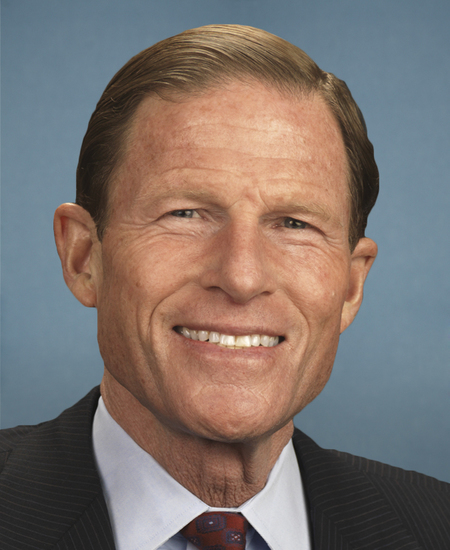
Sen. Richard Blumenthal
Sponsored bills
Maddy summaryThe Duty Status Reform Act reorganizes federal laws to consolidate how reserve military members are ordered to active duty, creating a unified framework that applies to the Army, Navy, Air Force, Coast Guard, National Guard, and Space Force. The bill establishes four distinct categories of duty - ranging from mandatory training and remote assignments to emergency mobilization - and aligns the benefits, pay, and survivor protections for National Guard members with those of other reserve components. It also updates the legal definition of a "contingency operation" to include these new reserve duty categories and repeals older, overlapping statutes to streamline the system. Notably, the legislation includes a transition provision that delays the law's effective date by ten years, allowing time for agencies to prepare for implementation.
Maddy summaryThis bill abolishes the Anti-Weaponization Fund, a financial reserve created by the Attorney General during the Trump v. Internal Revenue Service legal case. It also declares an order issued on May 19, 2026, regarding the release of certain claims as invalid and without effect. The legislation directly impacts the Department of Justice by removing this specific fund and reversing the associated administrative directive.
Maddy summaryThis Senate resolution designates June 6, 2026, as National Naloxone Awareness Day to highlight the importance of naloxone in reversing opioid overdoses. The measure aims to educate the public, healthcare providers, and first responders on how to recognize overdose signs and safely administer the medication. It also encourages federal, state, and local governments along with private organizations to support efforts that increase access to and distribution of naloxone.
Maddy summaryThe Promoting Police Leadership Act directs the Attorney General to create and certify specialized training programs for police commanders, focusing on leadership, community trust, and data-driven policing. This initiative requires the training to be primarily in-person and include practical problem-solving exercises where officers develop and refine solutions for real-world challenges. The bill mandates that the Attorney General consult with local agencies and universities to design these curricula and publish a list of law enforcement units that successfully complete the courses. Additionally, the legislation requires periodic reports to Congress and a review by the Government Accountability Office to assess the program's effectiveness and implementation barriers. Importantly, the act does not override state or local authority to set their own certification standards for law enforcement officers.
Maddy summaryThe Tribal Warrant Fairness Act amends two federal laws to explicitly include Indian Tribes in existing law enforcement and security protocols. It requires the U.S. Marshals Service to consider "Tribal fugitive matters" upon request by an Indian Tribe and updates the Presidential Threat Protection Act to include "Indian Tribes" and "Tribal law" alongside local and state entities. These changes ensure Tribal governments are treated equally with local and state authorities in federal processes. The bill directly affects Indian Tribes, the U.S. Marshals Service, and agencies under the Presidential Threat Protection Act by modifying how they handle Tribal matters. This is a technical update to existing statutes without creating new programs or funding.
Maddy summaryS 825 requires the Justice Department to develop a report within 150 days on programs providing evidence-based mental health care for public safety officers, including police, firefighters, EMTs, and 911 dispatchers. The report must outline how to deliver trauma-informed care, peer support, and family services through in-person or telehealth options, while ensuring confidentiality for officers seeking help. It also needs to detail administrative efficiency across states and territories, draft necessary grant conditions, and estimate annual funding needs. This bill does not fund programs but sets a framework for future action based on the high rates of PTSD and suicide among these frontline workers.
Maddy summaryS 736, the Lieutenant Osvaldo Albarati Stopping Prison Contraband Act, amends federal law to increase penalties for providing prohibited items (like phones) to prison inmates. It adds a maximum 2-year prison term for knowingly supplying phones to inmates, specifically targeting violations related to phone trafficking. The bill also requires the Bureau of Prisons to review and update its policies within one year of enactment to better prevent inmate access to prohibited objects and enhance safety for both incarcerated individuals and staff. These changes directly affect prison staff, correctional facilities, and individuals involved in supplying contraband to inmates.
First Rhode Island Regiment Congressional Gold Medal Act This bill provides for the award of a single Congressional Gold Medal to the First Rhode Island Regiment, collectively, in recognition of their dedicated service during the Revolutionary War.
Maddy summaryThis Senate resolution formally acknowledges and apologizes for the decades of discrimination and wrongful termination faced by lesbian, gay, bisexual, and transgender individuals who served in the U.S. military, Foreign Service, and federal civil service. The measure highlights historical policies, such as the "Don't Ask, Don't Tell" rule and the "Lavender Scare," which forced hundreds of thousands of service members to leave their jobs or hide their identities, while also noting recent executive actions that have rescinded protections for gender identity. While the resolution reaffirms a commitment to equal rights and respect for all LGBT government employees, it explicitly states that it does not create any legal claims or settlements for affected individuals.