

Maddy summaryThis bill establishes a comprehensive sanctions framework targeting the Russian government and its affiliated entities in response to ongoing military actions. It authorizes the President to block assets, revoke visas, and prohibit financial transactions for Russian officials, military leaders, and foreign persons supporting Russia's defense industry or undermining Ukraine. The legislation also bans U.S. investments in Russian energy sectors, prohibits the purchase of Russian sovereign debt, and imposes high tariffs on Russian imports while restricting crude oil purchases by specific foreign nations. Additionally, the bill prevents Russian companies from listing on U.S. stock exchanges and includes mechanisms for terminating sanctions only if Russia signs a peace agreement accepted by Ukraine and ceases hostilities.
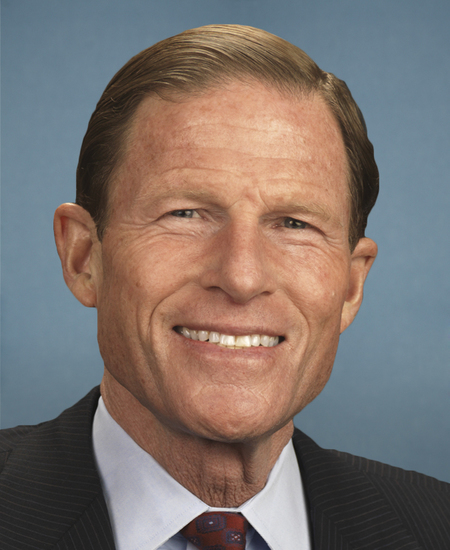
Sen. Richard Blumenthal
Sponsored bills
Maddy summaryThe Protecting Students from Worthless Degrees Act restricts federal funding for college programs that fail to meet specific standards regarding licensure preparation and student earnings. To qualify for federal aid, programs designed to prepare students for licensed professions must ensure graduates can take required exams and obtain certification in the state where they live, while also providing necessary internships or clinical placements. Additionally, the bill introduces a debt-to-earnings test that bars funding for programs where the average student's annual loan payments exceed 8% of their median earnings or where payments exceed 20% of their discretionary income. Institutions offering distance learning courses must also be legally authorized in every state where their students reside, unless participating in a mutual agreement between states.
Maddy summaryThe Disclosure of Tax Havens and Offshoring Act requires large multinational companies to publicly report their financial performance in every country where they operate. Specifically, it mandates that these firms submit detailed reports to the Securities and Exchange Commission showing revenues, profits, taxes paid, and employee counts for each jurisdiction. The law also requires this data to be provided in a machine-readable format and made available online for public access. Companies must follow specific rules for defining which entities and locations are included in these reports, with the Commission expected to issue final regulations within a year of the bill's enactment.
Maddy summaryThis joint resolution seeks to officially disapprove a specific rule issued by the Centers for Medicare & Medicaid Services regarding the implementation of prior authorization for certain Medicare services. The proposed action would prevent the rule, known as the WISeR Model, from taking effect, thereby stopping the new requirements from being enforced. If passed, the resolution would nullify the regulation and maintain the status quo for the affected healthcare services.
Maddy summaryThe Cancer Drug Parity Act of 2026 requires group health plans and insurance coverage to treat the cost-sharing for oral cancer medications no less favorably than that for intravenously administered cancer drugs. This rule applies to FDA-approved oral cancer treatments that a treating physician deems medically necessary and clinically appropriate, ensuring that deductibles, copayments, and coinsurance rates are not higher for oral options. The legislation also prohibits plans from making changes that would increase out-of-pocket costs or impose stricter limitations on oral cancer drugs compared to injected ones, while still allowing for standard utilization controls like prior authorization. Additionally, the bill mandates a Government Accountability Office study within two years to assess the impact of these changes on patient costs and access.
Maddy summaryThe Duster Inhalation Prevention Act directs the Consumer Product Safety Commission to classify specific aerosol duster propellants as hazardous substances. Under this law, aerosol products containing more than 18 mg of these substances would be banned, and manufacturers would be prohibited from stockpiling them ahead of the ban. The bill also allows the Commission to add other harmful propellants to the list if they are used for recreational inhalation. These measures aim to reduce the availability of products that can be misused for intoxication while excluding FDA-regulated drugs from the restrictions.
Maddy summaryThe Luxury JET Act prohibits the use of a luxury aircraft donated by the Government of Qatar for the personal benefit of any President, their family members, or associates, even after their term ends. It also mandates that the Government Accountability Office conduct a detailed review of the aircraft donation to analyze potential conflicts of interest, the full cost to taxpayers, and the legality of accepting the gift under the Foreign Emoluments Clause. The report from this review must be submitted to congressional defense committees within 90 days and should include recommendations to improve laws regarding foreign gifts and prevent the misuse of taxpayer funds.
Maddy summaryThe Nitrous Oxide Inhalation Prevention Act establishes new federal regulations to curb the misuse of nitrous oxide while allowing its continued use for legitimate medical, industrial, and automotive purposes. Key provisions include banning flavored products and limiting food-use canisters to 8 grams, alongside strict rules that prohibit packaging with bright colors or cartoon characters and require prominent warning labels on every cartridge. The bill also imposes age restrictions by setting a minimum purchase age of 21, mandates that retailers verify identification and limit sales hours, and restricts wholesalers from selling directly to individual consumers. To support harm reduction efforts, the legislation authorizes funding for grants aimed at education, prevention programs, and training for law enforcement and medical professionals. Non-compliance with these new requirements can result in civil monetary penalties for manufacturers and distributors, or escalating fines and potential sales bans for retailers.
Maddy summaryThe Mamas First Act expands Medicaid coverage to include prenatal, labor, and postpartum care provided by doulas, midwives, tribal midwives, and lactation support providers. To qualify for this coverage, these professionals must meet specific certification, training, or recognition standards, such as doulas having continuing education and references from former clients or healthcare providers. The bill also prohibits Medicaid programs from charging copayments or deductibles for these essential services. These changes are scheduled to take effect on January 1, 2027, aiming to improve maternal health outcomes by increasing access to supportive care.
Maddy summaryThe Good Jobs for Good Airports Act establishes new federal standards to ensure that workers at small, medium, and large hub airports receive a living wage and adequate health benefits. It defines "covered service workers" to include employees in roles such as baggage handling, passenger assistance, security, ticketing, and concession services, regardless of whether they are directly hired by the airport or work for a contractor. Under the bill, employers must pay these workers at least the higher of the federal Service Contract Act wage rates or applicable state and local minimum wages, and they must provide similar fringe benefits. To enforce these rules, the Secretary of Labor and the Secretary of Transportation will have the authority to investigate violations, issue penalties, and require employers to submit monthly compliance certifications. Additionally, the law allows private individuals to file lawsuits against non-compliant employers and mandates annual reports to Congress on the implementation of these labor standards.