

Comforting Our Military Families through On-base or Remote Treatment Act of 2021 or the COMFORT Act of 2021 This bill authorizes the Office of Military Family Readiness Policy within the Department of Defense (DOD) to coordinate programs and activities for the provision of nonmedical counseling services to military families through the DOD Military and Family Life Counseling Program. Under the bill, nonmedical counseling services means mental health care services that are nonclinical, short-term, and solution-focused to address topics related to personal growth, development, and positive functioning. The bill authorizes mental health professionals to provide non-medical counseling services regardless of where the provider or recipient is located so long as the provision of service is within the scope of the authorized duties of the provider. For purposes of the bill, mental health professionals include licensed or certified mental health professionals or members of the uniformed services, civilian DOD employees, or DOD contractors.
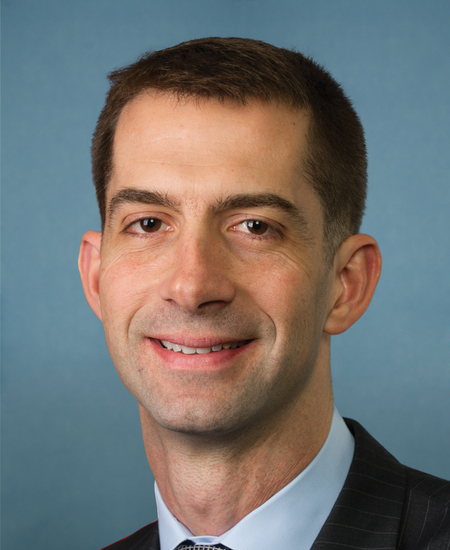
Sen. Tom Cotton
Sponsored bills
Campus Free Speech Restoration Act This bill addresses expressive activities (e.g., peacefully assembling, distributing literature, or carrying signs) on college campuses. First, the bill generally prohibits a public institution of higher education (IHE) that participates in federal student-aid programs from restricting noncommercial expressive activities in a generally accessible outdoor area on campus. Further, the bill prohibits a public IHE from receiving federal funds if the Department of Education determines that the public IHE (1) maintains a policy that infringes upon the expressive rights of students; or (2) maintains or enforces time, place, or manner restrictions on expressive activities in a generally accessible outdoor area on campus, except in limited circumstances. In addition, the bill prohibits retaliation against an individual because the individual reported or complained about restrictions on expressive activities or participated in an investigation or hearing. The bill also requires a private IHE that receives federal funds to provide students with its policies related to expressive rights. The bill also establishes a framework for investigating complaints and for IHEs to regain eligibility for federal funds.
This resolution supports the designation of October 3-October 9, 2021, as National 4-H Week. It also (1) recognizes the important role of 4-H in youth development and education, and (2) encourages all citizens to recognize 4-H for the significant impact the organization and members have made and continue to make by empowering young people with the skills needed to lead for a lifetime.
Viral Gain of Function Research Moratorium Act This bill prohibits the award of federal research grants to institutions of higher education or research institutes that conduct gain-of-function research. Gain-of-function research refers to any research that (1) may be reasonably anticipated to confer attributes to influenza, MERS, or SARS viruses such that the virus would have enhanced pathogenicity or transmissibility in an organism; or (2) involves the enhancement of potential pandemic pathogens or related risky research with potentially dangerous pathogens.
Helping American Victims Afflicted by Neurological Attacks Act of 2021 or the HAVANA Act of 2021 This bill specifically authorizes the Central Intelligence Agency, the Department of State, and other agencies to provide payments to agency personnel who incur brain injuries from hostilities while on assignment. Specifically, the bill allows agency personnel and their families to receive payments for brain injuries that are incurred (1) during a period of assignment to a foreign or domestic duty station; (2) in connection with war, insurgency, hostile acts, terrorist activity, or other agency-designated incidents; and (3) not as the result of willful misconduct. The bill's authority applies to injuries incurred before, on, or after the date of the bill's enactment. Agencies must submit classified reports on the bill's implementation, including the number of payments made and the amount of each payment. Since 2016, some intelligence, diplomatic, and other governmental personnel have reported experiencing unusual cognitive and neurological impairments while on assignment (particularly abroad), the source of which is currently under investigation. Symptoms were first reported by personnel stationed in Cuba and have since been collectively referred to as Havana Syndrome .
This bill requires the Department of Veterans Affairs (VA) to designate one week each year as Buddy Check Week for the purposes of organizing outreach events and educating veterans on how to conduct peer wellness checks. The VA shall ensure that the Veterans Crisis Line has a plan for handling the potential increase in calls that may occur during such week.
Better Enforcement of Grievous Offenses by unNaturalized Emigrants or the BE GONE Act This bill expands, for immigration purposes, the definition of aggravated felony to include sexual assault and aggravated sexual violence. (Under current law, a conviction for an aggravated felony is grounds for deportation and may bar an individual from other immigration-related benefits.)
This resolution commends the Society of the Honor Guard, Tomb of the Unknown Soldier on leading the commemoration of the Centennial of the Tomb of the Unknown Soldier.
This bill extends the deadline, from 270 days to 390 days, for the Commission on Combating Synthetic Opioid Trafficking to submit the final report on its activities and recommendations to combat the flow of synthetic opioids into the United States.
Providing Officers With Electronic Resources Act or the POWER Act This bill authorizes the Office of Community Oriented Policing Services within the Department of Justice to make grants to law enforcement agencies to purchase a chemical screening device and to train personnel to use, and interpret data collected by, such device.