

Maddy summaryS 1589, the Immigration Parole Reform Act of 2025, updates U.S. immigration parole rules to allow temporary entry for specific groups under strict criteria. It permits parole for urgent humanitarian reasons (like life-threatening medical emergencies or family reunification) or significant public benefit (such as assisting law enforcement), but only on a case-by-case basis - not for entire groups. The bill specifically expands eligibility for military family members, Cuban nationals under historical migration agreements, and those needing urgent medical care or organ transplants. Parole lasts up to one year (with possible one-year extensions) and does not grant work authorization except for military families and Cuban nationals, while requiring detailed annual reporting to Congress.
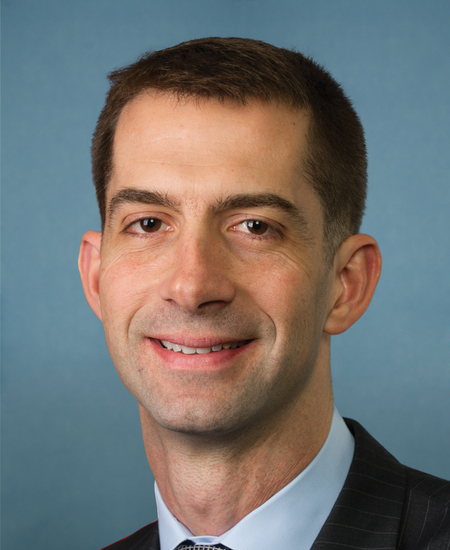
Sen. Tom Cotton
Sponsored bills
Maddy summaryThis bill amends the Safe Drinking Water Act to require community water systems to implement cybersecurity training and planning. It directly affects public water suppliers serving residential areas by mandating training on protecting against cyberattacks and responding to incidents. Key provisions include adding specific cybersecurity topics to required training programs and extending the implementation timeframe for these requirements to 2026-2031. The changes update existing safety protocols to address evolving digital threats to water infrastructure.
This bill increases the annual limit on the tax credit for qualified railroad track maintenance expenses (also referred to as the short line railroad tax credit) and expands eligibility for claiming the credit. Under current law, the tax credit is limited each tax year to $3,500 multiplied by the sum of the number of miles of railroad track owned or leased by the taxpayer (miles owned or leased) and the number of railroad track miles assigned to the taxpayer by a Class II or III railroad (miles assigned). This bill increases the annual limit to $6,100 multiplied by the sum of miles owned or leased and miles assigned. The $6,100 amount used in the calculation of the tax credit limit is adjusted for inflation for tax years beginning after 2025. The bill also expands eligibility for the tax credit to include gross expenses for maintaining railroad tracks owned or leased as of January 1, 2024. Under current law, the tax credit is limited to gross expenses for maintaining railroad tracks owned or leased as of January 1, 2015.
Maddy summaryThe Stand with Israel Act would prohibit U.S. federal funds from being used to pay the U.S. share of United Nations dues or contributions to UN programs, specialized agencies, or related entities if the UN or a UN entity expels, downgrades, or suspends Israel's membership or restricts Israel's full and equal participation as a member state. This means the U.S. government would withhold payments to the UN in cases where the UN takes such actions against Israel. The bill directly affects the Department of State and other federal agencies responsible for UN funding, requiring them to block these payments under specified conditions. It does not compel the UN to act but would prevent U.S. financial support in response to UN decisions impacting Israel's membership status.
Maddy summaryS 1539, the Depot Investment Reform Act, amends a provision in the U.S. Code governing minimum funding requirements for Department of Defense depots. It changes the timeframe used to calculate these requirements from "the preceding three fiscal years" to "the preceding fiscal year, the current fiscal year, and the estimated amount for the following fiscal year." This adjustment allows depots to base their minimum investment calculations on a rolling three-year window that includes next year's projected needs. The bill directly affects military depots responsible for maintaining and repairing equipment, providing a more forward-looking approach to planning their capital investments. The change focuses on updating the calculation method without altering the underlying funding levels.
Maddy summaryS 1524 establishes the William S. Knudsen Commission for American Defense-Industrial Mobilization to assess and recommend improvements to the U.S. defense manufacturing sector. The 12-member Commission, appointed by congressional leaders, will review current production capabilities, identify regulatory barriers (like environmental or energy rules), and evaluate requirements for rapid mobilization in major conflicts, drawing on lessons from recent events such as the war in Ukraine. It must submit a report within one year with specific recommendations for policy reforms, funding adjustments, and new initiatives to strengthen domestic defense production capacity. This process directly affects federal defense planning and policy decisions by providing Congress and the President with actionable strategies for industrial readiness.
Maddy summaryThis bill directs the Department of Education to use the International Holocaust Remembrance Alliance (IHRA) definition of antisemitism when reviewing discrimination complaints under Title VI of the Civil Rights Act. It specifically applies to cases involving discrimination based on Jewish ancestry or ethnic characteristics in schools and programs receiving federal funding. The bill clarifies that this guidance does not expand the Department’s authority, alter existing discrimination standards, or affect First Amendment rights. It aims to ensure consistent enforcement against antisemitism in federally funded education settings, building on existing Department practices since 2019.
Maddy summaryThis resolution designates the week of April 19-27, 2025, as "National Park Week" in the U.S. Senate. It encourages the public to responsibly visit, experience, and support national parks across the United States. The resolution highlights the National Park System’s role in preserving natural and cultural resources while acknowledging its economic impact and recreational value. It does not create new laws or alter funding, focusing solely on recognition and public engagement.
Maddy summaryThe Combating Organized Retail Crime Act amends federal law to strengthen legal tools for addressing organized retail crime, including theft from stores, online, and supply chains. It establishes a new Organized Retail and Supply Chain Crime Coordination Center within the Department of Homeland Security to coordinate Federal, State, local, and tribal law enforcement efforts. The Center will share information, assist with investigations, track crime trends, and provide training to combat these crimes. The bill expands legal definitions to include organized retail crime as a specific category and requires annual reports on the Center's activities. The Center will operate for 7 years before sunset.
Anyone But China Safe Drug Act or the ABC Safe Drug Act This bill restricts federal health care programs from purchasing drugs with active ingredients manufactured in China and provides tax incentives for the purchase of certain pharmaceutical and device manufacturing property for use in the United States. The bill phases in restrictions on federal health care programs’ purchase of drugs. By January 1, 2030, federal health care programs may not purchase any drug that contains active ingredients from China or countries that do not meet the health and safety standards of the Food and Drug Administration. The Department of Health and Human Services may issue a waiver for an agency or program that is unable to meet this requirement; this waiver authority expires in 2031. The bill also requires all drugs to be labeled with the country of origin of each active ingredient in the drug. Drugs that are not labeled with this information are deemed misbranded. Finally, the bill allows 100% tax expensing for qualified pharmaceutical and medical device manufacturing property placed in service between 2025 and 2030. Qualified pharmaceutical and medical device manufacturing property is any tangible property placed in service in the United States as part of the construction or expansion of property for the manufacture of drugs or devices.