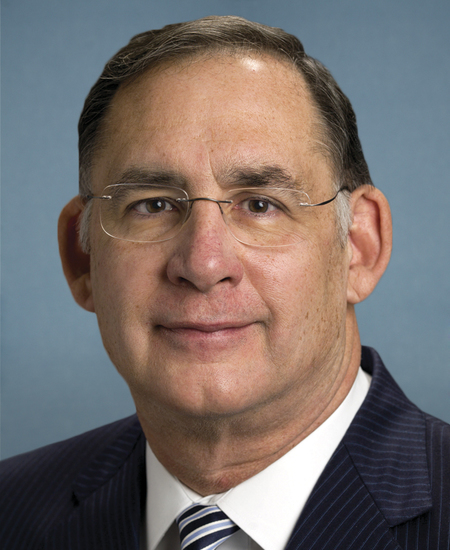
This resolution expresses the condolences of the Senate regarding the death of the Honorable Mike Enzi, former Senator for Wyoming.
Sponsored bills
Navigable Waters Protection Act of 2021 This bill enacts definitions that determine which bodies of water fall under the scope of the Clean Water Act and are thereby under federal jurisdiction. Specifically, the bill provides statutory authority for the definitions related to the waters of the United States, commonly known as WOTUS, in regulations when the bill is enacted.
Prescription Pricing for the People Act of 20 21 This bill requires the Federal Trade Commission (FTC) to report about anticompetitive practices and other trends within the pharmaceutical supply chain that may impact the cost of prescription drugs. The FTC also must provide recommendations to increase transparency in the supply chain and prevent anticompetitive practices.
This bill prohibits the U.S. International Development Finance Corporation from prohibiting or restricting the source of energy used by a power-generation project that has as its purpose the provision of affordable electricity in certain countries. Such countries are those that are eligible for support either solely from the International Development Association (IDA) or jointly from the IDA and the International Bank for Reconstruction and Development. Further, the corporation (1) may not reject a power-generation project in such a country based on the source of energy used by the project; and (2) must promote a technology- and fuel-neutral energy development strategy for such countries that includes the use of oil, natural gas, coal, hydroelectric, wind, solar, and geothermal power and other sources of energy.
Provider Relief Fund Deadline Extension Act This bill extends the period during which health care providers may use payments received from the Provider Relief Fund to cover a variety of costs related to COVID-19.
Department of Veterans Affairs Provider Accountability Act This bill prescribes oversight requirements for the Department of Veterans Affairs (VA) regarding health care professionals at VA medical centers. Specifically, the bill requires the VA to ensure each VA medical center consistently compiles, verifies, and reviews specified documentation for each VA health care professional (including contractors). The VA shall ensure that specified health care professionals hold an active Drug Enforcement Administration registration. Each VA medical center must implement (1) monitoring of the performance and quality of the health care delivered by each health care professional at the center, and (2) reviews of such care if an individual notifies the VA of any potential concerns relating to a failure to meet generally accepted standards of clinical practice. The bill imposes notification requirements in situations where the VA substantiates a concern relating to the clinical competency of, or quality of care delivered by, a current or former VA health care professional. The VA is prohibited from entering into a settlement agreement relating to an adverse action against a VA health care professional if such agreement includes terms that require the VA to conceal certain information from the employee's personnel file. Such prohibition does not apply to adverse actions determined to be prohibited personnel practices. The VA must provide mandatory training, at least annually, to employees who are responsible for specified tasks (e.g., those who are responsible for compiling, validating, or reviewing the credentials of VA health care professionals).
Guaranteeing Healthcare Access to Personnel Who Served Act This bill addresses the administration and provision of health care to veterans through the Department of Veterans Affairs (VA) and non-VA providers. First, the bill provides statutory authority for the eligibility thresholds for when a veteran must receive non-VA care under the Veterans Community Care Program (VCCP) for primary care, mental health care, noninstitutional extended care services, specialty care, or specialty services. Additionally, the bill establishes access to care standards for non-VA care under the VCCP, meaning a veteran's appointment must be within specified distances and time frames. Among other requirements, the VA must also implement an 18-month pilot program to allow certain veterans to use a website or mobile application to request, schedule, and confirm medical appointments with VCCP providers; ensure that VCCP third party administrators and credentials verification organizations comply with specified requirements to help ensure that certain health care providers are excluded from providing non-VA health care services; develop a strategic plan to ensure the effectiveness of the telehealth technologies and modalities delivered by the VA; and establish an online health care education portal for veterans. The bill requires the Government Accountability Office to report on (1) the VA program under which third parties provide transportation for veterans who are seeking VA services or benefits, (2) VA telehealth services, and (3) the VA's Foreign Medical Program. Finally, the Paperwork Reduction Act does not apply to the voluntary collection of information during research conducted by the Veterans Health Administration.
United States Cadet Nurse Corps Service Recognition Act of 2021 This bill recognizes service as a member of the U.S. Cadet Nurse Corps between July 1, 1943, and December 31, 1948, as active duty service. The active duty designation entitles qualifying individuals to certain benefits afforded to veterans, such as burial benefits (not including interment at Arlington National Cemetery) and honorary veteran status. Under the bill, the Department of Defense (DOD) must issue individuals who served in the corps during the specified period a discharge from their service under honorable conditions if such a discharge is warranted based on the duration and nature of the service. Such individuals are not entitled to Department of Veterans Affairs benefits aside from those related to burials and memorials. The bill also authorizes DOD to produce a service medal or other commendation, memorial plaque, or grave marker to honor the individuals.
This bill expands eligibility for Department of Veterans Affairs hospital care, medical services, and nursing home care to include veterans of World War II who are not already covered.
Improving Housing Outcomes for Veterans Act of 2021 This bill requires the Veterans Health Administration (VHA) to provide medical center staff and homelessness service providers of the Department of Veterans Affairs (VA) with information related to best practices for the collaboration on centralized or coordinated assessment systems established and operated by Continuums of Care. The VA must also ensure that the information and related resources are accessible to VA medical center staff and homelessness service providers. Additionally, the bill requires the VHA to communicate with VA employees who have responsibilities related to homelessness assistance programs regarding (1) the measurement of performance by the VA's Homeless Program Office, and (2) how to obtain and provide feedback about the performance measures.