

Recreation Not Red-Tape Act This bill revises and sets forth provisions related to recreation areas and special recreation permits issued by the Department of the Interior and the Department of Agriculture (USDA) for individual or group use of federal recreational lands and waters. The bill makes permanent certain authorizations, including regarding such permits and the fees charged for them and for related administration, overhead, and indirect costs. Interior and USDA shall evaluate the special recreation permitting process and identify opportunities for eliminating duplicative processes, reducing costs, and decreasing processing times; establish categorical exclusions from environmental review requirements for special recreation permits if it would reduce processing times or costs without significantly affecting the human environment; authorize the issuance of temporary permits for new or additional recreational uses of federal lands and waters managed by the Forest Service and the Bureau of Land Management; allow online payment of certain federal passes and fees; develop initiatives to promote private-sector volunteer opportunities; and establish an interagency trail management plan. Permittees issued a special recreation permit may voluntarily and temporarily return one or more of their service days. The bill sets forth requirements for review by USDA of the renewal or adjustment of the allocations for the use of a special recreation permit. Interior and USDA may enter into agreements with states to allow the purchase of federal and state recreation passes in the same transaction. The bill establishes a National Recreation Area System.
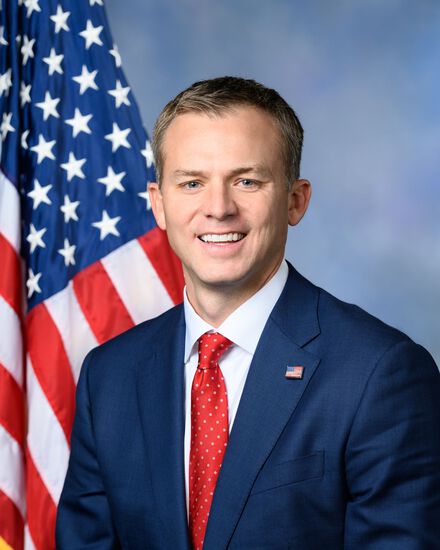
Rep. Blake D. Moore
Sponsored bills
Promotion and Expansion of Private Employee Ownership Act of 2021 This bill expands tax incentives and federal assistance for employee stock ownership plans (ESOPs) that are sponsored by S corporations. The bill provides additional tax incentives for ESOPs by (1) extending to all domestic corporations, including S corporations, provisions allowing deferral of tax on gain from the sale of employer securities to an ESOP; and (2) allowing a tax deduction for 50% of the interest received by a bank on loans to S corporation-sponsored ESOPs for the purchase of employer securities. The Department of the Treasury must establish the S Corporation Employee Ownership Assistance Office to foster increased employee ownership of S corporations. The bill defines an ESOP business concern for purposes of the Small Business Act as a business concern that was eligible for a loan, preference, or other program under such Act before more than 49% of the business concern was acquired by an ESOP.
Newborn Screening Saves Lives Reauthorization Act of 2021 This bill reauthorizes through FY2026 and revises several programs and activities relating to newborn screening for certain conditions and genetic, endocrine, and metabolic diseases. Among its changes, the bill reauthorizes and makes mandatory the Hunter Kelly Research Program at the National Institutes of Health, and national surveillance activities conducted by the Centers for Disease Control and Prevention. The bill also aligns statutory requirements for research on non-identified newborn blood spots with federal regulations governing research on human subjects. These blood spots are collected as part of newborn screening programs, and some states make them available for biomedical and public health research. Under current regulations, research on non-identified bio-specimens such as blood spots is not considered to be research on human subjects, to which additional protections apply.
Retain Skilled Veterans Act This bill modifies the restriction related to the appointment of retired members of the Armed Forces to certain civil service positions in the Department of Defense. Under the bill, the 180-day waiting period before a retired member may be appointed to a position only applies to those positions in the excepted or competitive service classified at or above GS-14 of the General Schedule (or equivalent).
Representation for Exceptional Military Families Act This bill establishes the Exceptional Family Member Program Advisory Council in the Department of Defense to provide recommendations on how to improve the Exceptional Family Member Program. The program provides assistance, services, and support to military family members who have special needs.
Toxic Exposure in the American Military Act or the TEAM Act This bill requires the Department of Veterans Affairs (VA) to expand health care, benefits, and resources for veterans with conditions related to exposure to toxic substances. Specifically, the bill expands eligibility for VA hospital care, medical services, and nursing home care to include veterans who (1) were exposed to toxic substances, radiation, or other conditions, and were awarded certain medals (e.g., the Armed Forces Service Medal); (2) are eligible for inclusion in the Airborne Hazards and Open Burn Pit Registry; or (3) have been identified by the Department of Defense to have been possibly exposed during service to an open burn pit, toxic substance, or specified hazardous sites. (A burn pit is an area used for burning solid waste in open air without equipment.) The bill establishes a presumption of service-connection for diseases associated with exposure to certain toxic substances and that become manifest within a certain time period; the VA must specify such diseases and requirements through regulations. Under a presumption of service-connection, specific conditions diagnosed in certain veterans are presumed to have been caused by the circumstances of their military service. Health care benefits and disability compensation may then be awarded. The bill also requires the VA to take specified actions to (1) evaluate scientific evidence regarding associations between diseases and exposure to toxic substances; (2) train its health care personnel on identifying, treating, and assessing illnesses related to such exposure; and (3) provide resources to veterans exposed to toxic substances.
Michael Lecik Military Firefighters Protection Act This bill establishes a presumption of service-connection for specified diseases becoming manifest in certain veterans to a degree of disability of 10% or more within 15 years of the veteran's separation from active military, naval, or air service. Under a presumption of service-connection, specific diseases or disabilities diagnosed in certain veterans are presumed to have been caused by the circumstances of their military service. Health care benefits and disability compensation may then be awarded. Veterans addressed by this bill are those who (1) are trained in fire suppression, and (2) served on active duty in a military occupational specialty or career field with a primary responsibility of firefighting or damage control for at least five years in the aggregate.
Trillion Trees Act This bills establishes a variety of requirements and incentives to plant trees and conduct other land management practices for the purposes of capturing and storing carbon in domestic and international trees and forests. Additionally, the bill provides incentives to research or develop other carbon sequestration tools. Specifically, the bill directs the Department of Agriculture (USDA) to set targets to increase forest carbon stock through January 1, 2100, for the purposes of sequestering and storing carbon in U.S. forests. It also establishes and provides funding for the Trillion Trees Challenge Fund to provide grants to nonfederal entities for activities related to reforestation efforts on public or private lands. In addition, it raises the cap on the Reforestation Trust Fund to enhance forest health in the National Forest System and requires the USDA to establish a Tree City USA Grant Program. The bill also allows the U.S. Agency for International Development to enter into an agreement with a nonprofit organization to establish an International Forest Foundation to promote reforestation and prevent deforestation. Additionally, it establishes requirements and incentives to address seedling shortages and support nurseries. Finally, the bill provides market incentives to research or develop other carbon sequestration tools relating to biochar, sustainable building practices, biochemical and bioplastic products, and biomass energy.
Flexible Financing for Rural America Act This bill allows rural utility service providers to submit to the Department of Agriculture (USDA) a request to adjust the interest rate or modify the terms of certain loans. The request shall include a report summarizing how the adjustment or modification will assist the borrower in providing critical utility services to a rural community. Specifically, on receipt of a request, USDA or the Department of the Treasury (in the case of a loan owned by the Federal Financing Bank) must adjust the interest rate on the loan to match certain interest rates for obligations of comparable maturity to the term remaining on the loan (or a higher rate requested by the borrower), and make modifications to the loan terms as necessary to address changes in the financial position of the borrower due to the COVID-19 public health emergency and to promote the financial sustainability of the borrower. In carrying out the adjustments or modifications, USDA or Treasury shall not impose or collect any fee from, or impose any penalty on, a borrower. The bill also provides funding to implement the adjustments and modifications and for the liquidation of residual intragovernmental amounts owed by the Federal Financing Bank in connection with certain loans.
Forest Technology Enhancements for Conservation and Habitat Improvement Act or the Forest TECH Improvement Act This bill directs the Department of Agriculture (USDA) to either establish a research and development pilot program or expand an applicable existing program to assess new technologies, including unmanned aircraft system, geospatial, or remote sensing technologies, across all reforestation activities; accelerate the deployment and integration of such technologies into the operations of USDA and the Department of the Interior; collaborate and cooperate with state, tribal, and private geospatial information system organizations with respect to such technologies. USDA and Interior shall enter into an agreement to develop consistent protocols and plans for the use of unmanned aircraft system technologies for reforestation activities. Any unmanned aircraft system technology or component of such technology that is used pursuant to this bill shall be made and manufactured in the United States.