

Maddy summaryHR 7361, the Flowers for Fallen Heroes Act of 2024, requires the American Battle Monuments Commission to establish a low-cost program allowing the public to order flowers for military gravesites at Commission-managed cemeteries. The bill mandates the Commission to partner with third-party florists (without excess fees) and create a user-friendly website and phone system for ordering by one year after enactment. It also authorizes credit card and electronic payment processing for these orders, with customers responsible for any third-party processing fees, and requires annual reports to Congress detailing program implementation, including order data and florist engagement. This bill directly affects the public seeking to honor fallen service members and the Commission’s operations at 25 overseas military cemeteries.
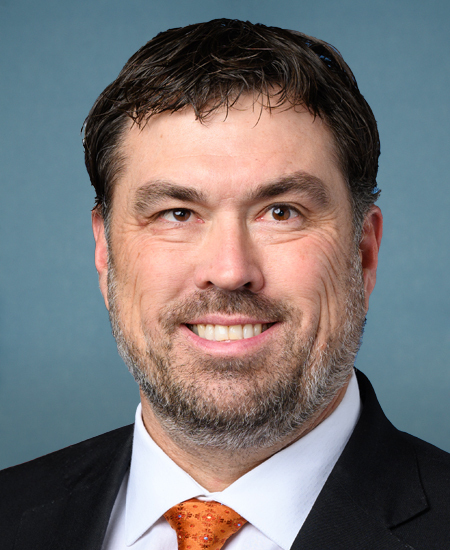
Rep. Morgan Luttrell
Sponsored bills
Maddy summaryThis bill directs the Secretary of State to actively use U.S. diplomatic resources, including the voice and influence of U.S. diplomats and officials at the International Boundary and Water Commission, to advance efforts ensuring Mexico complies with the 1944 water treaty. It requires U.S. officials to work toward establishing reliable water delivery agreements under the treaty for the Colorado, Tijuana, and Rio Grande rivers. The key mechanism is mandating diplomatic engagement to address Mexico's compliance with treaty obligations, aiming to secure predictable water flows for U.S. users. The bill affects U.S. diplomatic operations and water management coordination with Mexico, focusing on treaty implementation rather than new water infrastructure.
Maddy summaryThis bill amends the 2018 Anti-Boycott Act to include boycotts by international governmental organizations (IGOs), such as UN agencies, alongside boycotts by foreign countries. It expands existing requirements for U.S. entities to report boycotts they comply with, now covering IGO-initiated boycotts as well. The change directly affects U.S. businesses and organizations operating internationally who might face pressure from IGOs to participate in boycotts. Key provisions update legal definitions in the law by inserting "or international governmental organization" in relevant sections without creating new penalties.
Maddy summaryHR 7382 amends existing law to allow law enforcement agencies using Byrne JAG funds (a federal grant program) to specifically fund programs aimed at reducing demand for commercial sex trafficking. This change directly affects state and local law enforcement agencies that receive Byrne JAG grants, enabling them to allocate these funds toward demand reduction initiatives like public awareness campaigns or victim services. The key mechanism is adding "programs to reduce the demand for trafficked persons" as an explicitly authorized use of Byrne JAG funds under the 1968 Crime Control Act. This policy change expands the scope of existing federal funding to target the demand side of sex trafficking, without creating new programs or altering other funding categories.
Maddy summaryHR 7176, the "Unlocking our Domestic LNG Potential Act of 2024," streamlines approval processes for U.S. liquefied natural gas (LNG) export terminals. It grants the Federal Energy Regulatory Commission (FERC) exclusive authority to approve or deny LNG export facility projects, requiring FERC to deem such exports "consistent with the public interest" unless specific legal exceptions apply. The bill explicitly preserves the President’s authority to block LNG exports under sanctions laws targeting countries designated as state sponsors of terrorism. This directly affects LNG companies seeking export permits and FERC’s regulatory role, without altering existing environmental or safety regulations.
Maddy summaryHR 7313, the Jalisco Cartel Neutralization Act, requires the Secretary of Defense to provide quarterly briefings to specific congressional committees on efforts to capture or kill the leadership of the Jalisco New Generation Cartel (Cartel Jalisco Nueva Generación). The bill mandates these briefings begin 90 days after enactment and continue every 90 days thereafter. It directly affects the Department of Defense and targets five Senate committees and six House committees focused on national security, intelligence, and foreign policy. The bill establishes a reporting mechanism but does not create new funding, sanctions, or law enforcement actions.
Maddy summaryHR 7182, the Defend Our Borders From Armed Invaders Act, would authorize the National Guard to stop individuals attempting to cross the U.S. border from Mexico by land if they are clearly carrying weapons. This bill amends federal law to explicitly allow the National Guard to take necessary actions against such individuals without requiring special federal approval. It directly affects National Guard operations along the U.S.-Mexico border and targets only those crossing with weapons, not all border crossers. The law overrides existing restrictions on National Guard use for domestic border security under 18 U.S.C. § 1385.
Maddy summaryHR 7185 reauthorizes the High Intensity Drug Trafficking Areas (HIDTA) program through 2030, with specific focus on fentanyl. It allocates $302 million annually for HIDTA operations and adds $14.2 million yearly for grants to enhance fentanyl seizure efforts through competitive grants. The bill requires annual reports detailing fentanyl seizures and trafficking data, and directs the Attorney General to assign at least 16 assistant U.S. attorneys to prioritize fentanyl trafficking cases. This directly affects federal drug task forces, law enforcement agencies, and prosecutors working on fentanyl-related investigations.
Maddy summaryHR 7107, the Human Trafficking Awareness Training Act, requires the Federal Law Enforcement Training Centers (FLETC) to create a mandatory training program for state, local, tribal, territorial, and educational institution law enforcement officers. The training covers recognizing human trafficking indicators, understanding victim-centered responses, reporting protocols, relevant federal and state laws, and high-risk locations. The bill authorizes $2.3 million annually from 2024 through 2029 to fund this program and mandates coordination with the Department of Homeland Security’s Blue Campaign. It also requires integrating this training into existing FLETC programs. The law defines human trafficking per the Trafficking Victims Protection Act of 2000.
Maddy summaryHR 7083, the RAZOR Act, prohibits federal agencies from removing or altering barriers (like fences or fences) built by states along the U.S. border to prevent unlawful crossings. It directly affects federal departments and agencies, such as the Department of Homeland Security, by restricting their ability to modify state-constructed border infrastructure. The key provision is a clear ban on any federal action that would change or remove these state-built barriers. This bill makes a specific policy change regarding federal-state border infrastructure authority without altering broader immigration law.