

Maddy summaryHRES 1064 is a resolution passed by the U.S. House of Representatives recognizing that Texas operates its own electricity grid through the Electric Reliability Council of Texas (ERCOT), which serves over 26 million Texans and manages 52,700 miles of transmission lines. The resolution explicitly condemns any congressional or federal government action attempting to "federalize" Texas' electricity markets, which operate under the Texas Public Utility Commission and state legislature. It emphasizes that ERCOT is not subject to federal jurisdiction and rejects efforts to force connections to neighboring grids, as seen in previous legislative proposals. This resolution does not change laws but formally states the House's position supporting Texas' control over its energy system.
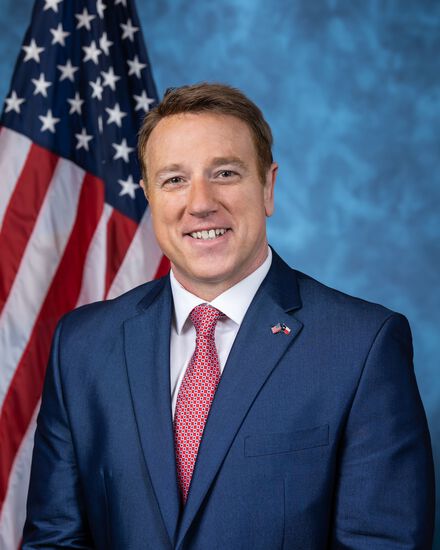
Rep. Pat Fallon
Sponsored bills
Maddy summaryThis bill directs the Secretary of State to actively use U.S. diplomatic resources, including the voice and influence of U.S. diplomats and officials at the International Boundary and Water Commission, to advance efforts ensuring Mexico complies with the 1944 water treaty. It requires U.S. officials to work toward establishing reliable water delivery agreements under the treaty for the Colorado, Tijuana, and Rio Grande rivers. The key mechanism is mandating diplomatic engagement to address Mexico's compliance with treaty obligations, aiming to secure predictable water flows for U.S. users. The bill affects U.S. diplomatic operations and water management coordination with Mexico, focusing on treaty implementation rather than new water infrastructure.
Maddy summaryThe Assad Regime Anti-Normalization Act of 2023 amends the Caesar Syria Civilian Protection Act to expand sanctions against individuals and entities supporting the Assad regime in Syria. It targets those who provide financial or material support to the regime, divert humanitarian aid, seize property, or engage with Syria Arab Airlines or Cham Wings. The bill prohibits U.S. officials from recognizing or normalizing relations with the Assad regime and requires the administration to develop a strategy to counter other countries' engagement with Syria. It also mandates annual reports on diplomatic meetings with Syria, transactions involving Syria, and how the Assad regime manipulates UN operations in Syria.
Maddy summaryThe Uyghur Policy Act of 2023 establishes a U.S. Special Coordinator for Uyghur Issues within the State Department to coordinate policy and advocate for the protection of Uyghur cultural, religious, and linguistic identity in Xinjiang. It authorizes $250,000 annually for Uyghur human rights advocates to speak at public diplomacy events in Muslim-majority countries and mandates Uyghur language training for U.S. diplomats. The bill also directs the U.S. government to support United Nations monitoring of Xinjiang human rights issues and oppose efforts to block discussions of Xinjiang at the UN. These provisions focus on diplomatic advocacy and information-sharing, not direct sanctions or enforcement actions against China.
Maddy summaryHR 533, the "Promoting a Resolution to the Tibet-China Dispute Act," establishes U.S. policy recognizing Tibetans' right to self-determination under international law and rejects China's historical claims about Tibet. It directs the State Department to counter Chinese disinformation about Tibet’s history and status, including claims that Tibet has been part of China "since ancient times," and amends the 2002 Tibetan Policy Act to require specific disinformation countermeasures. The bill defines "Tibet" to include the Tibet Autonomous Region and Tibetan areas in Qinghai, Sichuan, Gansu, and Yunnan provinces. These provisions aim to guide U.S. diplomatic efforts toward resolving the Tibet-China dispute through dialogue and factual representation.
Maddy summaryHR 7450, the Protecting Privacy in Purchases Act, prohibits payment card networks and covered entities (like payment processors) from requiring or assigning merchant category codes that specifically identify firearms retailers as different from general stores or sporting goods retailers. This directly affects firearms retailers and payment networks by preventing them from using business classification codes that could flag firearm sales. The bill establishes an enforcement process where the Attorney General investigates complaints, issues remediation notices, and can seek court injunctions for non-compliance, while preempting state or local laws on this issue. It does not create private lawsuits for individuals.
Maddy summaryHR 7374 designates the United States Postal Service facility at 500 Sergeant Gonzales Drive in Fort Davis, Texas, as the "Sergeant Manuel Sillas Gonzales Post Office." This bill directly affects the specific postal facility by changing its official name to honor Sergeant Manuel Sillas Gonzales. The key mechanism requires all federal references in laws, documents, or records to use the new name moving forward. As a naming bill, it makes no substantive policy changes beyond the official designation.
This resolution expresses the sense of the House of Representatives that former President Trump did not engage in insurrection or rebellion against, nor give aid or comfort to the enemies of, the United States.
Maddy summaryThe JOBS Act of 2023 would expand Federal Pell Grant eligibility to cover certain short-term job training programs that prepare students for high-demand careers. It defines "eligible job training programs" as those offering 150-600 hours of instruction over 8-15 weeks, aligned with in-demand industry sectors, and leading to recognized credentials that help students meet hiring requirements and take licensure exams. The bill would allow students in these programs to receive Pell Grants under standard terms, with the minimum Pell Grant amount reduced from 10% to 5% of the maximum. It also requires accrediting agencies to evaluate these programs and creates data-sharing between Education and Labor departments to track program effectiveness.
Maddy summaryThis resolution disapproves a Department of Energy rule that would have set new energy efficiency standards for consumer furnaces. The rule, published in the Federal Register (88 Fed. Reg. 87502), aimed to require furnace manufacturers to produce models meeting higher energy conservation levels. If enacted, this resolution would cancel the rule, preventing it from taking effect. As a result, current energy efficiency standards for furnaces would remain unchanged, and manufacturers would not face the new requirements.