

In committee Sep 24, 2026
1 co-sponsor
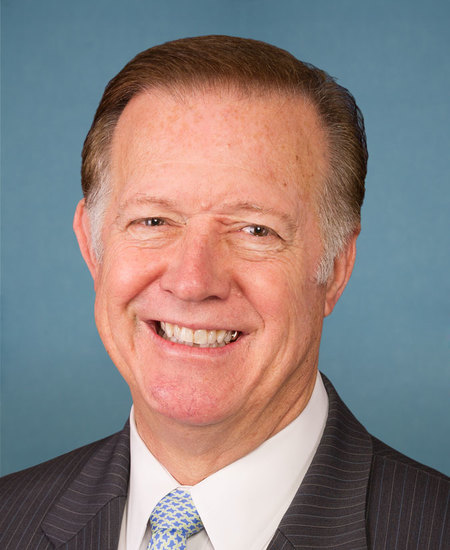
Rep. Randy K. Weber, Sr.
Total votes
2,837
all sessions
Attendance
98%
68 missed
Near the chamber average
With party
92%
of cast votes
Near the chamber average
Bipartisan score
4%
crosses aisle rarely
Near the chamber average
Sponsored
1,847
bills & resolutions
Higher than 84% of chamber peers
Committees
6
assignments
1,847 bills and resolutions
Sponsored bills
Total
1,847
Primary
60
Co-sponsor
1,787
This page
1,847
matching current filters
In committee Sep 24, 2026
1 co-sponsor
Ratepayer Protection Act
Maddy summaryThis bill, known as the Ratepayer Protection Act, modifies federal energy laws to ensure that large industrial customers pay for the specific infrastructure upgrades needed to serve their high electricity demands. It directly affects non-residential facilities with a peak power usage of 100 megawatts or more, requiring utilities to charge these customers the full incremental cost of any necessary generation, transmission, or distribution improvements. Under the new rules, large customers must also provide financial guarantees or contributions before such upgrades are made, ensuring utilities can recover costs even if the customer leaves the contract early. State regulators have two years to implement these standards, though the bill exempts utilities in states that have already enacted similar measures or are actively considering them.
Passed Sep 24, 2026
1 co-sponsor
Providing for congressional disapproval under chapter 8 of title 5, United States Code, of the rule issued by the Environmental Protection Agency relating to the "California State Nonroad Engine Pollution Control Standards; Commercial Harbor Craft Regulations; Notice of Decision".
Maddy summaryThis joint resolution seeks to overturn a specific Environmental Protection Agency rule that granted California the authority to enforce its own nonroad engine pollution standards for commercial harbor craft. If enacted, the bill would render the EPA’s decision invalid and prevent it from taking effect. The measure directly affects California by removing its ability to impose stricter local emissions regulations on these vessels.
Passed Sep 17, 2026
1 co-sponsor
Empowering Moms Act
Maddy summaryThe Empowering Moms Act directs the Secretary of Health and Human Services to update the government website moms.gov within one year to serve as a centralized directory for resources aimed at pregnant, postpartum, and parenting women. The bill authorizes grants for states to help aggregate local resources, which users can filter by ZIP code and distance, while also allowing the federal government to contact users via phone or email if they consent to follow-up outreach. A key provision excludes organizations that provide abortions, except in cases of rape, incest, or life-threatening conditions, from being listed on the website or receiving state grants. The act mandates that the website be accessible in multiple languages and requires the Secretary to submit a report to Congress within 180 days detailing user traffic, feedback, and resource gaps.
In committee Sep 16, 2026
1 co-sponsor
Providing for congressional disapproval under chapter 8 of title 5, United States Code, of the rule submitted by the Environmental Protection Agency relating to "California State Nonroad Engine Pollution Control Standards; Ocean-Going Vessels At-Berth; Notice of Decision".
Maddy summaryThis bill proposes to reject a specific rule issued by the Environmental Protection Agency regarding pollution control standards for ocean-going vessels at ports in California. If passed, the measure would use a congressional veto to cancel the rule, preventing it from taking legal effect. The legislation directly impacts the EPA's ability to enforce these specific emission limits and affects shipping companies and ports in California that would have been subject to the new standards.
EnergyOpposes EnergyBill uses a congressional veto to cancel EPA pollution control standards for ocean-going vessels, weakening emission limits and restricting clean energy enforcement.
EnvironmentOpposes EnvironmentBill uses a congressional veto to cancel EPA pollution control standards for ocean-going vessels, weakening environmental protections and allowing increased emissions.
TransportationOpposes TransportationBill cancels EPA pollution standards for ocean-going vessels, weakening environmental regulations on maritime transportation.
Passed Sep 16, 2026
1 co-sponsor
Recycled Materials Attribution Act of 2026
Maddy summaryThe Recycled Materials Attribution Act of 2026 allows companies to use mass balance accounting to support claims about recycled content in their products, provided they follow independent third-party certification rules. This method lets manufacturers mix recycled materials with conventional ones in the same supply chain while still crediting the final product with a specific amount of recycled content based on documented inputs. The Federal Trade Commission will update its existing environmental marketing guidelines to reflect these new standards and will enforce the rules against misleading recycled content claims. Additionally, the law prevents states from passing their own conflicting regulations on how recycled content claims are made or enforced.
In committee Sep 16, 2026
1 co-sponsor
PACK Act
Maddy summaryThe Packaging and Claims Knowledge Act of 2025 requires companies to ensure that recyclable, compostable, and reusable claims on consumer product packaging are accurate and supported by third-party certification. The bill mandates that recyclable claims must include information about local recycling availability, while compostable claims must be backed by scientific evidence and clearly explain disposal limitations. Companies must also provide actual reuse systems or products for reusable packaging claims, and the Federal Trade Commission will issue guidance on compliance without creating binding regulations.
In committee Sep 16, 2026
0 co-sponsors
Chip EQUIP Act
Maddy summaryThe Chip EQUIP Act restricts federal funding for semiconductor manufacturing equipment made by foreign entities designated as security concerns (or their subsidiaries). It prohibits the use of such "ineligible" equipment - defined as completed, fully assembled tools like etching, lithography, or inspection machines - in projects receiving federal financial assistance for 10 years. The bill requires federal agreements to include this ban, with limited waivers allowed only if the equipment is unavailable from U.S. or allied sources, was refurbished by a foreign entity of concern but originally made by a non-concern entity, or meets export rules and national security criteria. This directly affects companies receiving federal funds for semiconductor manufacturing facilities.
Budget & TaxesOpposes Budget & TaxesThe bill restricts federal funding for semiconductor manufacturing equipment from certain foreign entities, which can limit financial assistance and potentially increase costs for projects, thereby opposing fiscal flexibility.
TechnologySupports TechnologyBill restricts funding for foreign semiconductor equipment to protect national security and enhance domestic technology supply chains, strengthening cybersecurity and technological sovereignty.
In committee Sep 16, 2026
1 co-sponsor
Foreign Robocall Elimination Act
Maddy summaryHR 6152, the Foreign Robocall Elimination Act, establishes an interagency task force to address foreign robocalls entering the United States. The task force, composed of the FCC, FTC, DOJ, and private sector representatives, will study the origins, impacts, and potential solutions to foreign robocalls and must submit a report to Congress within 360 days. The bill also modifies existing law to require FCC notices about robocall mitigation every three years instead of annually, and introduces a bond requirement for providers using the Robocall Mitigation Database. This legislation affects telecommunications providers, federal agencies, and all U.S. telephone users who receive unwanted calls. The bill aims to improve coordination between U.S. agencies and foreign countries in combating illegal robocalls through concrete policy changes.
In committee Sep 16, 2026
1 co-sponsor
Ask Maddy
·
AI policy assistant
Ask Maddy about Randy K. Weber, Sr.
Scope: florida
Hi! I can help you understand Randy K. Weber, Sr.'s legislative record. What would you like to know?
Try one of these
i
Maddy answers using official bill text and legislative records. Always verify before sharing.
Sources cited inline