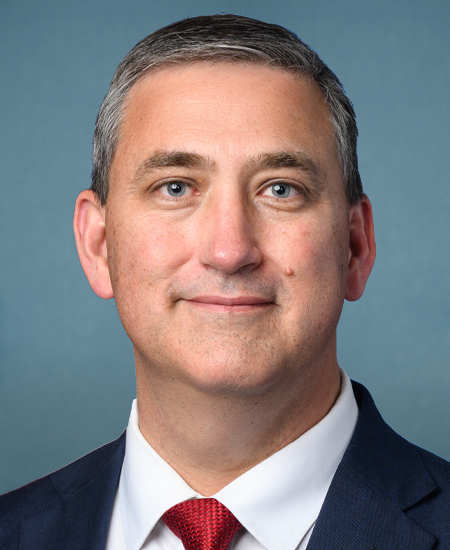
Photo of Nathaniel Moran
R United States House · District 1 · Texas On the 2026 ballot

Rep. Nathaniel Moran

Compare
Total votes
1,879
all sessions
Attendance
99%
19 missed
Near the chamber average
With party
95%
of cast votes
Higher than 97% of chamber peers
Bipartisan score
3%
crosses aisle rarely
Lower than 98% of chamber peers
Sponsored
523
bills & resolutions
Near the chamber average
Committees
5
assignments
523 bills and resolutions

Sponsored bills

Total
523
Primary
46
Co-sponsor
477
This page
523
matching current filters
Co-sponsor HR 8536
In committee · Florida House · Co-sponsor
Fuel STAR Act of 2026

Maddy summaryThe Fuel STAR Act of 2026 amends the Renewable Fuel Standard to limit the volume of non-advanced biofuel required each year to match projected domestic ethanol consumption. It extends the use of credits earned between 2020 and 2022 for compliance through five additional years, while prohibiting the use of electric vehicle credits. The bill also expands exemptions for small refineries by adding specific economic hardship criteria and requiring the EPA to automatically approve exemption requests if it fails to respond within 90 days. Furthermore, the legislation allows for the year-round sale of E15 fuel blends containing 10 to 15 percent ethanol by removing previous restrictions on Reid vapor pressure limitations.

In committee Apr 28, 2026 1 co-sponsor
Co-sponsor HR 7959
Passed · Florida House · Co-sponsor
IRS Whistleblower Program Improvement Act

Maddy summaryThis bill, the IRS Whistleblower Program Improvement Act, aims to strengthen protections and incentives for individuals who report tax violations to the Internal Revenue Service. It directly affects whistleblowers who submit information about tax evasion or avoidance schemes and the IRS officials who evaluate those reports. Key changes include requiring Tax Court reviews of whistleblower awards to be conducted de novo based on the original administrative record, granting whistleblowers anonymity before the Tax Court unless a societal interest outweighs potential harm, and adding interest to award amounts if the IRS delays providing preliminary recommendations. The legislation also modifies IRS annual reports to include descriptions of top tax avoidance schemes disclosed by whistleblowers and corrects a provision regarding attorney fee deductions for whistleblowers.

Passed Apr 28, 2026 1 co-sponsor
Co-sponsor HR 6431
Passed · Florida House · Co-sponsor
New Opportunities for Business Ownership and Self-Sufficiency Act

Maddy summaryThis bill modifies state unemployment programs to help job seekers start businesses. It removes the requirement that participants must first exhaust regular unemployment benefits before accessing self-employment assistance. States must now approve business plans or require entrepreneurial training/counseling for participants, who must also certify weekly participation. The bill also raises the cap on program participants from 5% to 10% of unemployed individuals. These changes aim to expand access to business ownership support through state unemployment systems.

Passed Apr 28, 2026 1 co-sponsor
Co-sponsor HR 227
Passed · Florida House · Co-sponsor
Clergy Act

Clergy Act This bill establishes a two-year window for certain members of the clergy and Christian Science practitioners to revoke their exemption from Social Security and Medicare taxes on ministerial earnings. Under current law, such individuals who object to participation in public insurance programs on religious or conscientious grounds may apply to the Internal Revenue Service (IRS) for an irrevocable exemption and will not receive Social Security or Medicare benefits in retirement unless they have qualifying credits from other employment. The IRS must develop a plan to inform members of the clergy and Christian Science practitioners of their eligibility to revoke prior exemptions, pursuant to the bill's changes.

Passed Apr 28, 2026 1 co-sponsor
Co-sponsor HR 8283
In committee · Florida House · Co-sponsor
Deterring American AI Model Theft Act of 2026

Maddy summaryThis bill establishes a framework to protect American-owned closed-source AI models from unauthorized extraction by foreign entities, particularly those from China and Russia. It requires the Secretary of State to conduct assessments identifying which foreign entities are conducting model extraction attacks or facilitating them through fraudulent account networks, then publish a public list of these actors for up to five years. The legislation authorizes the President to impose economic sanctions on identified entities and their affiliates, while also creating mechanisms for industry coordination and sharing information about threats. Importantly, the bill distinguishes between legitimate AI research conducted under contractual terms and unauthorized extraction attempts that bypass access controls or violate usage agreements.

In committee Apr 22, 2026 1 co-sponsor
Co-sponsor HR 8170
In committee · Florida House · Co-sponsor
MATCH Act

Maddy summaryThe MATCH Act requires U.S. agencies to align export controls on semiconductor manufacturing equipment with allied nations to prevent adversaries from accessing critical technology. It mandates a 150-day period for diplomatic efforts to secure countrywide denial policies from allied suppliers, after which U.S. jurisdiction would extend to equipment exported from countries not complying with these controls. The bill specifically targets semiconductor manufacturing equipment that the U.S. cannot currently produce in high volume and includes a list of Chinese companies deemed to warrant comprehensive restrictions. If allies fail to implement matching controls, the Act would allow the U.S. to regulate equipment exported from non-compliant allied countries and restrict servicing of restricted items at facilities in adversary nations. The legislation includes a sunset provision that expires five years after enactment, with annual reporting requirements to Congress on progress and compliance.

In committee Apr 22, 2026 1 co-sponsor
Co-sponsor HR 6322
In committee · Florida House · Co-sponsor
Stop Stealing our Chips Act

Stop Stealing our Chips Act This bill creates a whistleblower incentive program and establishes whistleblower protections for individuals who provide information to the Department of Commerce's Bureau of Industry and Security (BIS) related to violations of U.S. export control laws.  Currently, BIS administers and enforces controls on the export of dual-use goods (e.g., items with both civilian and military uses) and certain military parts and components. These export controls are implemented primarily under the Export Control Reform Act of 2018 (ECRA) through the Export Administration Regulations. Under the bill, BIS must establish a whistleblower incentive program to reward individuals who voluntarily report original information that results in BIS (1) imposing fines under ECRA on persons that violate, attempt to violate, conspire to violate, or cause a violation of ECRA or any related regulation, order, license, or authorization; or (2) requiring the forfeiture of property that results in net proceeds. Additionally, BIS must establish a secure online portal for whistleblowers to report violations of ECRA. The bill outlines requirements for BIS to review, investigate, and provide status updates related to these reports. The bill requires BIS to pay an award to certain whistleblowers who voluntarily reported original information that led to the imposition of a fine under ECRA. The bill establishes the Export Compliance Accountability Fund for paying these awards and funding related activities. The bill also sets forth whistleblower protections by (1) prohibiting employers from impeding communication or retaliating against individuals who act as whistleblowers, and (2) establishing confidentiality requirements.

In committee Apr 22, 2026 1 co-sponsor
Co-sponsor HR 8403
In committee · Florida House · Co-sponsor
To amend the Food and Nutrition Act of 2008 to modify the definition of food.

Maddy summaryThis bill, HR 8403, amends the Food and Nutrition Act of 2008 to modify the definition of eligible food items for the Supplemental Nutrition Assistance Program (SNAP). It directly affects SNAP recipients by expanding the types of food they can purchase with their benefits. The key provision explicitly adds "hot rotisserie chicken" to the list of items considered SNAP-eligible food. This change would allow individuals using SNAP to buy prepared hot rotisserie chickens from authorized retailers.

In committee Apr 21, 2026 1 co-sponsor
Co-sponsor HRES 1156
Passed · Florida House · Co-sponsor
Expressing support for tax policies that support working families.

Maddy summaryThis resolution expresses support for the Working Families Tax Cuts, a law already enacted in July 2025 that provides various tax benefits to American taxpayers. The bill directly affects individuals and families by recognizing specific provisions that reduce tax liability, including expanded child tax credits, increased standard deductions, and tax relief for tipped workers and overtime pay. Key provisions include making a four-person household earning under $73,000 generally face zero federal income tax, increasing the child tax credit to $2,200 per child, and allowing 529 accounts to cover K-12 and trade school expenses. The resolution also acknowledges tax relief for seniors, auto loan interest deductions for American-made vehicles, and expanded health savings account access. This is a procedural measure that formally acknowledges existing tax policies rather than creating new legislation.

Passed Apr 16, 2026 1 co-sponsor
Co-sponsor HR 8313
In committee · Florida House · Co-sponsor
Trump Accounts for All Generations Act

Maddy summaryThis bill, titled the Trump Accounts for All Generations Act, makes a specific program related to "Trump accounts" permanent and adjusts its contribution limits. It directly affects individuals who contribute to these accounts by altering their long-term availability and value. The legislation permanently extends the "Trump accounts" contribution program by removing its scheduled expiration date of January 1, 2029. Furthermore, it introduces an annual inflation adjustment for the program's $1,000 contribution amount, beginning in taxable years after 2028. The bill also removes the word "pilot" from the program's title and related sections of the tax code, formally establishing it as an ongoing program.

In committee Apr 15, 2026 1 co-sponsor
Showing 61 to 70 of 523 bills
Previous 1 … 6 7 8 … 53 Next