

In committee Sep 24, 2026
1 co-sponsor
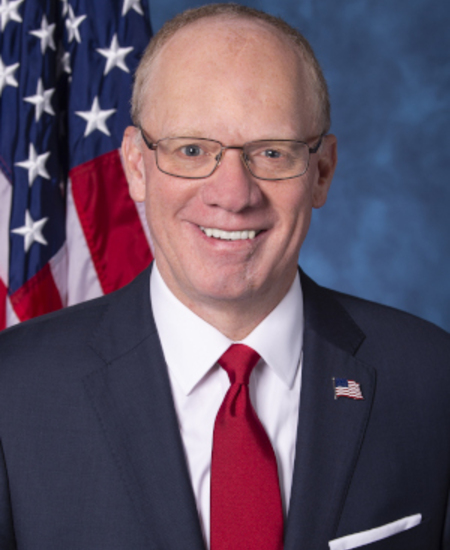
Rep. John W. Rose
Total votes
2,837
all sessions
Attendance
97%
99 missed
Lower than 84% of chamber peers
With party
94%
of cast votes
Near the chamber average
Bipartisan score
3%
crosses aisle rarely
Near the chamber average
Sponsored
707
bills & resolutions
Near the chamber average
Committees
8
assignments
707 bills and resolutions
Sponsored bills
Total
707
Primary
35
Co-sponsor
672
This page
707
matching current filters
Recognizing September 17, 2026, as National Teach Ag Day.
Maddy summaryThis House resolution designates September 17, 2026, as National Teach Ag Day to highlight the contributions of agricultural educators and the National FFA Organization. It formally recognizes the role these groups play in preparing students for leadership and career success in the agriculture sector. The bill also acknowledges the work of over 11,000 educators across the United States and its territories who teach about food and natural resources.
In committee Sep 17, 2026
1 co-sponsor
Aid and Attendance Assistance for Veterans Act
Maddy summaryThe Aid and Attendance Assistance for Veterans Act directs the Secretary of Veterans Affairs to launch a pilot program that contracts with qualified organizations to help veterans and surviving spouses prepare applications for non-service-connected pension benefits, including aid and attendance allowances. These partner organizations would provide services such as eligibility screening, documentation collection, and application packaging to ensure claims are complete before submission to the Department of Veterans Affairs. The bill sets strict qualification standards for participating groups, requiring at least five years of continuous operation, a track record of over 10,000 approved claims, and prohibitions on charging claimants fees or engaging in certain financial planning activities. The pilot is subject to performance evaluations that compare processing times, approval rates, and Medicaid usage against standard claims, with the authority to operate expiring on December 31, 2031.
HealthcareSupports HealthcareThe bill aims to assist veterans and surviving spouses in applying for pension benefits and aid and attendance allowances, which directly relates to providing access to healthcare and financial support for medical needs.
VeteransSupports VeteransThe bill directly aids veterans and surviving spouses in applying for pension benefits and aid and attendance allowances, which strengthens veteran services.
In committee Sep 17, 2026
0 co-sponsors
Supporting the designation of the week of September 20 through September 26, 2026, as "Gold Star Families Remembrance Week".
Maddy summaryThis House resolution supports designating the week of September 20 through September 26, 2026, as "Gold Star Families Remembrance Week." It aims to honor the families of service members and veterans who have died in the line of duty. The bill encourages Americans to observe this annual week by performing acts of community service and celebrating the lives of those who made the ultimate sacrifice.
In committee Sep 16, 2026
1 co-sponsor
Consumer Financial Protection Accountability and Reform Act of 2026
Maddy summaryThe Consumer Financial Protection Accountability and Reform Act of 2026 significantly restructures the Bureau of Consumer Financial Protection by subjecting it to the regular federal appropriations process and establishing an independent Inspector General appointed by the President. The bill restricts the Bureau's supervisory authority over banks and credit unions with assets under $30 billion, allowing these institutions to elect to remain under their existing prudential regulators instead. It also introduces a safe harbor for small-dollar loans of $3,500 or less that meet specific structural requirements, shielding compliant lenders from civil money penalties and private damages. Additionally, the legislation creates federal standards for earned wage access services, requiring providers to offer a no-cost option for early wage access and prohibiting them from treating these services as credit or debt under federal law.
In committee Sep 16, 2026
1 co-sponsor
Data BRIDGE Act
Maddy summaryThe Data BRIDGE Act requires the Federal Communications Commission (FCC) to update its national broadband map within 180 days of enactment by adding agricultural areas as a dedicated layer. This change will directly affect the FCC, USDA, state governments, and broadband providers by incorporating agricultural land data into the map used to identify broadband coverage gaps. The bill mandates the FCC to consult with the USDA, Commerce Department, states, and other stakeholders to integrate existing agricultural data into the map. The goal is to improve accuracy in identifying broadband needs in rural farming communities, though it does not directly fund infrastructure.
In committee Sep 16, 2026
1 co-sponsor
Whistleblower Protection Act of 2025
Maddy summaryThis bill extends existing whistleblower protections to workers on all contracts funded by the Department of Housing and Urban Development (HUD). It applies Section 4712 of U.S. law - which prohibits retaliation against employees reporting fraud or waste - to every HUD contract, subcontract, grant, or personal services agreement, regardless of when the contract was signed. This means employees working on HUD-funded projects can now seek legal protection if they face retaliation for raising concerns about misconduct. The law directly affects HUD contractors and their employees by ensuring they have the same legal safeguards as other federal contract workers.
HousingSupports HousingExtends whistleblower protections to HUD-funded housing projects, preventing fraud/waste in housing programs and strengthening program integrity.
Labor & EmploymentSupports Labor & EmploymentBill extends whistleblower protections to HUD-funded workers, strengthening worker rights against retaliation for reporting fraud.
Passed Sep 16, 2026
1 co-sponsor
AM Radio for Every Vehicle Act of 2025
Maddy summaryThis bill requires all new passenger vehicles manufactured for sale in the U.S. to include AM radio as standard equipment (not an optional add-on) by 2027-2028, depending on manufacturer size. It mandates that AM radio receivers must be easily accessible to drivers and allows compliance through digital AM broadcast technology. During a transition period, manufacturers must clearly label vehicles without AM radio but cannot charge extra for this feature. The bill also mandates a GAO study on AM radio's role in emergency alerts and includes a 10-year sunset provision for the rule. It preempts state laws regarding AM radio access in vehicles.
Passed Sep 16, 2026
1 co-sponsor
To designate the facility of the United States Postal Service located at 417 West 7th Street in Columbia, Tennessee, as the "Pharmacist’s Mate First Class John Harlan Willis Post Office Building".
Maddy summaryThis bill designates the U.S. Postal Service facility at 417 West 7th Street in Columbia, Tennessee, as the "Pharmacist’s Mate First Class John Harlan Willis Post Office Building." It updates all official references (including laws, maps, and documents) to reflect this new name. The bill affects the specific post office location and any federal records mentioning it, without altering postal services or creating new policies. This is a ceremonial naming bill with no substantive policy changes.
Passed Sep 14, 2026
1 co-sponsor
To designate the facility of the United States Postal Service located at 300 Macedonia Lane in Knoxville, Tennessee, as the "Reverend Harold Middlebrook Post Office Building".
Maddy summaryThis bill renames a specific United States Postal Service facility in Knoxville, Tennessee, located at 300 Macedonia Lane, as the "Reverend Harold Middlebrook Post Office Building." It directly affects the USPS location by changing its official name and requires all federal references to the building (in laws, maps, documents, etc.) to reflect the new name. The key provision is the formal designation and updating of all official records to use the new name. This is a ceremonial naming bill with no substantive policy changes.
Passed Sep 14, 2026
1 co-sponsor
Ask Maddy
·
AI policy assistant
Ask Maddy about John W. Rose
Scope: florida
Hi! I can help you understand John W. Rose's legislative record. What would you like to know?
Try one of these
i
Maddy answers using official bill text and legislative records. Always verify before sharing.
Sources cited inline