Maddy summaryHRES 565 designates the week of June 30-July 4, 2025, as "National Tire Safety Week" to promote education about tire maintenance for American motorists. The resolution supports existing safety practices like checking tire pressure monthly (when tires are cold), verifying tread depth (using the penny test), and rotating tires per manufacturer guidelines. It encourages drivers to inspect tires for damage and follow recommended maintenance to reduce risks like underinflation, hydroplaning, and premature wear. As a non-binding resolution, it expresses congressional support for public awareness efforts but does not create new legal requirements.
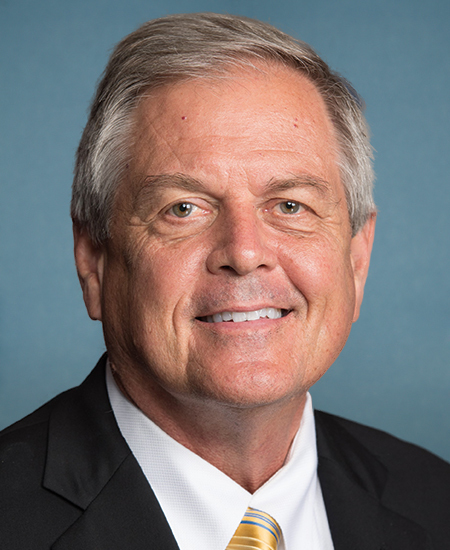
Rep. Ralph Norman
Sponsored bills
Maddy summaryThis bill requires the U.S. government to treat any World Health Organization (WHO) pandemic prevention or response agreement as a treaty needing Senate approval with a two-thirds vote. It directly affects U.S. foreign policy decisions regarding WHO agreements, ensuring the Senate must consent before such treaties take effect. The bill mandates that any WHO pandemic agreement - like the one adopted at the 2025 World Health Assembly - must follow the constitutional treaty process, not be implemented as a less formal executive agreement. This policy change aims to address concerns about WHO's pandemic management and independence, as highlighted by congressional findings.
Maddy summaryHR 4178, the "Enforce the Caps Act," sets specific annual spending limits for non-defense discretionary programs in federal budgets from fiscal years 2026 through 2029. It establishes new budget authority ceilings of $1.622 trillion for 2026, increasing to $1.671 trillion by 2029. These caps directly affect federal agencies managing programs like education, transportation, and scientific research by restricting their annual funding levels. The bill amends the 1985 Balanced Budget Act to insert these fixed spending levels into law, creating binding limits for those fiscal years.
Maddy summaryThe Employee Rights Act (HR 4154) makes several significant changes to labor law. It requires secret ballot elections for union representation, prohibits employees without lawful immigration status from voting in union elections, and establishes new privacy protections for employee information used in organizing campaigns. The bill also changes the criteria for determining employee status under labor laws, creates "independent negotiating" for workers who have left union representation, and restricts what can be included in collective bargaining agreements regarding diversity initiatives. These changes would affect workers, employers, and labor organizations across the United States.
Maddy summaryHR 4092, the Protect RAIL Act, amends U.S. immigration law to make certain crimes involving stolen goods transported by carriers (like trains, trucks, or ships) grounds for denying entry or deporting non-citizens. It adds new inadmissibility and deportability provisions for anyone convicted of theft from interstate or foreign shipments under Title 18, Section 659 of the U.S. Code. The bill directly affects non-citizens who commit these specific theft offenses, making them ineligible to enter the U.S. or subject to removal. This changes immigration consequences for existing criminal offenses, not the crimes themselves.
Maddy summaryThis resolution supports designating the week of June 22-28, 2025, as "National Women’s Sports Week" to commemorate the anniversary of Title IX’s passage (June 23, 1972) and recognize its impact on women’s sports participation. It encourages programs celebrating female athletes, coaches, and equal access to athletic opportunities. The resolution does not create new laws but promotes awareness of Title IX’s role in expanding women’s sports, noting a 545% increase in college and 990% in high school female athletes since its enactment.
Maddy summaryThis bill amends federal law to block Community Development Block Grants (CDBG) from going to local governments that qualify as "sanctuary jurisdictions." A sanctuary jurisdiction is defined as a city or county that restricts sharing immigration status information with federal authorities or refuses to comply with certain immigration detainer requests. The law requires grant recipients to certify they are not sanctuary jurisdictions during the grant period. This directly affects cities and counties with policies limiting cooperation on immigration enforcement, potentially withholding federal funds for housing, infrastructure, and community programs. The exception for jurisdictions not sharing information when victims or witnesses of crimes come forward is included.
Maddy summaryHR 3787, the Emergency Spending Accountability Act, requires the Office of Management and Budget to implement mandatory spending cuts equal to 20% of all emergency spending approved in a fiscal year. These cuts would occur over five years (starting October 1 of the next fiscal year) and apply to most federal programs, though they exempt Social Security benefits, national defense (budget function 050), Department of Veterans Affairs programs, and Medicare. The bill also mandates that any congressional measure containing emergency spending must include a detailed justification explaining why the spending qualifies as "emergency" under existing budget laws. This aims to create accountability for spending that bypasses standard budget limits.
Maddy summaryHR 3912, the Stop the Baseline Bloat Act of 2025, changes how the federal budget baseline is calculated by excluding emergency funding and supplemental appropriations. This affects the annual budget process by removing these funds from the baseline figure used to measure spending limits under the Budget Control Act. The key provision amends the Balanced Budget and Emergency Deficit Control Act to specify that emergency requirements and supplemental funding are not counted in the baseline calculation. As a result, future budget targets will reflect only regular appropriations, not additional emergency or supplemental spending.
Maddy summaryHR 3860, the "No Passports for Terrorists and Traffickers Act," denies or revokes U.S. passports for individuals charged with or convicted of providing material support to terrorism under federal law (18 U.S.C. §§2339A/B) or determined by the Secretary of State to have aided designated foreign terrorist organizations. It directly affects people meeting these criteria by preventing passport issuance or requiring passport cancellation, though limited exceptions allow return travel to the U.S. or humanitarian travel. Key mechanisms include the Secretary of State’s authority to act, a 60-day appeal process for affected individuals, and mandatory reports to Congress on each denial or revocation. The bill explicitly excludes medicine and religious materials from its definition of "material support," which covers items like money, training, transportation, or weapons. This law changes passport policy for specific terrorism-related cases without altering broader constitutional rights.