Social Security Disability Insurance Return to Work Act This bill makes various changes to Social Security Disability Insurance (SSDI), with a particular focus on returning individuals who receive SSDI to employment. Among other changes, the bill limits the amount of time an individual with a disability for which medical improvement is likely or expected may receive SSDI benefits, and it requires the Social Security Administration to establish a process to allow such individuals who return to employment before their benefits expire and whose earnings exceed a specified limit to receive an adjusted SSDI benefit.
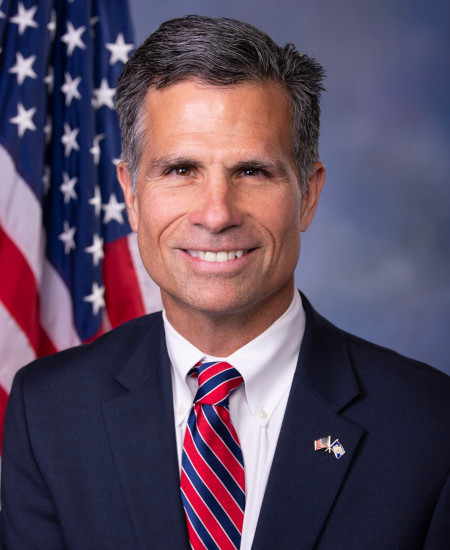
Rep. Daniel Meuser
Sponsored bills
American Workforce Investment in Next Generation of Students Act This bill directs the Secretary of Education to award grants to eligible entities to carry out a program for students to enroll in and complete science, technology, engineering, and mathematics (STEM) courses, STEM-focused career and technical education courses, and other career pathway courses during grades 11 and 12 at a secondary school served by a local educational agency (LEA) partner; enroll in a course of study related to such a career pathway or in a youth apprenticeship program at a partner community college upon graduating from the secondary school; enroll, for a two-year period, in the youth apprenticeship program or the joint-labor management training program upon receiving an associate's degree from a partner community college; receive assistance from a student career workforce navigator; and receive work training and job placement through a workforce development consortium employer established under the bill. An eligible entity is a partnership (1) among at least one LEA, at least one community college, and at least one youth apprenticeship program or joint labor-management training program; and (2) that works with an employer in a state-identified high-skill, high-wage, or in-demand industry sector or occupation that is serving, or seeking to expand its capacity to serve, youth apprenticeship programs.
School Milk Nutrition Act of 20 21 This bill revises requirements for milk provided by the National School Lunch Program of the Department of Agriculture. The bill permits schools participating in the program to offer students low-fat flavored milk.
This resolution denounces socialism and opposes the implementation of socialist policies in the United States.
Holding Iranian Leaders Accountable Act of 2021 This bill requires the President to report on the estimated total funds held in domestic and international financial institutions by certain Iranian leaders, and it requires the Department of the Treasury to brief Congress on any illicit or corrupt means employed to acquire or use such funds.
Value in Health Care Act of 2021 This bill makes a series of changes to certain methodologies and components used in the Medicare Shared Savings Program. The program enables accountable care organizations (ACOs) to receive payments for savings stemming from care coordination and management. Among other changes, the bill requires the Centers for Medicare & Medicaid Services to increase the shared savings rate for participating ACOs, as specified, and to establish a program that assists ACOs with start-up and operational costs of participation. The bill also extends certain incentive payments for health professionals who participate in eligible alternative payment models. The Government Accountability Office must report on health outcomes and racial disparities among beneficiaries who receive care from providers under alternative payment models compared to beneficiaries who receive care from providers under the traditional fee-for-service system.
Entrepreneurs Need Timely Replenishment (for) Eating Establishments Act or the ENTRÉE Act This bill provides FY2021 supplemental appropriations for the Restaurant Revitalization Fund and modifies requirements related to administration of the fund. The fund was established in response to COVID-19 to make grants to eligible food and beverage purveyors for covering specified costs such as payroll, operational expenses, and paid sick leave. The bill correspondingly rescinds unobligated amounts previously made available for the Economic Injury Disaster Loan Program and coronavirus state and local fiscal recovery funds. Further, the bill requires the Small Business Administration (SBA) to (1) review and process grant applications in the order in which they are received; (2) impose requirements on applicants that reduce waste, fraud, and abuse; and (3) submit and report monthly on an oversight and audit plan outlining the SBA's policies, procedures, and activities with respect to these grants.
Home for the Brave Act of 2021 This bill excludes from income veterans' service-connected disability or death benefits for purposes of determinations made in connection with the Department of Housing and Urban Development's housing assistance programs.
This bill provides supplemental FY2021 appropriations to the National Guard for its response to the events at the U.S. Capitol on January 6, 2021. The bill designates the funding as emergency spending, which is exempt from discretionary spending limits.
Technical Reset to Advance the Instruction of Nurses Act or the TRAIN Act This bill modifies the methodology and application of Medicare Advantage nursing and allied health education payments for hospitals. Specifically, for 2010-2019, the bill eliminates the annual cap on total payments and excludes any resulting increase from factoring into calculations for graduate medical education payments for such hospitals. (The Centers for Medicare & Medicaid Services recently issued guidance providing for the recalculation and correction of certain payments to account for the annual payment cap.)