

International Human Rights Defense Act of 2021 This bill establishes in the Department of State a permanent Special Envoy for the Human Rights of LGBTQI (lesbian, gay, bisexual, transgender, queer, or intersex) Peoples who shall serve as the principal State Department advisor regarding human rights for LGBTQI people and represent the United States in diplomatic matters relevant to the human rights of LGBTQI people. The special envoy shall periodically provide Congress with a U.S. global strategy to prevent and respond to criminalization, discrimination, and violence against LGBTQI people. The State Department and the U.S. Agency for International Development may provide assistance to prevent and respond to such activities against LGBTQI people. The bill also requires that annual country reports on human rights practices include information on criminalization, discrimination, and violence based on sexual orientation and gender identity.
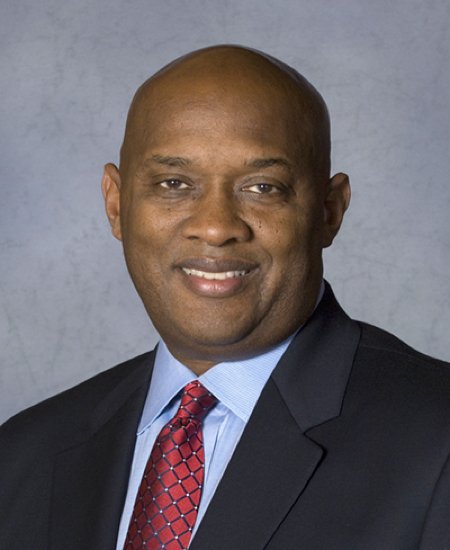
Rep. Dwight Evans
Sponsored bills
This joint resolution nullifies the rule finalized by the Social Security Administration on November 16, 2020, that outlines when its administrative appeals judges may hold hearings and issue decisions on individual cases. Currently, these judges serve an appellate function where they review, at the request of Social Security claimants, the decisions of the administrative law judges who issue decisions in individual cases.
This resolution urges the Department of State to take action on unpaid Peruvian agrarian reform bonds by encouraging Peru to negotiate in good faith with U.S. bondholders regarding payment of these bonds.
Public Servants Protection and Fairness Act of 2021 This bill establishes an alternative formula to calculate Social Security retirement benefits for those who receive pensions for certain non-covered employment. (The existing formula is known as the windfall elimination provision.) The alternative formula adjusts an individual's total lifetime earnings based on the proportion of covered earnings (i.e., earnings subject to Social Security payroll taxes). It applies to individuals who (1) first become eligible for benefits after 2022, (2) have earnings from non-covered service performed after 1977, and (3) have less than 30 years of coverage (i.e., years in which a beneficiary is considered to have contributed a substantial amount into the Social Security trust funds). Beneficiaries receive the higher benefit amount as calculated under the alternative method or the existing formula. In addition, the bill provides rebates for certain beneficiaries currently impacted by the existing formula. The Social Security Administration must include non-covered earnings in Social Security account statements, and the Government Accountability Office must study the availability of certain information related to retirement plans maintained by state and local governments.
Energy Efficient Qualified Improvement Property Act of 2021 or the E-QUIP Act This bill allow straight line depreciation over a 10-year period of energy efficient qualified improvement property. The bill defines energy efficient qualified improvement property as any improvement to a building that is nonresidential real property, or multifamily residential rental property, first placed in service more than 10 year before the enactment of this bill, and that is installed as part of the lighting system, the heating, cooling, ventilation, or hot water systems, or the building envelope. The improvement must meet specified performance and other requirements.
Automatic Voter Registration Act This bill provides for automatic voter registration of individuals through state motor vehicle authorities. Specifically, the bill requires each state motor vehicle authority, upon receiving specified identifying information regarding an individual who requests services from the authority, to transmit the identifying information to the appropriate state election official. The state election official must then notify the individual that the individual shall be automatically registered to vote in federal elections unless the individual declines to be registered to vote, does not meet voter registration eligibility requirements, or is already registered to vote. The bill provides an individual with a 21-calendar day period to opt out of automatic voter registration. A state may only use identifying information regarding an individual's citizenship status for determining whether the individual is eligible to vote in federal elections.
Mentoring and Supporting Families Act This bill establishes demonstration projects for peer support, mentoring, and career coaching under the Health Profession Opportunity Grants program, which supports organizations that provide low-income individuals with education and training for health care occupations. Specifically, the Administration for Children and Families (ACF) must award grants to organizations that provide case management plans to help participants develop workforce skills on an ongoing basis. The ACF must give preference to project applications that provide participants with a cash stipend.
Historic Tax Credit Growth and Opportunity Act of 2021 This bill increases the rehabilitation tax credit and modifies certain requirements for the credit. The bill increases the rate of the credit for qualified rehabilitation expenditures in taxable years beginning after December 31, 2019, and before January 1, 2027, after which the rate reverts to 20%. The bill increases the rate of the credit to 30% for certain small projects whose qualified rehabilitation expenditures do not exceed $2.5 million. The bill also expands the types of buildings eligible for rehabilitation by decreasing the rehabilitation threshold from 100% to 50% of project expenses. It also eliminates the basis adjustment requirement for the credit and modifies rules relating to tax-exempt use property eligible for the credit.
Supporting Accurate Views of Emergency Services Act of 2021 or the 911 SAVES Act This bill requires the Office of Management and Budget, by 30 days after the bill's enactment, to categorize public safety telecommunicators as a protective service occupation under the Standard Occupational Classification System.
Equitable Data Collection and Disclosure on COVID-19 Act of 2021 This bill expands data collection and reporting on demographic information and disparities related to COVID-19 (i.e., coronavirus disease 2019). During the COVID-19 emergency, the Centers for Disease Control and Prevention (CDC) and the Centers for Medicare & Medicaid Services must publish data on COVID-19 testing, treatment, vaccinations, and outcomes on the CDC website. They must update the data daily and disaggregate it by race, ethnicity, and other demographic factors. In addition, the Indian Health Service must consult with tribal nations about COVID-19 data collection and reporting. The Department of Health and Human Services must make a summary of final statistics related to COVID-19 publicly available and report specified information to Congress within 60 days of the end of the COVID-19 emergency. The bill also establishes the Commission on Ensuring Data for Health Equity. The commission must determine approaches to using data to reduce disparities in health outcomes, including specifically with respect to COVID-19. In addition, it must provide recommendations to improve demographic data collection and use in future public health emergencies.