

Maddy summaryThe Aid and Attendance Assistance for Veterans Act directs the Secretary of Veterans Affairs to launch a pilot program that contracts with qualified organizations to help veterans and surviving spouses prepare applications for non-service-connected pension benefits, including aid and attendance allowances. These partner organizations would provide services such as eligibility screening, documentation collection, and application packaging to ensure claims are complete before submission to the Department of Veterans Affairs. The bill sets strict qualification standards for participating groups, requiring at least five years of continuous operation, a track record of over 10,000 approved claims, and prohibitions on charging claimants fees or engaging in certain financial planning activities. The pilot is subject to performance evaluations that compare processing times, approval rates, and Medicaid usage against standard claims, with the authority to operate expiring on December 31, 2031.
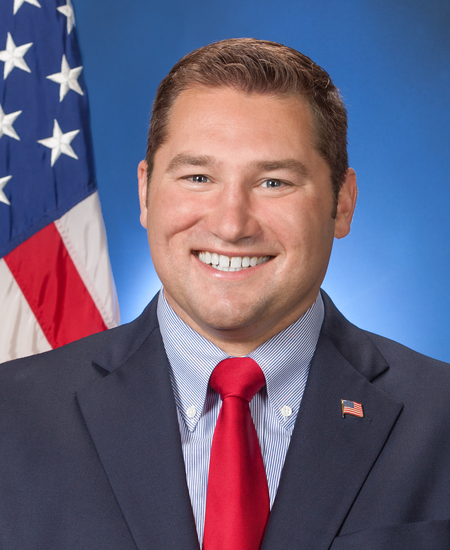
Rep. Guy Reschenthaler
Sponsored bills
Maddy summaryThis bill requires all new passenger vehicles manufactured for sale in the U.S. to include AM radio as standard equipment (not an optional add-on) by 2027-2028, depending on manufacturer size. It mandates that AM radio receivers must be easily accessible to drivers and allows compliance through digital AM broadcast technology. During a transition period, manufacturers must clearly label vehicles without AM radio but cannot charge extra for this feature. The bill also mandates a GAO study on AM radio's role in emergency alerts and includes a 10-year sunset provision for the rule. It preempts state laws regarding AM radio access in vehicles.
Maddy summaryThe Make Apportionment Great Again Act would change how U.S. House seats are distributed among states by excluding noncitizens from the population count used for apportionment. It requires the Secretary of Commerce to recalculate state populations using existing federal and state government records, without conducting a new census, and mandates that future censuses include a question on citizenship status. The bill establishes a legal presumption that any resulting changes in seat allocation are valid, allowing courts to overturn them only with clear evidence of statutory or constitutional violations. Additionally, it creates an expedited judicial process for legal challenges, requiring cases to be heard by three-judge panels and permitting direct appeal to the Supreme Court.
This bill designates the facility of the United States Postal Service located at 6 Pennsylvania Avenue in Matamoras, Pennsylvania, as the "PFC Edward Kuhn Memorial Post Office".
Maddy summaryThis bill directs the Joint Committee on the Library to acquire a statue honoring baseball player and humanitarian Roberto Clemente for permanent display in the U.S. Capitol or on its grounds. The legislation requires that artists from diverse backgrounds, including the Puerto Rican community, be considered for the commission, with public announcements made to reach these candidates. Funding for the project is authorized through transfers from the Capitol Preservation Fund, capped at a total of $500,000.
Maddy summaryThe Right to Worship Act makes it unlawful for individuals to knowingly disrupt religious services or prevent people from entering houses of worship within 100 feet of an entryway during the hour before and after a scheduled service. The bill applies to conduct that meaningfully interferes with a service's normal operation or unreasonably hinders participation, while explicitly allowing free speech as long as it adheres to these specific time, place, and manner restrictions. Violators face escalating civil fines ranging from $2,500 for a first offense to $10,000 for subsequent offenses, assessed by the Attorney General. Additionally, the act permits aggrieved individuals, the U.S. Attorney General, or state attorneys general to file civil lawsuits seeking injunctive relief, compensatory damages, and attorney fees.
Maddy summaryThis bill establishes a legal framework allowing banks and credit unions to provide financial services to businesses operating marijuana or hemp industries under state laws without fear of losing federal protections. It specifically shields these institutions from penalties, insurance termination, or liability if they accept deposits or make loans to state-sanctioned marijuana or hemp companies. The legislation also clarifies that income from these businesses can be used to qualify for federally backed mortgages and requires regulators to update guidance on how to handle suspicious activity reports related to these sectors. Additionally, the bill mandates annual reports and studies to assess access to banking services for minority-owned and small businesses within the industry.
Protecting Privacy in Purchases Act This bill prohibits payment card networks from using merchant codes that distinguish firearms retailers from general-merchandise retailers or sporting-goods retailers. The Department of Justice must enforce this bill and report annually on the resulting investigations and cases.
Maddy summaryThe Jewish American Security Act aims to combat antisemitism by strengthening protections for Jewish students, securing Jewish communities, and increasing transparency regarding online hate speech. For educational institutions receiving federal funds, the bill mandates the creation of specific coordinators to handle discrimination complaints, requires annual training on handling antisemitism, and establishes a new federal clearinghouse to share best practices for campus safety. To support physical security, the legislation expands grant funding for nonprofit organizations and directs the Attorney General to provide resources for law enforcement agencies protecting houses of worship. Additionally, the act requires major online platforms with over 50 million monthly users to submit detailed reports to the Federal Trade Commission on how they detect, remove, and moderate antisemitic content.
Maddy summaryHR 4398, the Veteran Burial Timeliness and Death Certificate Accountability Act, requires Veterans Affairs (VA) physicians or nurse practitioners to certify the death of a veteran who dies of natural causes within 48 hours of learning of the death. This directly affects veterans' families, who previously faced delays of up to eight weeks in burial and access to survivor benefits due to slow death certifications. The bill mandates annual reports to Congress on VA compliance with the 48-hour rule, including statistics on delays and their causes. The key change is establishing a strict timeline for death certification to prevent unnecessary delays in honoring veterans' final arrangements.