

Advancing Human Rights-Centered International Conservation Act of 2022 This bill requires the U.S. Fish and Wildlife Service (USFWS) to take actions to ensure that the international financial assistance it provides does not go to any foreign security force unit (e.g., a military or paramilitary unit) where there is a reasonable belief that the unit has committed a gross violation of internationally recognized human rights. The USFWS must conduct risk analysis to ensure that a recipient (or subrecipient) of a grant does not fund or support any such unit. The prohibition against providing funding to such a unit shall not apply if the applicable government is taking effective steps to (1) bring the responsible members of the unit to justice, and (2) prevent gross violations of internationally recognized human rights by the unit in the future. The USFWS must take other actions to prevent funding such a unit, such as (1) coordinating with the Department of State on procedures for vetting potential assistance recipients, (2) publicly identifying units that are barred from receiving assistance, (3) requiring assistance recipients to provide certain information and to implement a safeguards plan, and (4) requiring periodic financial and programmatic audits of assistance recipients. The bill also requires (1) a grant recipient to report credible information about possible human rights violations involving a grant to the USFWS and the relevant diplomatic or consular post, (2) the program awarding the grant to investigate such allegations, and (3) the Office of the Inspector General of the Department of the Interior to investigate certain cases referred by the USFWS.
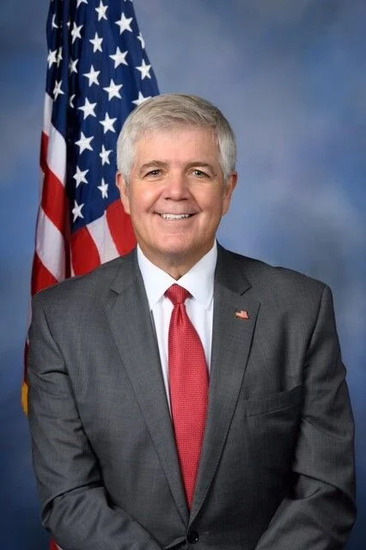
Rep. Cliff Bentz
Sponsored bills
This joint resolution nullifies the final rule issued by the Council on Environmental Quality titled National Environmental Policy Act Implementing Regulations Revisions and published on April 20, 2022. The rule restores regulatory provisions issued under the National Environmental Policy Act of 1969 (NEPA) that were in effect before being modified in 2020 by the Update to the Regulations Implementing the Procedural Provisions of the National Environmental Policy Act rule.
This bill ensures that members of the Armed Forces who were granted a general discharge under honorable conditions (on the sole basis that the members failed to obey a lawful order to receive a vaccine for COVID-19) are eligible for Department of Veterans Affairs educational assistance under the Montgomery GI Bill-Active Duty and Post-9/11 GI Bill programs.
This concurrent resolution expresses the sense of Congress that (1) it opposes the establishment of a new U.S. consulate in Jerusalem for outreach to Palestinians, (2) any establishment of a new consulate or diplomatic mission in Jerusalem should not move forward without congressional approval through the passage of new legislation, and (3) the presence of a U.S. diplomatic mission devoted to a non-state actor in Israel's sovereign capital would be an affront to the territorial integrity of a long-standing U.S. partner and ally.
Border's Unused Idle and Lying Dormant Inventory Transfer Act or the BUILD IT Act This bill requires the federal government to transfer, upon request, materials associated with the construction of a barrier along the U.S.-Mexico border to the governments of the states along that border (i.e., Arizona, California, New Mexico, and Texas). The transferred materials must be used to construct a barrier along the U.S.-Mexico border.
Maddy summaryThis bill amends the Endangered Species Act to require the Secretary of the Interior to issue protective regulations for endangered species, changing the current "may" to "shall" for this action. It clarifies that such regulations can prohibit activities listed in Section 9 (like harming species or their habitats) but only apply in states that haven't adopted equivalent rules through cooperative agreements. The bill also updates Section 9 to reference these new regulations. This change directly affects how federal protections are implemented for species listed as endangered, ensuring consistent conservation measures nationwide unless states adopt their own rules.
Federal Columbia River Power System Certainty Act This bill requires Federal Columbia River Power System (FCRPS) operations to be consistent with a specified decision. The system includes dams in the Columbia and Snake rivers in the Pacific Northwest. Specifically, the Bureau of Reclamation, the Bonneville Power Administration, and the U.S. Army Corps of Engineers must operate the FCRPS consistent with the Columbia River System Operations Environmental Impact Statement Record of Decision dated September 2020. The preferred alternative outlined in that decision would allow specified dams in the lower Snake River to remain in place. The decision may be amended if each agency determines that (1) changes are necessary for public safety or electrical grid reliability, or (2) certain requirements in the decision are no longer necessary. Further, the bill requires statutory authorization for any structural modification, action, study, or engineering plan that (1) restricts FCRPS hydroelectric dam generation; or (2) limits navigation on the Snake River in Washington, Oregon, or Idaho.
Securing Our Students Act This bill authorizes local educational agencies and nonpublic schools to use certain COVID-19 emergency relief funds, services, or assistance for school safety uses, that is improving school conditions for student learning by planning and designing school buildings and facilities, installing infrastructure, providing safety education, and implementing technology or other measures that strengthen security on school premises.
Community Services Block Grant Modernization Act of 2022 This bill reauthorizes the Community Services Block Grant program through FY2032 and otherwise modifies the program. The program supports various antipoverty activities, primarily through formula-based allotments to states, Indian tribes, and territories. In particular, the bill makes changes to the program's administration and leadership; performance measurement; and allotments to states and territories. The bill also expands eligibility for services and activities funded by the program to 200% of the federal poverty line (FPL). Under current law, eligibility is generally set at the FPL.
Trust the Science Act This bill directs the Department of the Interior to remove protections for the gray wolf under the Endangered Species Act of 1973 (ESA). Specifically, the bill requires Interior to reissue the final rule titled Endangered and Threatened Wildlife and Plants; Removing the Gray Wolf (Canis lupus) From the List of Endangered and Threatened Wildlife and published on November 3, 2020. The rule removed the gray wolf in the lower 48 United States, except for the Mexican wolf ( C. l. baileyi ) subspecies, from the endangered and threatened species list. However, the U.S. District Court for the Northern District of California vacated the rule on February 10, 2022. As a result, the gray wolf reattained the protection status it had prior to the rule's promulgation. The bill also prohibits the reissuance of the rule from being subject to judicial review.