

Safe Schools Improvement Act This bill requires states to direct their local educational agencies (LEAs) to establish policies that prevent and prohibit bullying and harassment of elementary and secondary school students. In particular, these policies must prohibit bullying and harassment based on race, color, national origin, disability, religion, or sex. Sex includes sexual orientation, gender identity, and sex characteristics (including intersex traits). Further, LEAs must provide (1) students, parents, and educational professionals with annual notice of the conduct prohibited in their disciplinary policies; (2) students and parents with grievance procedures that target such conduct; and (3) the public with annual data on the incidence and frequency of that conduct at the school and LEA level. The Department of Education must conduct and report on an independent biennial evaluation of programs and policies to combat bullying and harassment in elementary and secondary schools. The National Center for Education Statistics must collect state data to determine the incidence and frequency of the conduct prohibited by LEA disciplinary policies.
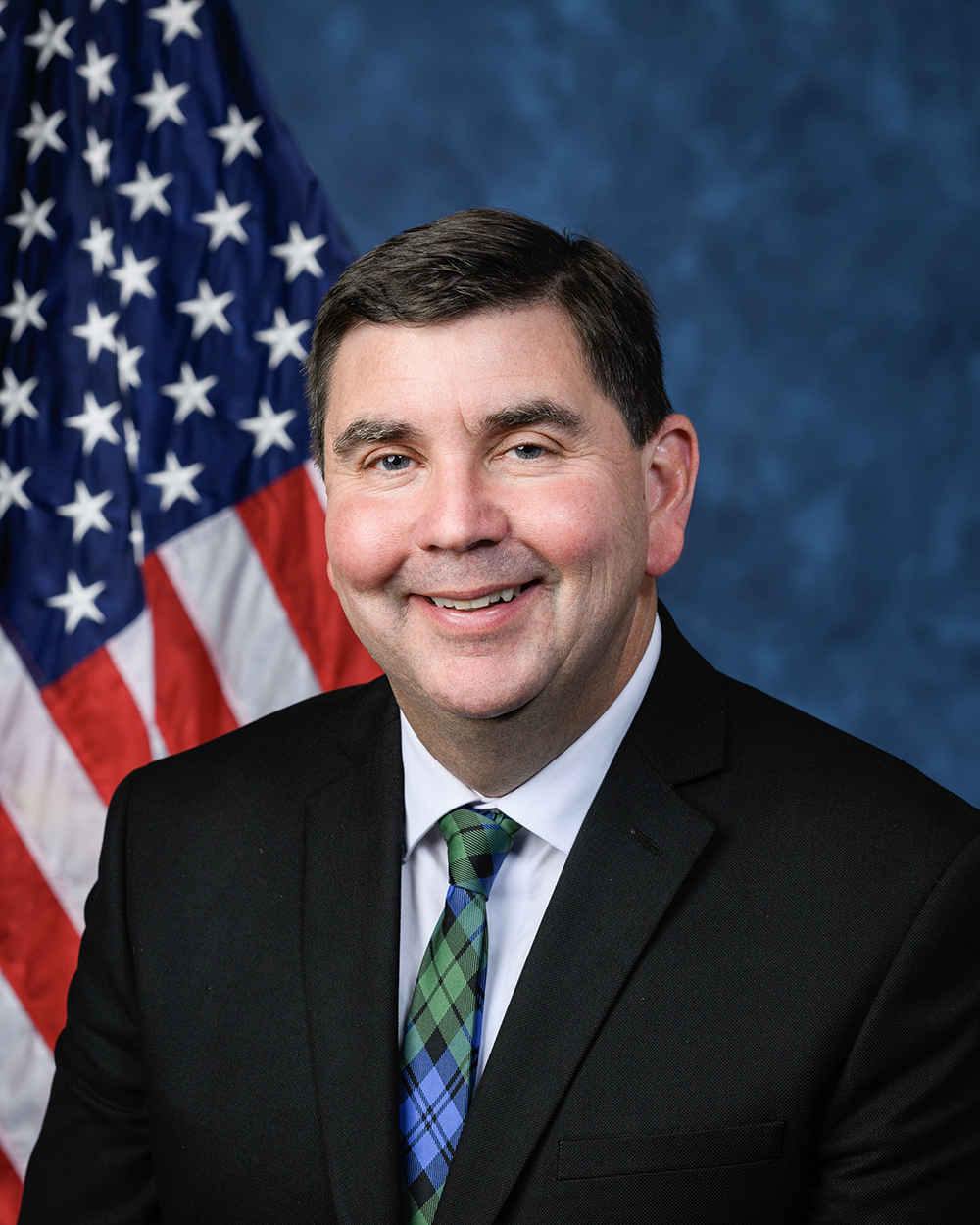
Rep. John W. Mannion
Sponsored bills
Maddy summaryHR 1383 extends the Secure Rural Schools program, which provides payments to counties and states with federal land (like national forests) to support local schools and services. It reauthorizes these payments through fiscal year 2026, adding specific rules to ensure counties don’t receive duplicate payments for 2024 and 2025. The bill also extends related authorities for special projects on federal land and county fund expenditures through 2028-2029. This directly affects rural communities adjacent to federal lands that rely on these payments for education and infrastructure.
Maddy summaryThis bill (HJRES 63) would rename the Robert E. Lee Memorial, a National Park Service site in Arlington, Virginia, to "Arlington House National Historic Site." It directly affects the National Park Service, which manages the site, and all federal government documents, maps, and records referencing the location. The key provision updates all official references to the site to the new name and repeals two prior resolutions that established the memorial. As a procedural renaming bill, it does not create new policies or funding but changes the site's official designation.
Maddy summaryThe Social Security Expansion Act increases Social Security benefits for retirees and disabled workers by raising the first bend point percentage from 90% to 95% and adding an 18% increase for individuals eligible after 2025. It extends benefit eligibility for children who are full-time students until age 22 (from age 19 for most children) and establishes a new minimum benefit based on years worked, with higher percentages for longer work histories (ranging from 11.25% for 11 years to 125% for 30+ years). The bill also changes the cost-of-living adjustment to use the Consumer Price Index for Elderly Consumers and adds new taxes on income above $250,000 and investment gains, increasing the tax rate on investment gains from 3.8% to 16.2%. These changes will primarily affect retirees, disabled workers, children of beneficiaries, and high-income earners.
Maddy summaryHR 1707, the Grown in America Act of 2025, creates a new tax credit for agricultural businesses that use predominantly domestically produced inputs. The credit equals 25% of a business's domestic agricultural input costs (capped at $100 million annually), but only if the business meets a 3-year average threshold for domestic sourcing (starting at 50% in 2026 and rising to 85% after 2033). It directly affects food and agricultural producers who source inputs like crops or fish raised in the U.S. for products sold domestically without further processing. The bill defines "domestic agricultural input costs" as expenses for U.S.-produced commodities used in U.S.-made food products, excluding certain commodities listed by the Secretary of Agriculture.
Maddy summaryHR 1695, the Guarding Readiness Resources Act, clarifies how the National Guard Bureau handles reimbursement funds from states. It requires that funds received from states (including Puerto Rico, DC, Guam, and the Virgin Islands) for using military property must be credited to specific accounts and can only be used by the Department of Defense for repairing, maintaining, or replacing assets directly supporting National Guard units operating under state control. This bill directly affects states that reimburse the National Guard Bureau and ensures these funds are restricted to maintaining military assets, not general purposes.
Maddy summaryThe American Dream and Promise Act of 2025 would create pathways to permanent residency for certain immigrant youth who entered the U.S. as children (Dream Act component) and for individuals from countries with Temporary Protected Status or Deferred Enforced Departure (American Promise Act component). To qualify, applicants must meet continuous physical presence requirements (since January 1, 2021 for Dream Act applicants, and for 3+ years for American Promise applicants), pass background checks, and satisfy educational or employment criteria. Conditional permanent resident status would be granted initially, with the option to convert to full permanent residency after meeting additional requirements like earning a degree, serving in the military for two years, or demonstrating three years of earned income. The bill includes fee exemptions for low-income applicants, establishes a grant program to assist applicants with legal help, and creates specific procedures for background checks and appeals.
Maddy summaryHRES 166 is a non-binding House resolution expressing U.S. support for the Iranian people's desire for a democratic, secular, and nonnuclear republic. It condemns the Iranian regime's terrorism, regional proxy wars, internal suppression of ethnic and religious minorities, and human rights abuses - including executions and repression of women-led protests. The resolution calls for holding the regime accountable through sanctions, supports the Ten-Point Plan for Iran’s democratic transition, and urges protection for Iranian political refugees in Albania. It does not create new laws but affirms U.S. policy alignment with Iranian protesters' demands.
Maddy summaryThis bill awards a Congressional Gold Medal to the 761st Tank Battalion (known as the "Black Panthers"), the first predominantly Black armored unit in World War II's European Theater. It recognizes their combat service from 1944-1946, including key roles in the Battle of the Bulge and breaking the Siegfried Line, despite facing racial prejudice during and after the war. The medal will be displayed at the National Museum of African American History and Culture, with bronze duplicates available for sale to cover costs. The bill commemorates the battalion's 130,000 enemy casualties inflicted, 50% casualty rate, and their 1978 Presidential Unit Citation. It does not create new laws or affect current policies.
Maddy summaryHR 1637, the Protect Veteran Jobs Act, allows veterans who were involuntarily dismissed without cause from federal civil service positions between January 20, 2025, and the bill’s enactment date to seek reinstatement to their former role or a qualified position. It directly affects eligible veterans dismissed during this period and requires federal agencies to report quarterly on veteran removals, including the number and reasons for each dismissal. Agencies must submit these reports to specified congressional committees until January 20, 2029, when the reporting requirement ends. The bill aims to restore employment opportunities for affected veterans while increasing transparency around federal hiring and dismissal practices.