

Maddy summaryThe Moms Matter Act directs the Department of Health and Human Services to create two main grant programs aimed at improving maternal mental health and reducing health disparities among pregnant and postpartum individuals. The first program provides funding to community organizations and healthcare providers to expand services that integrate mental health care into prenatal and postpartum settings, with a specific focus on groups facing higher risks of mortality and morbidity. The second program offers grants to educational institutions to train and recruit a diverse workforce of mental health professionals who specialize in caring for pregnant and postpartum patients. Both initiatives require recipients to submit annual reports on their activities and outcomes, while the legislation authorizes $25 million and $15 million respectively for each program from fiscal years 2027 through 2031.
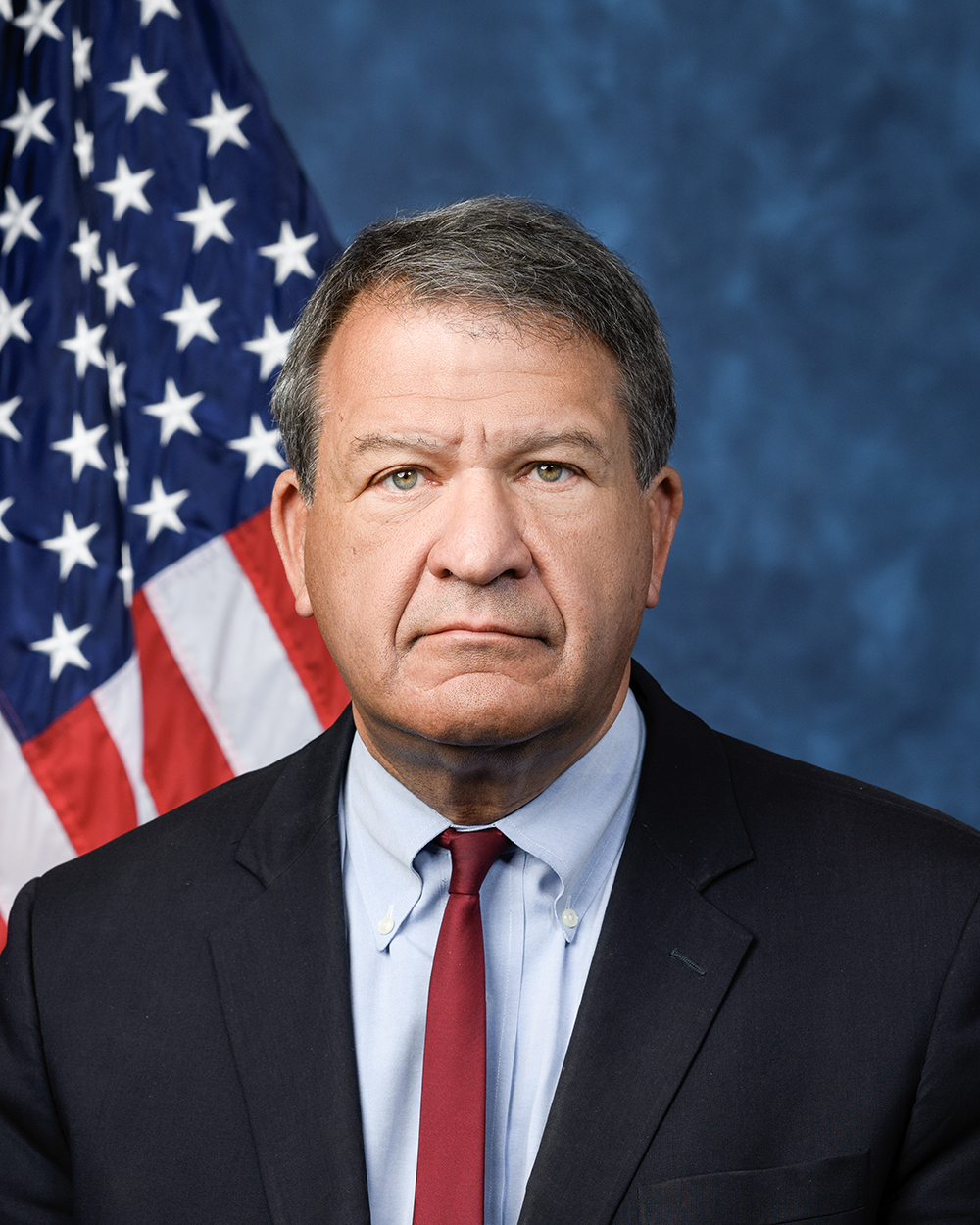
Rep. George Latimer
Sponsored bills
Maddy summaryThe Maternal Health Pandemic Response Act allocates $200 million to the Centers for Disease Control and Prevention to improve data collection, surveillance, and research on how public health emergencies affect pregnant and postpartum individuals. This funding supports efforts to gather detailed demographic information on maternal health outcomes, establish regional centers of excellence, and expand surveys to better reach underrepresented communities. The legislation also requires the CDC to make this data publicly available in a disaggregated format while protecting patient privacy, and mandates public education campaigns to ensure accurate information reaches families and healthcare providers. Additionally, the bill creates a diverse task force to develop federal recommendations for respectful maternity care during emergencies, addressing issues such as telehealth access, doula coverage, and the treatment of mental health and substance use disorders. These measures aim to reduce health disparities and improve care quality for pregnant people from racial and ethnic minority groups during public health crises.
Maddy summaryThis bill designates the U.S. Chancery building in Pristina, Kosovo, as the "Eliot L. Engel Building" to honor a specific individual. It requires all future legal documents, maps, and official records to use this new name instead of the current designation. The change is purely symbolic and does not alter the building's function or the operations of the U.S. government in Kosovo.
Maddy summaryHRES 64 is a non-binding House resolution affirming the U.S.-South Korea alliance. It highlights historical ties (dating to 1882), economic partnerships (including 2023 trade data), and security cooperation (like the 1953 Mutual Defense Treaty), while celebrating Korean American contributions to U.S. society. The resolution formally supports strengthening security, economic, and cultural ties between the two nations and notes the 2025 anniversary of Korean liberation. It does not create new laws or funding, but serves as a symbolic statement of congressional support for the alliance.
Maddy summaryThis bill would amend federal law to strengthen penalties for organized retail crime by expanding definitions of theft to include digital goods, gift cards, and setting a $5,000 aggregate value threshold for charges over a 12-month period. It would establish a new "Organized Retail and Supply Chain Crime Coordination Center" under Homeland Security to coordinate Federal, State, local, and Tribal law enforcement efforts against cross-jurisdictional theft groups. The Center would share information with retailers, transportation companies, and law enforcement agencies, track crime trends, and produce annual reports on organized retail crime. This legislation directly affects retailers, supply chain businesses, and law enforcement agencies, while targeting organized crime groups responsible for a 93% increase in larceny incidents and rising safety concerns for retail employees. The bill aims to address significant financial losses and supply chain disruptions noted in the National Retail Federation's 2023 data.
Maddy summaryThe Connected Vehicle Security Act of 2026 restricts the importation, sale, and manufacture of vehicles and related technology from specific countries, including China, Russia, Iran, and North Korea, to address national security concerns. The law defines prohibited items as connected vehicles, their software, and hardware components and sets different effective dates, with vehicle bans starting in 2027 and hardware restrictions beginning in 2030. A government official can grant exceptions for specific items after reviewing security risks and notifying Congress, while the agency must publish annual reports on enforcement actions and compliance.
Maddy summaryThe Assault Weapon Financing Accountability Act prohibits the use of "Buy Now, Pay Later" loans to purchase semiautomatic assault weapons. This ban applies to both lenders offering these short-term credit products and dealers who accept such loans for firearm sales. The bill defines "semiautomatic assault weapons" based on specific physical features like pistol grips, forward grips, and high-capacity magazines, and sets a civil penalty of $100,000 for violations by lenders or sellers.
Maddy summaryThe Vote by Mail Protection Act of 2026 directly affects the federal government by nullifying Executive Order 14399, which previously required citizenship verification in federal elections. This legislation prohibits any federal agency from enforcing the order or using taxpayer funds to carry out its activities. By repealing the executive order, the bill removes the mandate for agencies to verify citizenship as a condition for voting in federal elections.
Maddy summaryThe Afterschool for All Act significantly increases funding for the Community Learning Centers program, raising the annual appropriation from $1 billion to $10 billion for the fiscal years 2026 through 2035. This expansion aims to support after-school programs in elementary and secondary schools, directly benefiting students and educational institutions that rely on these grants. Additionally, the bill amends the name of the relevant section in the Elementary and Secondary Education Act to remove the term "21st Century," and it raises the corporate income tax rate from 21% to 22% for taxable years beginning after the law is enacted.
Maddy summaryThis resolution expresses the House of Representatives' support for keeping United States troops as part of the Kosovo Force (KFOR). The bill directly affects the roughly 600 U.S. military personnel currently stationed in Kosovo and the NATO mission they support. It asserts that maintaining this presence is vital for stabilizing the region amid ongoing tensions between Kosovo and Serbia. The text urges that American forces remain in Kosovo until the peace mission is fully completed.