Maddy summaryThis bill modifies the $800 de minimis exemption for small shipments entering the U.S. duty-free. It excludes goods from nonmarket economy countries and nations on the U.S. trade "priority watchlist" from this exemption. Importers must submit detailed documentation (including origin, value, shipper details, and classification) to U.S. Customs within 180 days of enactment. Providing false information could result in $5,000 civil penalties per violation. The changes apply to shipments entered on or after 180 days after the bill’s enactment.
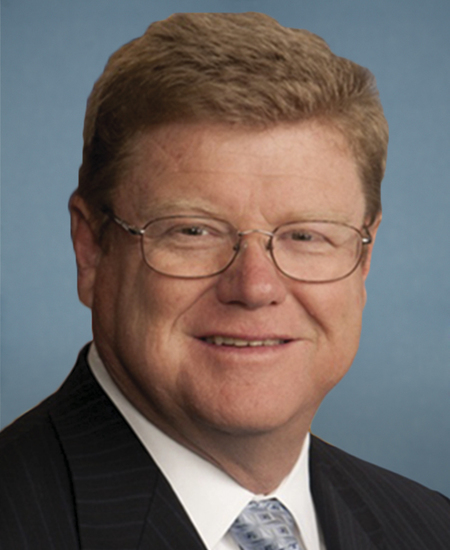
Rep. Mark E. Amodei
Sponsored bills
Maddy summaryThe PASTEUR Act establishes a new subscription payment model to incentivize development of new antimicrobial drugs for resistant infections. It creates a Committee on Critical Need Antimicrobials and a Subscription Contract Office to manage payments based on specific drug characteristics like treating multi-drug resistant infections, novel mechanisms of action, and oral administration. Under this model, the government would pay drug developers up to $3 billion over 10 years for qualifying drugs, with payments tied to requirements like ensuring drug availability, reporting resistance data, and developing appropriate use plans. The bill aims to address the lack of new antimicrobial drugs by changing the funding model to reward drugs that meet specific clinical and public health needs.
Maddy summaryThe PREPARE Act of 2023 creates a 23-member federal Commission to study how to regulate cannabis similarly to alcohol, focusing on preparing the government for potential federal legalization. The Commission will examine barriers like racial disparities in criminalization, limited financial access for cannabis businesses, research restrictions, youth protection, and revenue collection systems. It will gather public input from state regulators, industry stakeholders, and formerly incarcerated individuals, then publish final recommendations within one year. This bill directly affects federal agencies (like DOJ, HHS, and Treasury), state cannabis regulators, and communities disproportionately impacted by current prohibition. The Commission has no authority to create new laws but will advise Congress and the President on regulatory pathways.
Maddy summaryHR 2474, the "Strengthening Medicare for Patients and Providers Act," changes how Medicare pays physicians for services. It replaces the previous two-part payment system (used through 2025) with a single annual payment rate update starting in 2024. This update will be based on the Medicare Economic Index (MEI), which tracks costs for medical providers. The change directly affects Medicare-certified doctors and clinics who receive payments under the physician fee schedule.
Maddy summaryThis bill would require Medicare to cover FDA-approved blood tests that screen for multiple cancers simultaneously (like breast, lung, or colorectal cancer) for beneficiaries. It directly affects Medicare recipients aged 65+ who could access these new screenings once per year, without prior authorization. The key provision adds "multi-cancer early detection screening tests" to Medicare's covered services under Part B, defining them as blood tests analyzing cell-free DNA, while maintaining existing coverage for standard screenings like mammograms. The bill does not change current coverage for individual cancer screenings but ensures Medicare keeps pace with new medical technology.
Maddy summaryHR 1666 extends deadlines for ambulance service reimbursement rules under Medicare. It amends Section 1834(l) of the Social Security Act by changing dates from 2025 to 2028 in two specific provisions: paragraph (12)(A) and paragraph (13)(A). This delay gives ambulance providers additional time to adjust to existing Medicare payment rules. The bill directly affects Medicare-certified ambulance services and the patients relying on ground ambulance care covered by Medicare.
Maddy summaryThe Prevent Interruptions in Physical Therapy Act of 2023 amends Medicare rules to allow physical therapists to use temporary replacement providers (locum tenens) for outpatient physical therapy services, aligning with existing provisions for physicians. This directly affects Medicare beneficiaries receiving physical therapy and physical therapy practices needing temporary staffing solutions during provider shortages. The bill updates the Social Security Act to extend the current physician locum tenens rule to physical therapists, ensuring continuity of care without requiring separate approval for temporary coverage. It applies to services furnished after the bill's enactment date.
Maddy summaryHR 1610 would modernize Medicare coverage for chiropractic care by removing the current restriction that limited beneficiaries to one chiropractic service per visit. It expands coverage to include all services provided by licensed chiropractors within their state-authorized scope, aligning Medicare with VA, military, and private insurance practices. The bill requires chiropractors to complete a Secretary-approved educational webinar to cover non-spinal services, while still allowing payment for spinal manipulation treatments without this requirement. This directly affects Medicare beneficiaries seeking chiropractic care and chiropractors seeking Medicare reimbursement for their services.
Maddy summaryThis bill amends Medicare rules to allow nurse practitioners and physician assistants to document medical necessity for diabetic shoes, a requirement currently limited to physicians. It directly affects Medicare beneficiaries with diabetes who need these shoes and expands the pool of providers (nurse practitioners and physician assistants) who can fulfill the documentation requirement. The key change inserts "nurse practitioner, or physician assistant" into Medicare's documentation standards for diabetic shoe coverage. This simplifies access for patients by enabling more healthcare providers to support coverage approval without requiring a physician's signature. The bill does not change coverage eligibility or costs, only the documentation process.
Maddy summaryHR 1586, the Forest Protection and Wildland Firefighter Safety Act of 2023, exempts certain fire suppression activities from requiring permits under the Clean Water Act. It directly affects federal agencies like the Forest Service, National Park Service, and Bureau of Land Management, as well as state, local, and tribal governments conducting wildfire response. The bill's key provision removes the need for a Section 402 permit under the Clean Water Act when these covered entities discharge fire retardants, chemicals, or water for fire control or prevention. This change streamlines firefighting operations by eliminating a specific permitting step during active wildfire events.