

Maddy summaryThis bill requires wagering and prediction market platforms to use facial recognition technology to verify that all users are over 18 years old before allowing them to place bets or orders. To protect user privacy, the law mandates that these platforms collect only the data strictly necessary for age verification and must delete any such data once it is no longer needed. The Federal Trade Commission is given the authority to enforce these age verification rules and can issue penalties for violations. Additionally, the legislation establishes a new Office of the Retail Advocate and an Advisory Council within the Commodity Futures Trading Commission to better protect individual investors and oversee the regulation of event contracts.
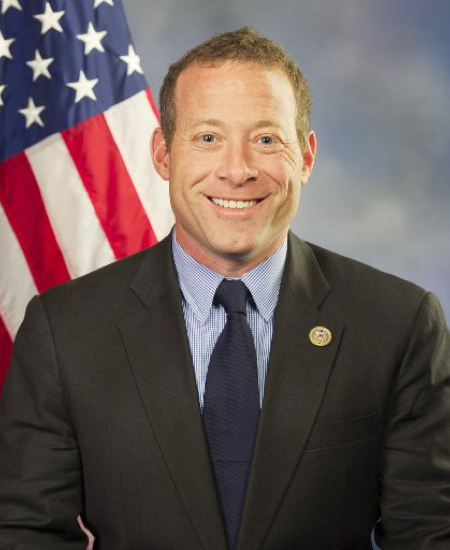
Rep. Josh Gottheimer
Sponsored bills
Maddy summaryHR 6556, the Failing Bank Acquisition Fairness Act, modifies rules for merging failing banks to prevent financial instability. It allows regulators to bypass standard concentration limits (which restrict bank size) when merging banks in default or danger of default, but only if they prove the merger is necessary to avoid economic disruption and no "qualified bid" exists from a well-capitalized, well-managed institution. The bill requires regulators to submit detailed justifications to Congress within 30 days for such waivers, including analysis of alternative bids. It also prohibits considering bids that would violate these new rules when calculating the least costly resolution for the Deposit Insurance Fund. This directly affects the FDIC, bank regulators, and financial institutions involved in resolving failing banks.
Maddy summaryThis bill requires Medicare Advantage plans to implement electronic pre-approval systems for medical services by 2028 and meet transparency reporting standards starting in 2027. Plans must publicly report data on approval/denial rates, appeal outcomes, response times, and technology use for pre-approval requests, including details on how denials relate to clinical criteria. It establishes a 24-hour response timeframe for certain requests and mandates annual reviews of pre-approval requirements based on data and input from seniors and providers. The law directly affects Medicare Advantage plans, seniors enrolled in these plans, and healthcare providers who submit pre-approval requests. These changes aim to make the pre-approval process faster, more transparent, and more accountable for seniors seeking covered medical services.
Maddy summaryThe FARM AI Act of 2026 directs the U.S. Department of Agriculture to prioritize artificial intelligence in its research, extension programs, and workforce training initiatives. This legislation requires the department to update its funding categories to include AI projects that enhance precision farming, resource management, and cybersecurity while adding specific training for implementing computing systems and maintaining agricultural machinery. To oversee these efforts, the bill establishes a new position called the Artificial Intelligence Agriculture Advisor, who will coordinate with the National Institute of Standards and Technology to develop national standards and promote the adoption of digital tools among farmers and rural communities.
Maddy summaryThe Cure Hepatitis C Act of 2026 establishes a federal program to eliminate hepatitis C by creating a subscription model that allows the government to purchase antiviral drugs directly from manufacturers and distribute them at no cost to specific patient groups. These groups include individuals in Medicaid or CHIP programs, those without health insurance, patients in correctional facilities, and those receiving care through the Indian Health Service. The bill also expands Medicare coverage by removing deductibles and copayments for hepatitis C treatments between 2028 and 2032. To support these efforts, the legislation authorizes funding for state grants to improve screening and treatment access, mandates the creation of a national strategy and performance dashboard, and requires coordination with various federal agencies and stakeholders.
Maddy summaryThis bill directs the U.S. Secretary of State to create and execute a plan to end the operations of the United Nations Relief and Works Agency for Palestine Refugees in the Near East (UNRWA) across the Middle East. The legislation requires a detailed strategy that assesses current programs like education and healthcare, identifies new organizations to take over these services, and outlines how to fund and oversee the transition without interrupting aid. Once the plan is submitted to Congress, the State Department must begin implementing it within a year while coordinating with host countries and international partners. The bill emphasizes maintaining service continuity and ensuring that any successor groups meet strict standards for transparency and accountability.
Maddy summaryThe BUSES Act establishes a national minimum standard requiring that restrictions on bus engine idling cannot last for less than 15 minutes, applying to both over-the-road and school buses. This rule prevents states and local governments from enforcing shorter idling limits through their existing air quality plans. Additionally, the legislation prohibits private citizens from suing bus owners or operators for violating these idling rules and bans state programs that pay individuals for reporting such violations.
Maddy summaryThis bill requires investment companies and transfer agents to collect contact information for a trusted person when serving "specified adults" (individuals 65+ or with impairments affecting their ability to protect their interests). It allows these entities to temporarily delay cash payments from investments (up to 15 business days, extendable by 10 more days) if they reasonably suspect financial exploitation during a redemption request. The delay period requires written notification to the trusted contact, internal review, and holding funds securely. The bill aims to prevent exploitation by giving companies time to verify situations before releasing funds. It also mandates record-keeping and future SEC reporting on financial exploitation risks.
Maddy summaryThis bill aims to remove a tax disadvantage known as the "marriage penalty" for couples filing jointly under the State and local tax deduction. It achieves this by adjusting the dollar limits and income thresholds so that married couples filing jointly receive twice the deduction amount available to single filers, while married individuals filing separately receive half. These changes are designed to ensure that married couples do not pay more in taxes solely because they are married. The provisions would take effect for tax years beginning after December 31, 2026.
Maddy summaryThe Jewish American Security Act aims to combat antisemitism by strengthening protections for Jewish students, securing Jewish communities, and increasing transparency regarding online hate speech. For educational institutions receiving federal funds, the bill mandates the creation of specific coordinators to handle discrimination complaints, requires annual training on handling antisemitism, and establishes a new federal clearinghouse to share best practices for campus safety. To support physical security, the legislation expands grant funding for nonprofit organizations and directs the Attorney General to provide resources for law enforcement agencies protecting houses of worship. Additionally, the act requires major online platforms with over 50 million monthly users to submit detailed reports to the Federal Trade Commission on how they detect, remove, and moderate antisemitic content.