

Real Economic Support That Acknowledges Unique Restaurant Assistance Needed To Survive Act of 2021 or the RESTAURANTS Act of 2021 This bill temporarily establishes and provides funding for the Restaurant Revitalization Fund, from which the Department of the Treasury shall make grants to eligible food and beverage purveyors to cover specified costs such as payroll, operational expenses, and paid sick leave. For the grant program's initial period, Treasury must (1) prioritize awarding grants to marginalized and underrepresented communities, and (2) only award grants to eligible food and beverage purveyors with annual revenues of less than $1.5 million in 2019. For tax purposes, grant amounts are excluded from the recipient's gross income. An entity that received a loan under the Paycheck Protection Program established to support small businesses in response to COVID-19 (i.e., coronavirus disease 2019) may not apply for or use a restaurant revitalization grant for the same expenses for which the entity received the paycheck protection loan. Further, a grant applicant may request an additional amount to cover the cost of providing 10 days of paid sick leave to its employees. Treasury must report a list of grant recipients with the amount each recipient received, as well as demographics and other specified information.
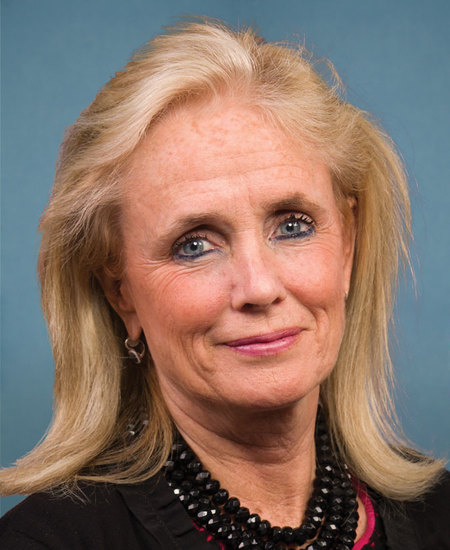
Rep. Debbie Dingell
Sponsored bills
Family and Medical Insurance Leave Act or the FAMILY Act This bill entitles every employee to a family and medical leave insurance (FMLI) monthly benefit payment of two-thirds of the employee's regular pay, limited to a maximum of $4,000, for not more than 60 days of qualified caregiving. The bill establishes the Office of Paid Family and Medical Leave within the Social Security Administration to administer the FMLI program. An FMLI benefit payment must be coordinated with any periodic benefits received under a state or local temporary disability insurance or family leave program. The bill imposes a tax on employers, employees, and self-employed individuals to fund FMLI benefits. It also establishes the Federal Family and Medical Leave Insurance Trust Fund to hold tax revenues.
Scientific Integrity Act This bill revises provisions regarding the release of scientific research results by federal agencies. Each agency that funds, conducts, or oversees scientific research must (1) adopt and enforce a scientific integrity policy that includes requirements such as that scientific conclusions are not based on political considerations, and (2) submit such policy to the Office of Science and Technology Policy (OSTP) for approval. Each agency must make such policy available to the public and submit such policy to Congress. Agencies and the OSTP must periodically review the policies. The Government Accountability Office shall review implementation of the policies. Each agency shall (1) appoint a Scientific Integrity Officer, (2) establish a process for dispute resolution consistent with the scientific integrity policy, and (3) establish a specified training program for current and new employees.
Restoring Communities Left Behind Act This bill directs the Department of Housing and Urban Development to establish a grant program for local partnerships to carry out neighborhood revitalization support activities in economically distressed areas. Eligible activities include weatherization and energy efficiency improvements; housing accessibility improvements for seniors and persons with disabilities; purchasing delinquent mortgages; purchasing and developing vacant or distressed properties to create affordable rental housing and for other purposes; and improving parks, sidewalks, and street lighting.
Secure Data and Privacy for Contact Tracing Act of 2021 This bill establishes grants for state, tribal, and territorial health departments to incorporate digital contact tracing technology in COVID-19 (i.e., coronavirus disease 2019) contact tracing programs. The Centers for Disease Control and Prevention must award the grants. Any technology developed or procured with these grants must meet privacy, security, and other conditions. Grantees that acquire technology that does not meet these conditions lose eligibility for this, and future, funding for COVID-19 contact tracing technology. In addition, federal privacy standards for personal health information expressly apply to information transmitted or maintained by grant-funded programs. Current law restricts the use and disclosure of personal health information by health care providers, health plans, health clearinghouses, and their business associates. However, there is an exception to these standards for information used by, or disclosed to, a public health authority. The bill also prohibits the use of data derived from the contact tracing technology in legal proceedings or for immigration enforcement. The Government Accountability Office must evaluate this program.
FEMA Climate Change Preparedness Act This bill requires the Federal Emergency Management Agency (FEMA) to (1) revise its 2018-2022 Strategic Plan to ensure that the plan explicitly mentions climate change and addresses the implications of climate change on homeland security and near- and long-term national disaster risk, and (2) ensure that future strategic plans do likewise. The Department of Homeland Security must establish, as a subcommittee of the National Advisory Council, the Climate Change Subcommittee, which shall advise FEMA on how to best incorporate climate change, including risk assessments and strategies for adaptation and mitigation, into and throughout FEMA's policies, plans, programs, and operations. FEMA must publish as a report, submit to specified congressional committees, and make available to Congress and the public, a comprehensive assessment of climate change risks and preparedness.
Wear Your Mask Act This bill requires each federal agency to take action to ensure that an individual is required to wear a face mask inside a federal facility under its jurisdiction if the individual is within six feet of another individual to minimize the transmission of COVID-19 (i.e., coronavirus disease 2019). Each agency shall make face masks available at each entrance to a federal facility at which such agency maintains a presence. The bill terminates such requirements when the National Institute of Allergy and Infectious Diseases determines, and publishes in the Federal Register a notification, that the requirement to wear a mask is no longer necessary to prevent such transmission.
Temporary Reciprocity to Ensure Access to Treatment Act or the TREAT Act This bill temporarily authorizes the interstate provision of in-person and telehealth services. This authorization applies during, and for at least 180 days after, the COVID-19 (i.e., coronavirus disease 2019) emergency. Specifically, subject to scope of practice and other requirements, a health care professional may provide health services in any U.S. jurisdiction based on that individual's authorization to practice in any one state or territory. The bill also provides certain related powers to health care professional regulatory bodies, such as medical boards. Specifically, a regulatory body may investigate and take disciplinary actions against a professional who provides services pursuant to this bill to a patient in that body's jurisdiction.
This resolution expresses support for a National Day of Mourning for the lives lost as a result of COVID-19 (i.e., coronavirus disease 2019).
USPS Fairness Act This bill repeals the requirement that the U.S. Postal Service annually prepay future retirement health benefits.