Maddy summaryThe PEARL Act directs the U.S. Customs and Border Protection agency to create a pilot program that adopts dogs from local animal shelters to serve as support animals for its existing canine unit. This initiative is designed to provide emotional assistance to the handlers and agents who work with these dogs, with the program set to run for a three-year period. By requiring the adoption of shelter dogs, the legislation also aims to support local animal welfare organizations while enhancing the well-being of CBP personnel.
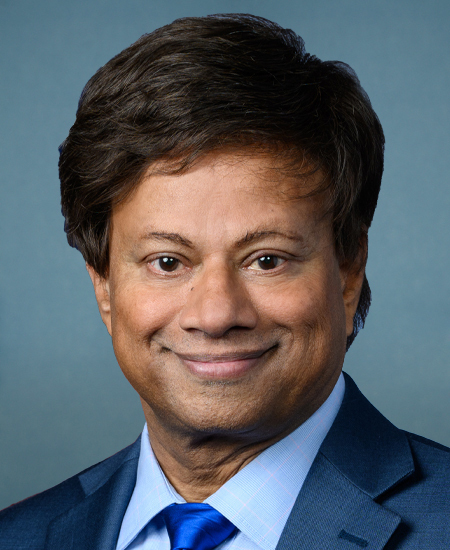
Rep. Shri Thanedar
Sponsored bills
Maddy summaryThis bill would require Medicare to cover early detection screening tests for Alzheimer's disease and related dementias starting January 1, 2028. It defines eligible tests as FDA-cleared genomic blood tests, blood product analyses, or equivalent medical imaging methods (like protein expression or whole genome sequencing) that detect pre-symptomatic or early-stage conditions. Medicare beneficiaries would receive this coverage without cost-sharing for these specific screenings. The bill amends Medicare coverage rules to explicitly include these tests under Section 1861(nnn) of the Social Security Act.
Maddy summaryThe Survivors' Rights Restitution Act of 2026 establishes a federal compensation program administered by the Attorney General for victims of sexual assault, abuse, trafficking, or exploitation involving Jeffrey Epstein or Ghislaine Maxwell, as well as victims whose rights were violated by the federal government. Petitions are filed with the United States Court of Federal Claims and assigned to special adjudicators who must be mental health professionals or experts in victim services, civil rights law, or claims administration. The process is designed to be informal and less adversarial than standard litigation, with decisions required within 120 days and a minimum compensation award of $123,000. Compensation is funded by a dedicated Treasury account that accepts forfeited assets and voluntary contributions, and payments are exempt from federal income tax and means-tested benefit calculations.
Maddy summaryThe WIC for Kids Act expands eligibility for the Special Supplemental Nutrition Program for Women, Infants, and Children (WIC) to include children in households receiving Head Start services, food assistance on Indian reservations, or nutrition block grants in Puerto Rico, American Samoa, and the Northern Mariana Islands. The bill extends the standard certification period for WIC-eligible children from one year to two years and allows state agencies to align recertification dates for all eligible family members within a household. Additionally, it requires states to automatically certify infants born to participating mothers without requiring a new application and grants automatic eligibility to children in kinship care arrangements.
Maddy summary# Summary of Digital Commodities and Blockchain Technology Regulatory Framework This comprehensive legislation establishes a new regulatory framework specifically for digital commodities and blockchain technology, creating a balanced approach that protects investors while fostering innovation. ## Key Components 1. **New Regulatory Structure**: - Creates new categories for digital commodity exchanges, brokers, and dealers under the Commodity Futures Trading Commission (CFTC) - Establishes "qualified digital asset custodians" as a new regulatory category - Defines "mature blockchain systems" with special regulatory treatment 2. **Core Requirements**: - Mandates segregation of customer assets and strict custody requirements - Requires robust risk management systems - Sets capital requirements for digital commodity brokers and dealers - Establishes new disclosure and reporting obligations - Defines "blockchain control persons" with special restrictions on selling digital commodities 3. **Innovation-Focused Provisions**: - Creates a "Strategic Hub for Innovation and Financial Technology" (FinHub) at the SEC - Establishes "LabCFTC" as a dedicated innovation lab within the CFTC - Provides exemptions for SEC-registered entities from certain CFTC requirements - Includes provisions for expedited hiring of digital commodities experts 4. **Studies and Research**: - Mandates studies on decentralized finance (DeFi) - Requires a study on non-fungible tokens (NFTs) - Directs a study on financial literacy among digital commodity holders - Requires a study on tokenized securities and derivatives 5. **Exclusions**: - Excludes decentralized finance activities from regulation - Excludes certain blockchain-related activities from regulatory requirements The legislation aims to create a functional regulatory framework that acknowledges the unique benefits and risks of digital commodities while ensuring investor protection, preventing market manipulation, and promoting the responsible development of this emerging technology within the United States. It seeks to prevent the shift of digital commodity development to less regulated countries by establishing a clear, balanced regulatory path.
Maddy summaryThe Local Communities & Bird Habitat Stewardship Act of 2025 establishes the Urban Bird Treaty Program, which provides grants and technical assistance to local groups - including cities, nonprofits, community organizations, and academic institutions - to protect and restore urban bird habitats. Key provisions include funding for habitat restoration (e.g., removing invasive species and planting native plants), reducing urban bird hazards, and engaging communities in monitoring and education. The program, administered by the National Fish and Wildlife Foundation, authorizes $1 million annually from 2026 to 2032 for projects focused on conserving urban bird populations through collaborative local efforts. It directly affects communities seeking to enhance green spaces and support bird conservation in populated areas.
National Law Enforcement Officers Remembrance, Support and Community Outreach Act. [ sic ] This bill temporarily directs the Department of the Interior to award a grant to the National Law Enforcement Officers Memorial Fund for the expenses associated with operating and enhancing the community outreach, public education, and officer safety and wellness programs of the National Law Enforcement Museum.
Maddy summaryThis House resolution formally recognizes suicide as a serious public health problem in the United States and expresses support for designating September 2026 as National Suicide Prevention Month and September 10, 2026, as World Suicide Prevention Day. The bill cites data from the CDC, SAMHSA, and the VA to highlight that suicide is a leading cause of death among young people, veterans, and during the postpartum period, while also noting the significant economic costs associated with it. It declares suicide prevention a national priority and emphasizes that mental health is as important as physical health. The resolution supports the development of strategies to improve access to quality mental health, substance abuse, and suicide prevention services for all communities.
Maddy summaryThis House resolution formally recognizes suicide as a significant public health issue in the United States and highlights the impact of the 988 Suicide and Crisis Lifeline on individuals and communities. It commends the establishment of the 988 number as a nationwide three-digit dialing code for crisis support, noting its role in connecting people to mental health resources. The bill supports the designation of September 8, 2026, as "988 Day" to raise awareness about the service and promote access to mental health care. Additionally, it encourages continued public education and federal, state, and local efforts to expand crisis intervention programs for high-risk populations.