

Maddy summaryHR 7183, the Youth Financial Learning Act, provides federal grants to state education agencies to integrate financial literacy education into public elementary and secondary schools. It directly affects schools by funding programs teaching consumer finance, credit, student loans, and financial aid through school-based curriculum, after-school partnerships with community organizations, and teacher training. Key provisions require states to provide 25% matching funds, prioritize high-need schools, ensure geographic diversity in program access, and use funds to supplement - not replace - existing education resources. The grants, available for up to four years, aim to enhance students' practical financial knowledge as part of a well-rounded education.
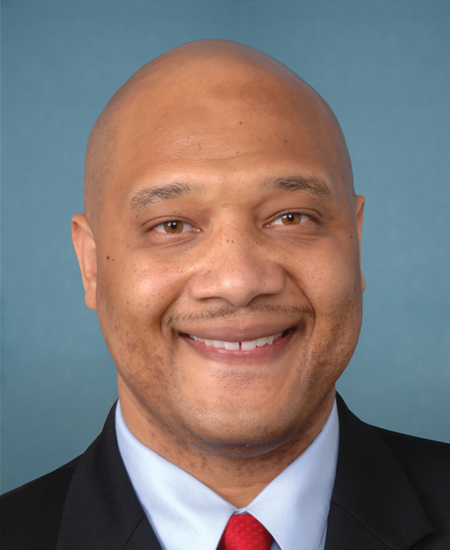
Rep. André Carson
Sponsored bills
Maddy summaryHR 7173, the Follow the Science Act, restricts political appointees from influencing National Institutes of Health (NIH) operations and grant decisions. It prohibits most political appointees (defined broadly as those in policy-making roles) from being employed by NIH or participating in grant reviews, funding selections, or policy implementation. The bill requires the NIH Director to report on past political appointee involvement in these activities to Congress within 30 days of enactment. These changes aim to ensure NIH decisions are based on scientific merit rather than political influence, with limited exceptions for other federal agencies.
Maddy summaryThis bill requires federal agencies that use or fund complex AI systems (called "covered algorithms") to establish civil rights offices staffed by experts. These offices must monitor and report on potential bias in algorithms affecting programs like benefits, housing, or loans, particularly regarding traits like race, gender, or disability. Agencies must submit detailed reports every two years starting one year after the bill passes, outlining risks, mitigation steps, stakeholder engagement, and recommendations. The law also creates an interagency working group to coordinate efforts across agencies. It directly affects any federal agency using or overseeing such AI systems, aiming to prevent unfair outcomes through transparency and accountability.
Maddy summaryHR 7100 establishes a Department of Justice Task Force on Anti-Sikh Hate and Discrimination to address systemic bias against Sikhs. The Task Force must draft a formal definition of anti-Sikh hate for DOJ use, develop educational programs for law enforcement and schools, and produce annual reports on hate crimes and trends. It requires quarterly collaboration with Sikh organizations and translation of materials into Punjabi. The bill directly affects Sikhs in the U.S. (who face disproportionate targeting as noted in FBI data) and mandates federal agencies to improve hate crime data collection and response. This is a policy-focused measure to standardize definitions, enhance reporting, and support community safety through DOJ action.
Maddy summaryThe Healthcare Reinvestment Act repeals and rescinds funds previously allocated for healthcare under a prior law, redirecting them to extend federal tax credits that help people afford health insurance. This extension ensures eligible individuals can continue receiving these credits without annual budget constraints, maintaining access to financial assistance for health coverage. The bill also requires the Treasury to publish annual reports on fund usage and undergo audits to ensure transparency and accountability in how the funds are applied.
Maddy summaryHRES 1001 is a House resolution requesting the President and Secretary of State to provide the House with specific documents related to U.S. policy on Greenland. It directs them to submit all communications (including emails, meeting notes, and records) created since January 2025 about potential U.S. ownership of Greenland, U.S. relations with Denmark, security agreements under the 1951 defense pact, and diplomatic engagements concerning recent statements about Greenland. The resolution focuses on transparency regarding the Administration's stance, including discussions with Danish and Greenlandic authorities and assessments of legal implications under NATO and UN obligations. This procedural request does not change policy but seeks documentation for congressional oversight.
Maddy summaryHRES 996 is a resolution introduced by multiple House members to impeach Kristi Lynn Arnold Noem, the Secretary of Homeland Security, for alleged violations of law and the Constitution. It outlines three articles of impeachment: obstructing congressional oversight by denying access to detention facilities and withholding funds, violating public trust through warrantless arrests and excessive force (including tear gas on children), and self-dealing by awarding federal contracts to associates without competitive bidding. If approved by the House, this resolution would formally charge Noem, triggering a Senate trial to determine her removal from office. The resolution itself does not enact new policy but initiates the constitutional impeachment process against a sitting Cabinet official.
Maddy summaryHR 926, the Fort Pillow National Battlefield Park Study Act, directs the Secretary of the Interior to conduct a special resource study of Fort Pillow Historic State Park in Tennessee. The study will evaluate the site's national significance and determine if designating it as a National Battlefield Park is suitable and feasible. This bill does not change the park's current status as a state park (established 1971) or its existing National Register and National Historic Landmark designations. The study is prompted by the historical importance of the 1864 Fort Pillow Massacre, particularly its impact on U.S. Colored Troops during the Civil War, as detailed in congressional findings. The bill itself is procedural, focusing solely on authorizing the study to inform potential future designation.
Maddy summaryHRES 995 is a symbolic resolution supporting Korean American Day, commemorating January 13 as the anniversary of the 1903 arrival of the first large wave of Korean immigrants to the U.S. It urges all Americans to recognize Korean Americans' contributions to U.S. society, economy, and U.S.-South Korea relations, honoring their historical journey and ongoing impact. The resolution has no legal effect or policy changes - it serves solely as a formal acknowledgment of cultural heritage.
Maddy summaryHRES 990 is a resolution recognizing the 113th anniversary of Delta Sigma Theta Sorority, Incorporated, founded in 1913 at Howard University. It honors the sorority's century of community service and global initiatives, including its focus on education, economic development, and international outreach. The resolution is symbolic and non-binding, celebrating the organization's legacy without creating new policy or affecting specific groups. It was introduced by multiple House members in January 2026.