

Maddy summaryHR 7591 requires the U.S. Department of Education to develop and distribute annual firearm safety best practices to schools, focusing on secure storage methods and suicide prevention resources. The bill mandates that local school districts create community-specific guidance incorporating these best practices, to be shared with students, parents, and staff annually before the start of each school year. It specifies that materials must include practical storage solutions (like locks and safes), mental health resources, and neutral information about firearm safety without promoting or discouraging gun ownership. The law directly affects schools receiving federal funding under the Elementary and Secondary Education Act, aiming to reduce firearm-related injuries and suicides through education, not by changing gun ownership laws.
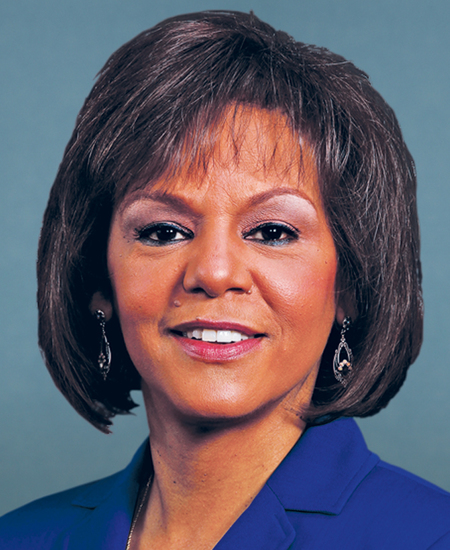
Rep. Robin L. Kelly
Sponsored bills
Maddy summaryHR 7599 creates a federal framework for extreme risk protection orders (ERPOs), allowing family members or law enforcement to petition courts to temporarily prohibit individuals from possessing firearms when they pose a risk of harm to themselves or others. The bill establishes a process for issuing ex parte orders (up to 14 days) followed by a hearing within 72 hours to determine if a longer-term order (up to 180 days) should be issued, requiring respondents to surrender firearms to U.S. Marshals or designated law enforcement. Courts must consider specific factors like recent threats, violence, substance abuse, or cruelty to animals before issuing orders, with no fees for petitioners. The law requires law enforcement training to address bias, includes annual reporting requirements, and ensures firearms are returned once the order expires and the individual is eligible to own firearms under federal law.
Maddy summaryHRES 1066 is a non-binding resolution expressing the House of Representatives' condolences to the families of five victims killed in a 2019 mass shooting at a warehouse in Aurora, Illinois. It honors the memory of Russell Beyer, Vicente Juarez, Clayton Parks, Josh Pinkard, and Trevor Wehner, while commending the Aurora Police Department officers and emergency responders who were wounded during the incident. The resolution does not create new laws but serves as a symbolic gesture of solidarity with the Aurora community and victims of gun violence nationwide.
Maddy summaryThis bill modifies tax rules for public school bonds to make certain financing more accessible. It allows school districts to issue bonds for building, repairing, or acquiring school facilities (with 100% of funds used for these purposes) and treat them as tax-exempt, reverting to the pre-December 2017 tax treatment. The key provision reopens a prior tax rule that had expired, enabling districts to use advance refunding bonds for school construction without triggering tax penalties. It directly affects public school districts seeking to finance physical school infrastructure through bond financing. The change applies to bonds issued after the bill's enactment date.
Maddy summaryThis bill requires states to cover 12 annual telehealth mental health visits for Medicaid enrollees who were recently incarcerated in a public institution and are under court-ordered home confinement. It amends Medicaid law to mandate this coverage specifically for individuals released from prison and subject to home confinement, effective after the bill's enactment. The provision applies to all states operating under Medicaid plans or waivers, ensuring consistent access to mental health support during the reentry phase. It directly affects formerly incarcerated individuals transitioning from prison to home supervision, focusing on accessible mental health care through telehealth. The policy change is limited to Medicaid-covered telehealth visits during the period of home confinement, with no additional funding specified.
Maddy summaryThis bill requires most employers to provide workers with earned paid sick leave. Employees would earn 1 hour of paid sick time for every 30 hours worked, up to 56 hours per year, which can be used for their own illness, medical care, caring for family members (including children, parents, spouses, domestic partners, or other family-like relationships), or addressing domestic violence, sexual assault, or stalking situations. The bill prohibits employers from retaliating against workers who use this leave and requires employers to inform employees about their rights. It ensures that workers who leave and return to the same employer within a year can reinstate their unused sick leave. This law would not override more generous state or local paid leave policies.
Maddy summaryThis bill establishes a 12-member National Council on African American History and Culture within the National Endowment for the Humanities (NEH). The Council, appointed by the President with Senate approval, will include experts in African American history and culture who are not federal employees, with balanced representation (6 Democrats, 6 Republicans) and attention to diversity. Its duties include evaluating NEH programs related to African American history, preparing annual reports, and making recommendations to improve preservation and celebration efforts. The Council will operate for 10 years, with members serving five-year terms and receiving partial compensation for their service.
Maddy summaryHR 7564, "Jaime’s Law," amends federal law to require background checks for ammunition transfers between unlicensed individuals. It mandates that unlicensed people cannot directly buy or receive ammunition; instead, they must go through a licensed dealer who conducts background checks and provides required notices. The bill specifically exempts transfers between family members, law enforcement, temporary safety-related transfers, and certain sporting activities. It does not create a national ammunition registry and leaves state laws intact.
Maddy summaryHR 7500, the Responsible Firearms Marketing Act, directs the Federal Trade Commission (FTC) to study whether firearm advertising or marketing practices are unfair or deceptive, particularly those targeting minors, implying illegal use, or promoting semiautomatic assault weapons. After a two-year study, the FTC must report to Congress and then create enforceable regulations within 18 months to ban such practices. The law specifically prohibits manufacturers, dealers, and importers from using ads that appeal to people under 18, suggest illegal activity, or market assault weapons. Violations would be enforced under existing FTC authority, treating them as unfair or deceptive acts under current law. This bill directly affects firearm industry marketing practices but does not regulate gun sales or ownership.
Maddy summaryThe Firearm Safety Act of 2025 removes an existing exemption that prevents the Consumer Product Safety Commission from regulating firearms as consumer products. By amending the Consumer Product Safety Act, the bill allows the commission to apply its standard safety rules to guns, similar to how it regulates other household items. This change directly affects manufacturers and sellers of firearms by potentially subjecting them to federal safety standards and testing requirements. The legislation does not alter existing gun laws or create new bans, but rather changes the regulatory framework under which firearm safety is overseen.