

Maddy summaryHR 649, the Whole Milk for Healthy Kids Act of 2025, amends the National School Lunch Act to allow schools participating in the program to offer students both organic and non-organic whole milk, in addition to reduced-fat, low-fat, and fat-free options. Key provisions include clarifying that milk fat in whole milk should not count toward saturated fat limits for meal compliance, prohibiting schools from purchasing milk from Chinese state-owned enterprises, and ensuring schools cannot be barred from offering the full range of milk types listed. The bill directly affects public and private schools serving the National School Lunch Program by expanding their milk options for students. It focuses on concrete policy changes to dietary offerings and sourcing restrictions within the school nutrition program.
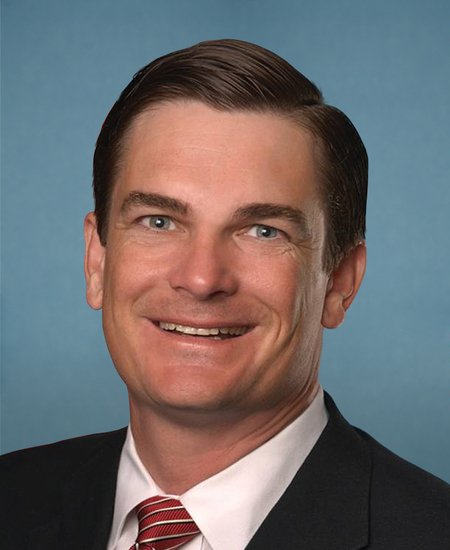
Rep. Austin Scott
Sponsored bills
Maddy summaryThis non-binding resolution (HRES 456) expresses congressional support for designating May 2025 as "Progressive Supranuclear Palsy Awareness Month." It directly affects individuals living with progressive supranuclear palsy (PSP), a rare neurodegenerative brain disorder impacting movement, cognition, and daily functioning, along with their families and caregivers. The resolution aims to raise public awareness, encourage research funding, and support organizations working to improve care and find treatments for PSP. It does not create new laws or funding but formally recognizes the need for greater attention to this condition.
Maddy summaryThis resolution blocks a Department of Energy rule that would have set new energy efficiency standards for gas-fired instant water heaters. It prevents the rule from taking effect, meaning appliance manufacturers would not have to meet the proposed efficiency requirements. The rule, submitted in December 2024, directly affected manufacturers of these water heaters and consumers purchasing them. Congress approved this disapproval through a joint resolution passed on May 9, 2025.
Maddy summaryHRES 377 is a procedural resolution that allows the House to debate and vote on two separate bills. It sets up consideration for H.R. 276, which would rename the Gulf of Mexico as the "Gulf of America" (a symbolic change with no direct impact on people or policies), and H.R. 881, which would restrict Department of Homeland Security funding for colleges with Confucius Institute ties. The resolution waives objections to these bills and outlines debate rules, but does not enact any policy changes itself. It directly affects the legislative process for these two bills, not any specific individuals or institutions.
Maddy summaryThe GAMES Act (HR 3219) removes a one-year time limit for veterans to join military adaptive sports programs. Previously, veterans could only apply within one year of leaving the military, but this bill expands eligibility to allow participation at any time after separation. The change modifies Section 2564a of Title 10, U.S. Code, directly affecting veterans seeking access to these programs. This policy update simplifies access without altering program funding or structure.
Maddy summaryThe SALUTE Act establishes a 5-year pilot program to provide supplemental insurance for military members and their TRICARE-eligible dependents who face uncovered cancer-related costs. It requires the Secretary of Defense to partner with up to two insurance companies to offer fixed indemnity plans that pay direct cash benefits for cancer screening, diagnosis, and treatment expenses not covered by standard military health benefits. These plans must operate separately from existing coverage, be available through TRICARE's online portal, and be funded entirely by enrollee premiums with no government subsidies. The program targets active-duty service members (Army, Navy, Marine Corps, Air Force, Space Force) and their TRICARE-enrolled dependents facing out-of-pocket cancer costs.
Maddy summaryThis bill establishes the Ralph David Abernathy, Sr. National Historic Site in Atlanta, Georgia, to preserve the West Hunter Street Baptist Church (where Dr. Abernathy served as pastor during the civil rights movement) and honor his legacy as a civil rights leader. It defines the site's boundary using a specific map and requires the Secretary of the Interior to acquire land (primarily through donation) before formally establishing the site. The bill is procedural, creating a National Park System unit with standard administrative rules and requiring a management plan within three years of funding. It directly affects the preservation of this historic church and its surrounding area in Georgia.
Maddy summaryThis bill requires the U.S. Postal Service to seek an advisory opinion from the Postal Regulatory Commission (PRC) at least 180 days before implementing any nationwide or significant district postal service change. It prohibits the Postal Service from spending funds or moving forward with such changes until the PRC issues its opinion. If the Postal Service skips this step, the PRC can suspend the change and require service levels to return to their pre-change state. The bill also gives Congress a 60-day window after the PRC’s opinion to disapprove the change via a joint resolution.
Maddy summaryThis bill requires the Secretaries of Health and Human Services and Defense to develop a 10-year strategy within 180 days of enactment to maintain stockpiles of anthrax countermeasures (like treatments and vaccines) in the Strategic National Stockpile and for military personnel and families on U.S. bases. It mandates annual reports to Congress detailing anthrax threats from foreign adversaries and terrorist groups, government programs addressing these threats, and efforts to ensure countermeasures are available for military dependents abroad. The strategy must prioritize sustainable cooperation with manufacturers and address multidrug-resistant strains. The bill directly affects military personnel, their families, and civilians on military installations by strengthening anthrax defense capabilities.
Fair Access to Agriculture Disaster Programs Act This bill waives the adjusted gross income limitations for payments or benefits under specific Department of Agriculture (USDA) disaster assistance programs for a person or legal entity that derives a portion of their income from agriculture. Currently, a person or entity is not eligible to receive certain benefits during a crop, fiscal, or program year if their average gross income exceeds $900,000. Specifically, in the case of an excepted payment or benefit, the adjusted gross income limitation is waived if 75% or more of the average adjusted gross income for the person or entity is derived from farming, ranching, or silviculture activities. These activities include agritourism, direct-to-consumer marketing of agricultural products, and the sale of agricultural equipment owned by such person or entity. The bill applies to the USDA Livestock Indemnity Program; Livestock Forage Disaster Program; Emergency Assistance for Livestock, Honey Bees, and Farm-Raised Fish Program; Tree Assistance Program; and Noninsured Crop Disaster Assistance Program.