Maddy summaryThe Stop Illegal Alien Cops Act amends federal law to modify exemptions for government entities regarding firearms. Currently, federal, state, and local government agencies are generally exempt from many federal prohibitions when acquiring or supplying firearms for official use. This bill would remove that exemption for specific prohibitions, making it unlawful for government entities to provide firearms to or employ individuals who are unlawfully in the United States. Additionally, the bill removes the
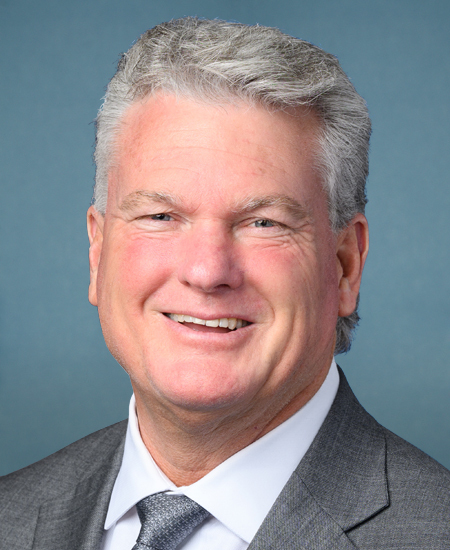
Rep. Mike Collins
Sponsored bills
Maddy summaryHRES 1076 is a House resolution recognizing the 10th anniversary of the first U.S. liquefied natural gas (LNG) export shipment from the lower 48 states, which occurred on February 24, 2016. The resolution celebrates this milestone as a historic achievement in American energy production, highlighting its role in supporting over 273,000 annual jobs and $400 billion in economic growth over the past decade. It honors the workers and communities involved and acknowledges LNG exports' contribution to U.S. economic growth, energy security, and global partnerships. The resolution has no binding effect or policy changes - it solely expresses recognition of a past event.
Small Business Artificial Intelligence Advancement Act This bill directs the National Institute of Standards and Technology (NIST) to develop or identify resources for small businesses to address concerns relating to the use of artificial intelligence (AI). Resources must be generally applicable, technology neutral, and based on relevant voluntary international standards, among other requirements. NIST must coordinate with the Small Business Administration with respect to the distribution of these resources. NIST must also review and update the resources at least biennially.
Maddy summaryThis bill modifies federal budget rules for unspent agency funds. It requires federal agencies to allocate 49% of unused funds to the next fiscal year, 49% toward paying the national debt, and 2% for retention bonuses (capped at 10% of an employee's base pay). Agencies must also limit future budget requests to the previous year's amount adjusted for inflation. The bill directly affects all executive branch agencies (excluding the Red Cross), altering how they manage leftover budget authority. It does not create new savings programs for individuals but changes government fiscal management procedures.
Maddy summaryThe Make Elections Great Again Act (HR 7300) would require voters to present photo identification to cast ballots in person or by mail for federal elections, with limited exceptions for religious objections or military voters. It would establish new requirements for proving U.S. citizenship during voter registration, including documentary proof of citizenship and proof of state residency. The bill would change mail-in ballot procedures by requiring voters to request mail-in ballots (rather than universal mail-in voting), implementing barcode tracking for mail-in ballots, and setting strict deadlines for ballot receipt. These provisions would apply to all states for federal elections held in 2027 or later, affecting how voters register, vote in person, and submit mail-in ballots for federal office elections.
Safeguard American Voter Eligibility Act or the SAVE America Act This bill requires individuals to provide documentary proof of U.S. citizenship when registering to vote, and requires photo identification to vote, in federal elections. Specifically, the bill prohibits states from accepting and processing an application to register to vote in a federal election unless the applicant presents documentary proof of U.S. citizenship. The bill specifies what documents are considered acceptable proof of U.S. citizenship, such as identification that complies with the REAL ID Act of 2005 that indicates U.S. citizenship. Further, the bill (1) prohibits states from registering an individual to vote in a federal election unless, at the time the individual applies to register to vote, the individual provides documentary proof of U.S. citizenship; and (2) requires states to establish an alternative process to demonstrate U.S. citizenship. Each state must take affirmative steps on an ongoing basis to ensure that only U.S. citizens are registered to vote, which shall include establishing a program to identify individuals who are not U.S. citizens using information supplied by certain sources. Additionally, states must remove noncitizens from their official lists of eligible voters. The bill (1) provides for a private right of action for certain violations, and (2) establishes criminal penalties for certain offenses. Individuals voting in federal elections must present an eligible photo identification document. An individual who votes by absentee ballot must submit a copy of their identification document with both the request for, and the submission of, the absentee ballot.
Maddy summaryThis bill creates a tax credit for businesses selling products made with U.S.-grown cotton. The credit equals 24% of the cotton's market value if processed only in the U.S. or in countries with U.S. trade deals, or 18% for other processing locations. To qualify, cotton must be digitally traced from U.S. farms to finished products and certified by the USDA as meeting origin requirements. It directly affects clothing and textile manufacturers selling qualifying products in the U.S. market.
Maddy summaryHR 7185, the Home Savings Act, allows individuals to exclude from taxable income certain retirement plan distributions used for down payments or closing costs when buying a principal residence. It applies to defined contribution plans (like 401(k)s), IRAs, annuity plans, and 457(b) plans, covering the individual or their eligible relatives (spouse, children, grandchildren, or ancestors). The exclusion is limited to distributions made after 2025 but expires for distributions after December 31, 2030. This policy change directly affects homebuyers using retirement savings for home purchases, reducing their taxable income for those specific expenses.
Maddy summaryHR 7156, the SCAM Act, would expand grounds for revoking U.S. citizenship (denaturalization) for naturalized citizens who commit specific offenses within 10 years of becoming citizens. It targets individuals convicted of defrauding federal, state, or local governments (e.g., $10,000+ in public benefit fraud), affiliating with foreign terrorist organizations, or committing aggravated felonies or espionage. If convicted in these categories, the government could automatically revoke citizenship retroactively (as if it never existed) based on evidence that the person lacked good moral character or loyalty to the U.S. at the time of naturalization. This bill directly affects naturalized citizens who commit these offenses within a decade of gaining citizenship, with revocation triggering immediate deportability.
Maddy summaryThis resolution (HRES 998) is a symbolic House of Representatives commendation honoring President Trump, U.S. military/intelligence agencies, and Justice Department personnel for the alleged success of "Operation Absolute Resolve" in apprehending Venezuelan leader Nicolás Maduro. It cites Maduro's charges (including narcoterrorism conspiracy) and the Maduro regime's alleged dismantling of Venezuelan democracy, state-sponsored drug trafficking, and human rights abuses. The resolution expresses support for Venezuela's democratic transition but contains no new policy, funding, or legal changes. As a procedural resolution, it does not directly affect any individuals or alter laws.