Maddy summaryHR 1184, the "Stop CCP Land Act," requires states to ban purchases of agricultural land by entities from designated countries (like China and Russia) to receive certain federal agricultural and environmental funds. It mandates states to prohibit such foreign purchases and require annual reporting from existing foreign landholders. The bill also directs the Agriculture Secretary to update federal reporting rules for foreign agricultural investment and the GAO to assess national security impacts and suggest safeguards. This directly affects states receiving specific federal programs and foreign entities from listed countries.
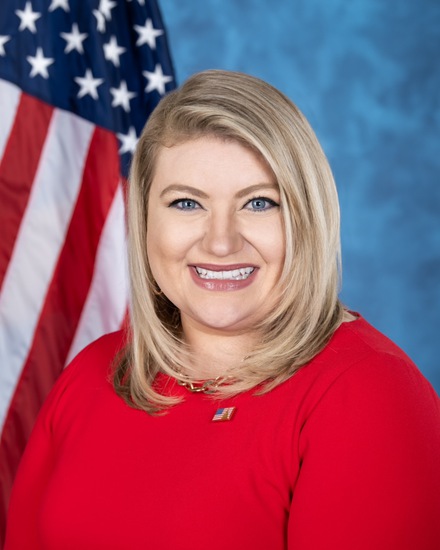
Rep. Kat Cammack
Sponsored bills
This bill prohibits the Big Cypress National Preserve in Florida from being designated as wilderness or as a component of the National Wilderness Preservation System. The National Park Service currently manages Big Cypress National Preserve, which is a freshwater swamp ecosystem of 729,000 acres. In general, development activities, commercial activities, permanent structures, and roads are prohibited in wilderness areas. In contrast, natural preserves typically allow some development activities, such as hunting or oil and gas exploration.
Maddy summaryThis bill allows individuals enrolled in silver-level health plans through the Affordable Care Act marketplace to opt for health savings account (HSA) contributions instead of reduced cost-sharing subsidies. Insurers would deposit funds directly into the enrollee’s HSA (equal to the value of the standard cost-sharing reduction) rather than the government paying the subsidy. It requires insurers to offer high-deductible plan alternatives to silver plans and mandates public education about HSA options starting in 2026. The policy change applies to months beginning after December 2025, shifting how cost-sharing support is delivered to eligible enrollees.
Maddy summaryThe HALT Fentanyl Act (HR 27) creates a new category of Schedule I controlled substances for "fentanyl-related substances" defined by specific chemical modifications to fentanyl. This law directly affects researchers, medical professionals, and law enforcement by expanding the legal definition of fentanyl-related substances to include many structurally similar compounds. Key provisions include streamlined registration processes for research on these substances, allowing researchers to conduct studies with expedited procedures if related to FDA-approved drug development or government-funded research. The bill requires the Attorney General to issue implementing rules within six months and includes penalties for violations involving these substances.
Maddy summaryHCONRES 8 is a non-binding congressional resolution urging the U.S. President to end the current "One China Policy" and recognize Taiwan as an independent country. It specifically calls for resuming normal diplomatic relations (including appointing ambassadors), negotiating a bilateral free trade agreement with Taiwan, and advocating for Taiwan's full membership in international organizations like the UN and WHO. The resolution argues that Taiwan has maintained democratic governance and independence for over 70 years, separate from the People's Republic of China. This resolution does not change U.S. law but expresses Congress's position on foreign policy toward Taiwan.
Fair Access to Banking Act This bill places restrictions on certain banks, credit unions, and payment card networks if they refuse to do business with a person who complies with the law. Restrictions include prohibiting the use of electronic funds transfer systems and lending programs, termination of an institution's depository insurance, and specified civil penalties. Banks and other specified financial institutions are allowed to deny financial services to a person only if the denial is justified by a documented failure of that person to meet quantitative, impartial, risk-based standards established in advance by the institution. This justification may not be based upon reputational risks to the institution. The bill establishes the right for a person to bring a civil action for a violation of this bill.
Maddy summaryHR 925, the "Dismantle DEI Act of 2025," would eliminate diversity, equity, and inclusion (DEI) programs across federal government operations. The bill requires federal agencies to close DEI offices, rescind related executive orders, and prohibit the use of federal funds for DEI training, offices, or initiatives. It defines "prohibited diversity, equity, or inclusion practice" as any activity that discriminates based on race, ethnicity, religion, biological sex, or national origin, or requires employees to complete training asserting that certain groups are inherently superior or inferior. The legislation also prohibits requiring employees to sign statements about race, ethnicity, or gender, and establishes private lawsuits for violations with potential damages of $1,000 per violation per day. This bill would directly affect federal agencies, contractors, grantees, and advisory committees receiving federal funding.
Defending Domestic Orange Juice Production Act of 2025 This bill requires finished pasteurized orange juice to contain at least 10% by weight of orange juice soluble solids, exclusive of the solids of any added optional sweetening ingredients. (Current regulations require at least 10.5% by weight of orange juice soluble solids.)
Maddy summaryHRES 76 is a symbolic resolution recognizing "Gold Shield Families" - the families of fallen police officers, firefighters, EMTs, correction officers, emergency dispatchers, and emergency service providers who died in the line of duty. It formally honors these families for their sacrifices and resilience, affirming that their struggles should not be forgotten. The resolution does not create new policies or funding but serves as a public statement of national appreciation. It directs the House to transmit a copy to the President and make it publicly available for recognition. This is a commemorative measure with no binding policy changes.
Maddy summaryThis bill requires the Congressional Budget Office (CBO) to publicly publish the models, data, and detailed methodology it uses to estimate the costs and effects of legislation. Specifically, it mandates that the CBO make available all fiscal models, data routines, and the underlying assumptions behind its cost estimates, allowing independent verification. This applies to all CBO analyses of proposed bills, including the specific data and computational details needed for others to replicate the results. The requirement applies to all users of CBO reports - lawmakers, researchers, and the public - except for data legally restricted from disclosure, which would still require a public list of variables and descriptive statistics.