Maddy summaryHR 5577, the FACE Act Repeal Act of 2023, would repeal a federal law (Section 248 of Title 18, U.S. Code) that made it a crime to block access to abortion clinics or threaten clinic staff. This repeal would remove criminal penalties for obstructing access to clinics, affecting abortion providers, clinic staff, and individuals attempting to access or block clinic entrances. The bill specifically targets the repeal of this prohibition, applying to prosecutions pending or initiated after the law's enactment. It does not change other abortion-related laws or create new policies.
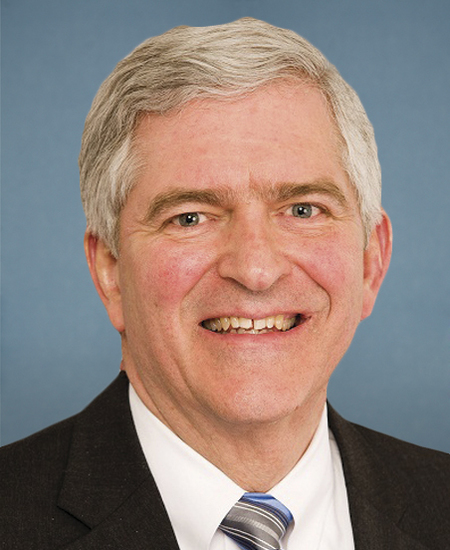
Rep. Daniel Webster
Sponsored bills
Maddy summaryHR 5455, the Collision Avoidance Systems Act of 2023, allows automakers to install pulsating light systems as rear-end collision avoidance technology on new vehicles. The bill requires the Secretary of Transportation to issue new regulations within 180 days updating Federal Safety Standard 108 to include performance-based rules for these systems. Specifically, it defines a "pulsating light system" as a high-mounted brake light that flashes rapidly (up to 4 times for no more than 1.2 seconds) before switching to steady light, with a 5-second lockout period after braking stops. This directly affects vehicle manufacturers who must comply with the updated safety standards for brake lights.
Maddy summaryHR 3152, the "Fight CRIME Act," aims to maintain international restrictions on Iran's missile-related activities by requiring diplomatic efforts to extend these restrictions before they expire in October 2023. The bill mandates annual reports detailing U.S. diplomatic strategies, potential impacts of expiration, and measures to deter missile technology transfers to Iran. It establishes sanctions against foreign individuals or entities that knowingly support Iran's missile or drone programs, including asset freezes and visa restrictions. These sanctions apply regardless of whether UN restrictions remain in effect after their expiration, directly affecting foreign entities involved in these activities.
Maddy summaryHR 5363, the Robert Cleckler (Bobby) Bowden Congressional Gold Medal Act, authorizes the posthumous presentation of a Congressional Gold Medal to honor Bobby Bowden, the late Florida State University football coach, for his 377 career wins, two national championships, and humanitarian work. The medal, designed by the U.S. Mint, will be given to Bowden’s next of kin, with bronze duplicates available for sale to cover production costs. This bill is purely commemorative and does not create new laws or policies.
Maddy summaryHR 5239, the Gulf of Mexico Commerce Protection Act, prohibits the National Oceanic and Atmospheric Administration (NOAA) from creating a vessel slowdown zone in the Gulf of Mexico until the Commerce Secretary completes and reports on a study. The study must prove that any proposed whale protection measures (specifically for Rice’s whales) would not harm supply chains or maritime commerce. The bill requires the Commerce Secretary to develop and report findings within 60 days to specific congressional committees, and explicitly bans nighttime transit bans or fixed slowdown zones in the required mitigation protocols. This bill directly affects NOAA’s regulatory authority and the Commerce Department’s study process, delaying potential environmental rules pending congressional review.
Maddy summaryHR 4162, the Land Grant Research Prioritization Act of 2023, adds four new research priorities to existing agricultural funding under the Food, Agriculture, Conservation, and Trade Act of 1990. The bill directs the Secretary of Agriculture to prioritize grants for land-grant universities (as defined in 7 U.S.C. 3103) to develop: mechanized harvesting technologies for specialty crops, artificial intelligence applications in agriculture, methods to manage invasive species, and sustainable aquaculture techniques. These provisions expand funding opportunities for research projects addressing specific agricultural challenges. The bill directly affects land-grant colleges and universities by creating new, targeted grant categories for their research programs.
This bill requires various changes to the passport application process and addresses related issues. The bill requires all U.S. regular passports to contain a written notice advising travelers (1) to check travel.state.gov for updated travel warnings, (2) to register with the Department of State prior to overseas travel, (3) that many countries deny entry to travelers whose passport expires within six months, and (4) to renew their passports within at least one year of the expiration date. Further, the bill makes permanent existing State Department authority to assess a surcharge on the passport application fee to cover the costs of increased demand prompted by certain legal requirements. This authority currently expires on September 30, 2026. For three years starting from this bill's enactment, the State Department may use direct hire authority to expedite the hiring of individuals into Passport and Visa Examining positions (Series 0967). Finally, the bill requires the Department of State to report to Congress about passport processing wait times, agency plans for a public outreach campaign, and related information.
Maddy summaryThe ACES Act directs the Department of Veterans Affairs to fund a National Academies study examining cancer rates among active-duty military aircrew members (including pilots and navigators in fixed-wing aircraft). The study will identify potential military-related exposures linked to specific cancers - such as lung, prostate, melanoma, and others - and analyze existing VA, Defense, and CDC health data. It requires the National Academies to report findings to Congress on cancer prevalence and mortality among these service members. This bill focuses on gathering scientific data to inform future policy, not on immediate benefits or changes.
Maddy summaryHR 5127, the Visitor Visa Wait Time Reduction Act, requires the State Department to report on consular posts with visitor visa interview wait times exceeding 100 days and to take steps to reduce those waits. If wait times at any post exceed 300 days, the Secretary must temporarily reassign State Department personnel to assist consular staff at that location. The bill directly affects U.S. embassies and consulates handling visitor visa applications and the applicants waiting for interviews. It mandates specific administrative actions to address processing delays but does not change visa eligibility or fees. The focus is on improving internal staffing efficiency at consular posts, not altering immigration policy.
Maddy summaryThis is a ceremonial resolution (HRES 622), not a substantive bill. It expresses the U.S. House of Representatives' gratitude and congratulations to the U.S. Coast Guard for its maritime border security efforts in fiscal year 2022. The resolution cites specific achievements like interdicting over 330,000 pounds of narcotics, 12,500 illegal immigrants, and 6,300 vessel boardings. It has no policy impact or legal effect - it solely serves to honor the Coast Guard's service.