Maddy summaryThis bill (SJRES 43) is a joint resolution seeking to block a Department of Education rule that would have improved income-driven repayment plans for federal student loans. It targets a specific rule (88 Fed. Reg. 43820, July 10, 2023) affecting borrowers in the William D. Ford Federal Direct Loan Program and the Federal Family Education Loan (FFEL) Program. If passed, the resolution would make this rule void, preventing it from taking effect. The resolution uses a specific procedural mechanism under Title 5 of U.S. Code to achieve this disapproval. It directly impacts student loan borrowers who rely on income-driven repayment options.
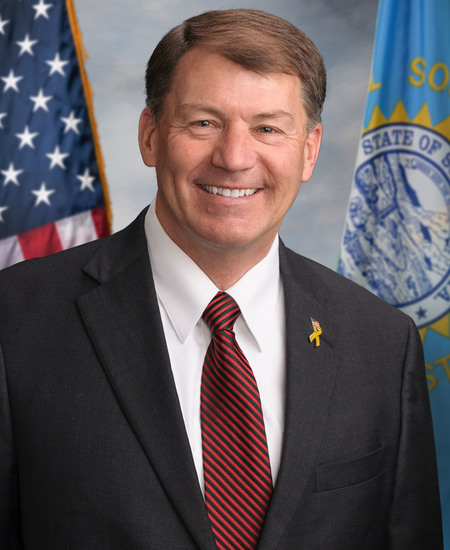
Sen. Mike Rounds
Sponsored bills
Maddy summaryThis bill directs the Architect of the Capitol to create a time capsule for the 250th anniversary of the United States (semiquincentennial). The capsule, to be buried on the Capitol's West Lawn by July 4, 2026, must contain representative materials about the Semiquincentennial, copies of key congressional milestones, a message from Congress to future lawmakers, and other appropriate items selected by congressional leadership. It will remain sealed until July 4, 2276, when the Speaker of the House will present it to the 244th Congress for their consideration. The bill authorizes funding for this effort and specifies the timeline for burial and opening. This procedural measure affects Congress directly, as it requires congressional leadership to determine contents and the 244th Congress to handle the capsule's contents upon opening.
Maddy summaryS 749 (NACIE Improvement Act) requires the President to add at least one Tribal College or University president to the National Advisory Council on Indian Education (NACIE) within 180 days of enactment. It mandates that NACIE’s annual report be shared with the Secretaries of Education and Interior by June 30 each year. Both departments must then consider this report when preparing their federal budget proposals. This directly affects Tribal Colleges through membership inclusion and influences federal education funding decisions via budget considerations.
Maddy summarySenate Joint Resolution 49 seeks congressional disapproval of a National Labor Relations Board (NLRB) rule that would have established a new standard for determining when two or more companies are considered "joint employers" under labor law. The rule, published in October 2023, would have affected businesses with complex employment structures, such as franchisors and contractors, by altering how joint employer liability is assessed for wage, hour, and union representation matters. If passed, the resolution would block the rule from taking effect, preserving the previous standard for joint employer determinations. The bill was introduced by Senators Cassidy, Manchin, Braun, McConnell, Marshall, Cramer, Capito, and Paul and referred to the Health, Education, Labor, and Pensions Committee.
Maddy summarySRES 459 is a ceremonial Senate resolution recognizing November 2023 as National Native American Heritage Month and the Friday after Thanksgiving as Native American Heritage Day, as specified in the 2009 Native American Heritage Day Act. It does not create new laws or funding but formally acknowledges Native Americans' contributions to U.S. history, culture, and society through "appropriate programs and activities." The resolution highlights historical context, including Native American cultural preservation, military service, and influences on U.S. governance, without imposing obligations on any entity. It directly affects the general public by encouraging observance during November 2023. This is a symbolic gesture, not a policy change.
Maddy summaryThis bill requires the U.S. Department of Agriculture (USDA) to establish a formal annual consultation process with Tribal Governments on budget requests and multi-year farm bill reauthorizations. It mandates that USDA provide 30 days' notice before consultations, develop a reporting mechanism for consultation outcomes, and submit a detailed report to Congress within 12 months. The bill also directs USDA to create a public repository of federal economic development programs for Tribal entities (including tribes, 1994 Institutions, and urban Indian organizations) and form an interagency task force to streamline application processes across agencies. These provisions aim to improve tribal engagement in USDA budgeting and increase access to economic development programs.
Maddy summaryThe PRINTS Act requires U.S. Customs and Border Protection officers to collect fingerprints from noncitizen children under 14 if they suspect trafficking during entry into the United States. It criminalizes using a minor (not a relative or guardian) to gain entry, punishable by fines or up to 10 years in prison. The bill also mandates sharing fingerprints of unaccompanied children with Health and Human Services and requires monthly public reporting on child trafficking apprehensions. These provisions aim to improve trafficking identification and enforcement through standardized data collection and criminal penalties.
Maddy summaryThe Healthcare Workforce Resilience Act creates 40,000 new employment-based immigrant visas for healthcare workers by recapturing unused visas from fiscal years 1992-2021, with 25,000 reserved for professional nurses and 15,000 for physicians. These visas are exempt from country caps and issued based on priority date, but must be applied for within three years of the bill’s enactment and only for applicants not already eligible under existing visa allocations. The bill also requires employers to attest that hiring foreign workers won’t displace U.S. workers and mandates expedited processing for these applications without additional fees. This policy directly affects nurses and physicians seeking to immigrate for healthcare roles in the U.S., along with their eligible family members.
Maddy summaryThis bill improves housing loan access for Native American veterans living on trust land by establishing clearer requirements and expanding support services. It requires that veterans maintain meaningful ownership interests in trust land properties and creates a new relending program through Native community development financial institutions that must be at least 51% owned by Native Americans. The bill expands outreach efforts through partnerships with tribal organizations and Native housing entities to help veterans navigate mortgage processes. It also sets specific funding levels for the relending program, starting with $5 million in fiscal year 2024. These changes aim to make housing finance more accessible for Native American veterans while establishing clearer oversight and foreclosure procedures.
This concurrent resolution expresses the sense of Congress that a carbon tax would be detrimental to families and businesses and would severely harm the economic and national security of the country.