This resolution honors the life of William "Bill" Felton Russell (basketball player and coach with the Celtics and civil rights activist) and expresses condolences to his family and friends.
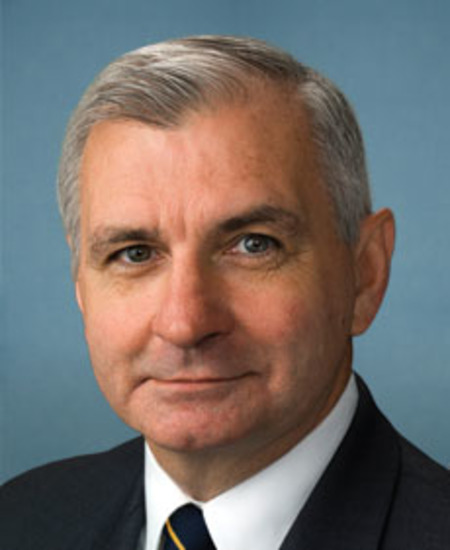
Sen. Jack Reed
Sponsored bills
Veterans and Consumers Fair Credit Act This bill applies certain military consumer credit protections to all consumers. Specifically, the bill caps the interest rate on extensions of consumer credit at 36%.
This resolution expresses that the Senate has heard the announcement of the death of the Honorable Jacqueline R. Walorski, Congresswoman for the Second Congressional District of Indiana. The resolution also honors Representative Walorski for her service to Indiana and the United States. The resolution expresses that when the Senate adjourns today, it stands adjourned as a further mark of respect to the memory of Representative Walorski.
Maddy summaryThis resolution designates August 16, 2022, as "National Airborne Day" to honor the history of U.S. airborne forces. It recognizes August 16, 1940, as the date of the first official U.S. Army parachute jump, marking the beginning of airborne operations. The resolution calls on the public to observe the day with appropriate ceremonies and activities, acknowledging the service of airborne troops from World War II through modern conflicts. It is a ceremonial resolution with no legal effect or direct impact on policy or individuals.
Taxing Big Oil Profiteers Act This bill imposes an additional 21% tax through 2025 on the excess profits (i.e., current profits over normal return) of oil and natural gas companies that have average annual gross receipts during a three-year period of over $1 billion. The bill imposes on publicly-traded domestic corporations a tax equal to 25% of the fair market value of the stock of the corporation repurchased during the taxable year. The tax does not apply to a repurchase made after 2025 or that is treated as dividend. It also does not apply if the total value of the stock repurchased during a taxable year does not exceed $1 million. The bill disqualifies certain large oil and natural gas companies from the use of the LIFO (last-in first-out) inventory accounting method.
Livable Communities Act of 2021 This bill creates the Office of Sustainable Communities in the Department of Housing and Urban Development (HUD) to coordinate the provision of long-term affordable housing, transportation, and environmental projects and to administer grant programs established in the bill. The bill creates the Comprehensive Planning Grant Program and the Community Challenge Grant Program to be administered by the office. Grants under the Comprehensive Planning Grant Program must be used for specified activities related to the coordination, development, or updating of a comprehensive regional plan across jurisdictions and agencies. Grants offered under the Community Challenge Grant Program must be used to promote integrated planning and investments across policy and governmental jurisdictions and to implement projects identified in a regional plan. The bill also creates a program that requires HUD to provide loans and loan guarantees to projects that meet specified criteria. Eligible projects must be part of a community-wide development plan, promote sustainable development, and ensure that housing units associated with the project are affordable and initially occupied by lower-income renters or homeowners.
This resolution designates September 25, 2022, as National Lobster Day and encourages the people of the United States to observe the day with appropriate ceremonies and activities.
Reproductive Health Care Accessibility Act This bill establishes various grants and related programs that address sexual and reproductive health care for individuals with disabilities. Specifically, the Health Resources and Services Administration must support training for health care providers who offer sexual and reproductive health care to individuals with disabilities, and educating individuals with disabilities about sexual and reproductive health care. The Administration for Community Living must establish a national center to provide recommendations, technical assistance, and other resources related to the provision of sexual and reproductive health care for individuals with disabilities. The bill also authorizes support for medical schools, nursing schools, and other educational institutions that offer obstetrics and gynecology training programs to expand the number of individuals with disabilities entering the reproductive health care workforce. Additionally, the Department of Health and Human Services must study the effectiveness and other aspects of reproductive health care services and programs for individuals with disabilities.
Legislative Branch Appropriations Act, 2023 This bill provides FY2023 appropriations for the legislative branch, including the Senate and joint items such as the Joint Economic Committee, the Joint Committee on Taxation, the Office of the Attending Physician, and the Office of Congressional Accessibility Services. In addition, the bill provides FY2023 appropriations for the Capitol Police; the Office of Congressional Workplace Rights; the Congressional Budget Office; the Architect of the Capitol; the Library of Congress, including the Congressional Research Service and the Copyright Office; the Government Publishing Office; the Government Accountability Office; Congressional Office for International Leadership Fund; and the John C. Stennis Center for Public Service Training and Development. (Pursuant to the longstanding practice of each chamber of Congress determining its own requirements, funds for the House of Representatives are not included in the Senate bill.) The bill also sets forth requirements and restrictions for using funds provided by this bill.
Let Doctors Provide Reproductive Health Care Act This bill sets out protections for and establishes programs to support health care providers (and those who assist such providers) who offer reproductive health care services that are lawful in the state where the services are provided. Reproductive health care services refer to abortion services; contraceptive services; in vitro fertilization; or other reproductive care, education, and counseling that is provided (1) at a health care site or via telehealth, and (2) in a medically accurate manner. The bill prohibits individuals, entities, and states from preventing, restricting, or otherwise interfering with the provision of lawful reproductive health care services by health care providers. The Department of Justice, individuals, or providers may bring a lawsuit to enforce this bill, and states are not immune from suits for violations. Furthermore, states may not use federal funds to pursue legal cases or similar proceedings (e.g., adverse licensing proceedings) against health care providers, individuals, or entities that offer or assist with lawful reproductive health care services. Additionally, medical malpractice insurers may not deny coverage to or sue a health care provider because the provider offers or assists with lawful reproductive health care services. The bill also funds grants to assist health care providers who offer or refer for abortion services and face legal issues relating to their provision of reproductive health care services with legal matters and improving security.