

Crisis Assistance Helping Out On The Streets Act or the CAHOOTS Act This bill allows state Medicaid programs to cover certain community-based mobile crisis intervention services for individuals experiencing a mental health or substance-use disorder crisis outside of a facility setting. Among other requirements, such services must be (1) provided by multidisciplinary teams composed of behavioral health professionals who are trained in trauma care and de-escalation techniques, (2) available 24-7, and (3) voluntary for the individual experiencing the mental health or substance-use disorder crisis. The bill provides an enhanced Federal Medical Assistance Percentage (i.e., federal matching rate) for such services, as well as specified funds for state planning and evaluation grants.
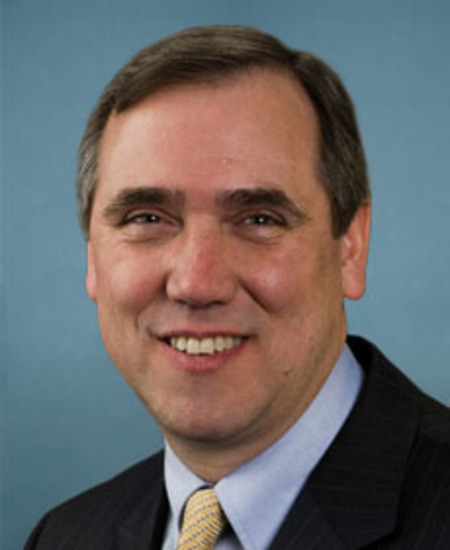
Sen. Jeff Merkley
Sponsored bills
COVID Community Care Act This bill provides FY2021 supplemental appropriations for the Department of Health and Human Services (HHS) to prevent, prepare for, and respond to COVID-19 (i.e., coronavirus disease 2019). Specifically, the bill provides appropriations to the HHS Public Health and Social Services Emergency Fund and the Indian Health Service for implementing programs to prevent, prepare for, and respond to COVID-19 in medically underserved communities and among tribal populations, respectively. The bill designates the funding as emergency spending, which is exempt from discretionary spending limits.
Keeping Women and Girls Safe from the Start Act of 2021 This bill requires the Department of State to carry out activities under the Safe from the Start program to prevent, mitigate, and respond to gender-based violence in humanitarian emergencies around the world. (The Safe from the Start program addresses childhood exposure to violence.) These activities shall include (1) training and capacity building for humanitarian personnel; (2) deployment of, and support for, gender advisors and female humanitarian aid workers; (3) use of standards, guidelines, and best practices to address gender-based violence; (4) expanding and improving empowerment activities; and (5) establishing accountability mechanisms and monitoring and reporting tools to prevent and respond to incidents of sexual or other gender-based exploitation or abuse. The State Department must submit an annual report that includes an analysis of data and research regarding the key drivers of gender-based violence in humanitarian emergencies, as well as a detailed description of the programs, diplomatic efforts, and other activities taken to implement Safe from the Start.
Protecting Americans with Pre-Existing Conditions Act of 2021 This bill nullifies specified guidance and final rule provisions pertaining to Section 1332 waivers (also known as State Innovation Waivers or State Relief and Empowerment Waivers) issued by the Department of the Treasury and the Department of Health and Human Services. The provisions allow states to forego certain requirements of the Patient Protection and Affordable Care Act in order to implement experimental plans for health care coverage, as long as the resulting coverage meets certain statutory criteria. The provisions, which supersede earlier guidance from 2015, alter agency interpretation of how states may satisfy the statutory criteria for waiver approval. For example, the provisions (1) redefine acceptable coverage under such waivers to include short-term, limited-duration insurance and association health plans; (2) allow the comprehensiveness and affordability of coverage under such waivers to be assessed based on projected availability, rather than enrollment; and (3) allow the level of coverage to be assessed based on the effects over the entire course of the waiver, rather than per year.
Accessible, Affordable Internet for All Act This bill reauthorizes through FY2026, revises, and establishes grants and activities to promote access to telecommunications services, including broadband internet. The bill addresses digital equity and inclusion through grants and by requiring studies on barriers to adopting broadband services and related matters. The bill addresses broadband affordability and access. It (1) reauthorizes and expands programs that subsidize or support broadband services for, among others, eligible households, schools, and minority communities; and (2) establishes a program for expanding broadband service for underserved areas and community support organizations (e.g., religious organizations). Additionally, the Federal Communications Commission (FCC) must expand programs that verify an individual's eligibility for subsidized telecommunications services. The bill addresses matters concerning broadband data. The FCC must (1) issue rules for collecting pricing data and labels for disclosing information about broadband plans to consumers, and (2) collaborate and share data with federal agencies and stakeholders. The bill makes financing (e.g., low-interest loans) available to communities and public-private partnerships for broadband infrastructure investments and creates grants to establish or expand certain internet exchange facilities and submarine cable landing stations. Additionally, the Department of Transportation must require states to install conduits for broadband cables as part of certain highway projects. The bill also sets up a task force on nationwide dig once requirements (i.e., policies or practices to minimize excavations of highway rights-of-way when installing telecommunications infrastructure). Further, the bill preempts state laws that prohibit certain telecommunications service providers (e.g., public providers) from providing high-speed broadband services.
This resolution condemns the February 1, 2021, military coup in Burma (Myanmar) and calls on Burmese authorities to allow journalists, human rights organizations, United Nations monitors, and humanitarian actors full and safe access to every part of the country. The resolution also asks neighboring countries to provide immediate and direct cross-border assistance to address the humanitarian needs of refugees.
Wastewater Efficiency and Treatment Act of 2021 This bill requires the Department of Energy (DOE) to establish a Water and Energy Efficiency Program. Under the program, DOE must award grants to certain small public wastewater treatment facilities that serve disadvantaged communities or populations that do not exceed 10,000. The facilities must use the grants to conduct energy efficiency audits of the facilities and update equipment based on the audits. In addition, DOE must provide loan guarantees to eligible municipalities and Indian tribes for (1) projects that convert waste in the treatment process of wastewater treatment facilities into renewable fuels, biosolids, or other byproducts; and (2) projects that will assist in transitioning facilities towards the use of energy-efficient technologies. In carrying out the program, DOE must establish a small-scale extension services program to provide assistance to rural communities through grants, outreach, training, and technical assistance regarding energy-efficient technologies at wastewater treatment facilities in eligible municipalities and tribes.
Assault Weapons Ban of 2021 This bill makes it a crime to knowingly import, sell, manufacture, transfer, or possess a semiautomatic assault weapon (SAW) or large capacity ammunition feeding device (LCAFD). The prohibition does not apply to a firearm that is (1) manually operated by bolt, pump, lever, or slide action; (2) permanently inoperable; (3) an antique; or (4) a rifle or shotgun specifically identified by make and model. The bill also exempts from the prohibition the following, with respect to a SAW or LCAFD: importation, sale, manufacture, transfer, or possession related to certain law enforcement efforts, or authorized tests or experiments; importation, sale, transfer, or possession related to securing nuclear materials; and possession by a retired law enforcement officer. The bill permits continued possession, sale, or transfer of a grandfathered SAW, which must be securely stored. A licensed gun dealer must conduct a background check prior to the sale or transfer of a grandfathered SAW between private parties. The bill permits continued possession of, but prohibits sale or transfer of, a grandfathered LCAFD. Newly manufactured LCAFDs must display serial number identification. Newly manufactured SAWs and LCAFDs must display the date of manufacture. The bill also allows a state or local government to use Edward Byrne Memorial Justice Assistance Grant Program funds to compensate individuals who surrender a SAW or LCAFD under a buy-back program.
Police Training and Independent Review Act of 2021 This bill authorizes the Department of Justice to award grants to states that (1) require law enforcement officers to be trained on fair and impartial policing (e.g., diversity and anti-bias training), and (2) require an independent prosecutor to be appointed to investigate and prosecute an alleged offense involving the use of deadly force by a law enforcement officer that results in a death or injury.
Work Opportunities and Resources to Keep Nonprofit Organizations Well Act or the WORK NOW Act This bill requires the Department of the Treasury to establish a grant program to provide emergency relief to certain nonprofit organizations, prioritizing organizations that provide services related to the COVID-19 (i.e., coronavirus disease 2019) pandemic. Organizations receiving funding must use not less than 60% of these funds to hire former and new employees.