

Maddy summarySRES 593 is a Senate resolution honoring the 67 victims of the January 29, 2025 mid-air collision between a U.S. Army Black Hawk helicopter and American Airlines Flight 5342 over the Potomac River. It specifically recognizes the lives of all victims, including 11 U.S. figure skating athletes, their families, and 3 Army soldiers, as well as the 1,700+ first responders who assisted in the recovery efforts. The resolution offers condolences to affected families, acknowledges the bravery of emergency personnel, and commits the Senate to using safety lessons from the crash to prevent future incidents. As a commemorative resolution, it does not create new laws or provide direct benefits but serves to formally memorialize the tragedy and honor those impacted.
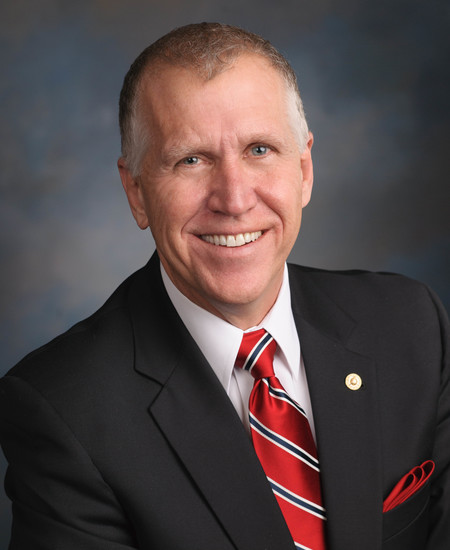
Sen. Thom Tillis
Sponsored bills
This resolution supports the designation of 2026 as the International Year of the Woman Farmer and recognizes the critical role of women in agriculture. The resolution also encourages citizens to celebrate the impact these women have on the food systems and agricultural workforce of the United States by encouraging and empowering women to pursue careers in agriculture and cultivate leadership opportunities.
Maddy summaryThe PBM Reporting Transparency Act requires the Medicare Payment Advisory Commission (MedPAC) to produce two reports analyzing pharmacy benefit manager (PBM) agreements with Medicare prescription drug plans. The first report, due 2 years after data becomes available, must detail trends in PBM contracts, their impact on beneficiaries' out-of-pocket costs and pharmacy reimbursement rates, and include recommendations. A second report, due 2 years after the first, will track changes in this data over time and provide updated recommendations. This legislation directly affects Medicare drug plan participants by increasing transparency around PBM practices that influence prescription drug costs.
Maddy summaryThe REAL Health Providers Act (S 3750) requires Medicare Advantage plans to maintain accurate, up-to-date provider directories for beneficiaries, starting in 2028. Plans must verify provider information at least every 90 days (or annually for hospitals), remove outdated listings within 5 business days, and indicate when information may be inaccurate. If a beneficiary is treated by a provider listed in the directory but not in the network, the plan must cover costs as if the provider were in-network. Annual accuracy reports will be submitted by plans and publicly posted by the government starting in 2029.
Maddy summaryThis bill authorizes $6 million annually for seven years to fund the National Law Enforcement Museum's community outreach, public education, and officer safety programs. It directly supports the National Law Enforcement Officers Memorial Fund, which operates the museum in Washington, D.C., by requiring the Secretary of the Interior to award grants for specific activities like developing safety resources, expanding educational exhibits, and providing free museum access for officers and families. Key provisions include funding programs to reduce line-of-duty deaths, enhance public understanding of law enforcement, and foster community-police relationships through workshops and digital resources. The bill does not create new safety standards but provides federal funding to maintain and expand existing outreach efforts already coordinated with law enforcement agencies.
Maddy summaryThis resolution designates the week of January 25-31, 2026, as "National School Choice Week" to recognize educational options for K-12 students. It encourages parents to learn about school choices and urges the public to host events raising awareness about diverse education environments, including public schools, charter schools, private schools, and homeschooling. The resolution has no policy or funding impact - it is a ceremonial designation acknowledging existing annual events celebrating educational choice.
Maddy summarySRES 585 is a commemorative resolution honoring Ben Nighthorse Campbell, a former U.S. Senator from Colorado and the first Native American to chair the Senate Committee on Indian Affairs. It recognizes his military service, Olympic judo career, legislative work (including authoring the National Museum of the American Indian Act), and advocacy for tribal communities. The resolution has no policy impact - it formally expresses the Senate’s respect for his legacy, requests transmission to his family, and directs a moment of silence. It directly affects Campbell’s legacy and family, not any current policy or population. (Note: This is a procedural resolution, not a bill with legislative provisions.)
Maddy summarySRES 519 is a symbolic Senate resolution honoring the 50th anniversary of the AH-64 Apache attack helicopter's first flight. It recognizes the Apache's role in U.S. and allied national defense, highlighting its 5.2 million flight hours (including 1.3 million combat hours) across conflicts like Desert Storm and Inherent Resolve. The resolution specifically honors U.S. Army aviators, maintainers, and support personnel who operate and sustain the Apache, and directs a copy to the Army Aviation Center at Fort Rucker, Alabama. As a non-binding resolution, it has no policy or funding impact but formally acknowledges the helicopter's military contributions and personnel dedication.
Maddy summarySRES 580 is a resolution directing the Architect of the Capitol to display a plaque honoring law enforcement officers who protected the U.S. Capitol on January 6, 2021, in a publicly accessible area of the Senate wing until it can be placed permanently on the Capitol's western front. The plaque recognizes officers from the U.S. Capitol Police, Metropolitan Police Department, and other federal, state, and local agencies who responded during the January 6th incident. This action implements a prior requirement from the Consolidated Appropriations Act, 2022 (section 214), which mandated the plaque's creation. The resolution does not create new policy but specifies the temporary display location for an existing plaque.
Maddy summaryThis bill modifies tax code to help businesses in disaster-affected areas use unused tax credits. It allows businesses operating in qualified disaster zones (federally declared after 2023 or state-recognized under specific criteria) to treat certain carried-over tax credits as transferrable credits for eligible expenses. Eligible expenses include costs for business operations in these areas within two years of the disaster declaration. The change applies to tax years ending after the bill's enactment, making it easier for affected businesses to access credit benefits they previously couldn't utilize.