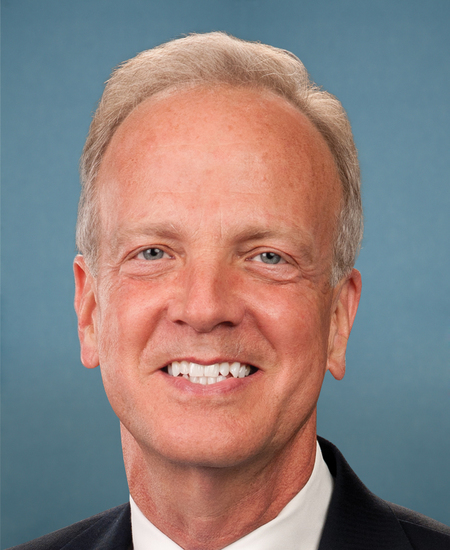
This resolution expresses the condolences of the Senate regarding the death of the Honorable Mike Enzi, former Senator for Wyoming.
Sponsored bills
International Pandemic Preparedness and COVID-19 Response Act of 2021 This bill outlines U.S. foreign policy to respond to the COVID-19 pandemic and to future pandemics and disasters. With respect to COVID-19, the Department of State must develop a strategy to expand and expedite access to COVID-19 vaccines in other countries. The bill also allows for the use of any foreign assistance for activities to combat COVID-19, regardless of the original purpose of the funding. Additionally, the State Department and the U.S. Agency for International Development must protect and support humanitarian actors responding to secondary effects of the pandemic (e.g., food insecurity). Furthermore, the State Department must report on, and take other steps to address, restrictions and violations of human rights in the COVID-19 response measures of other countries, and the U.S. Agency for Global Media must focus its communication programs on combating propaganda and providing accurate information related to COVID-19. With respect to future pandemics and disasters, the bill (1) designates agencies responsible for carrying out preparedness and response activities, and (2) authorizes a committee within the National Security Council to coordinate government-wide response efforts. Additionally, the President must establish a strategy for advancing U.S. global health security; the bill creates a position in the State Department to promote this strategy. Moreover, the State Department must work with other international actors to establish a financing mechanism and otherwise promote global health security, including by strengthening health systems and disease surveillance in developing countries. Additionally, funding authorized by this bill may not be made available to China.
Navigable Waters Protection Act of 2021 This bill enacts definitions that determine which bodies of water fall under the scope of the Clean Water Act and are thereby under federal jurisdiction. Specifically, the bill provides statutory authority for the definitions related to the waters of the United States, commonly known as WOTUS, in regulations when the bill is enacted.
Major Medical Facility Authorization Act of 2021 This bill authorizes the Department of Veterans Affairs to carry out specified major medical facility projects during FY2021. The bill also indicates the maximum amount that can be spent on each project.
Provider Relief Fund Deadline Extension Act This bill extends the period during which health care providers may use payments received from the Provider Relief Fund to cover a variety of costs related to COVID-19.
Department of Veterans Affairs Provider Accountability Act This bill prescribes oversight requirements for the Department of Veterans Affairs (VA) regarding health care professionals at VA medical centers. Specifically, the bill requires the VA to ensure each VA medical center consistently compiles, verifies, and reviews specified documentation for each VA health care professional (including contractors). The VA shall ensure that specified health care professionals hold an active Drug Enforcement Administration registration. Each VA medical center must implement (1) monitoring of the performance and quality of the health care delivered by each health care professional at the center, and (2) reviews of such care if an individual notifies the VA of any potential concerns relating to a failure to meet generally accepted standards of clinical practice. The bill imposes notification requirements in situations where the VA substantiates a concern relating to the clinical competency of, or quality of care delivered by, a current or former VA health care professional. The VA is prohibited from entering into a settlement agreement relating to an adverse action against a VA health care professional if such agreement includes terms that require the VA to conceal certain information from the employee's personnel file. Such prohibition does not apply to adverse actions determined to be prohibited personnel practices. The VA must provide mandatory training, at least annually, to employees who are responsible for specified tasks (e.g., those who are responsible for compiling, validating, or reviewing the credentials of VA health care professionals).
Guaranteeing Healthcare Access to Personnel Who Served Act This bill addresses the administration and provision of health care to veterans through the Department of Veterans Affairs (VA) and non-VA providers. First, the bill provides statutory authority for the eligibility thresholds for when a veteran must receive non-VA care under the Veterans Community Care Program (VCCP) for primary care, mental health care, noninstitutional extended care services, specialty care, or specialty services. Additionally, the bill establishes access to care standards for non-VA care under the VCCP, meaning a veteran's appointment must be within specified distances and time frames. Among other requirements, the VA must also implement an 18-month pilot program to allow certain veterans to use a website or mobile application to request, schedule, and confirm medical appointments with VCCP providers; ensure that VCCP third party administrators and credentials verification organizations comply with specified requirements to help ensure that certain health care providers are excluded from providing non-VA health care services; develop a strategic plan to ensure the effectiveness of the telehealth technologies and modalities delivered by the VA; and establish an online health care education portal for veterans. The bill requires the Government Accountability Office to report on (1) the VA program under which third parties provide transportation for veterans who are seeking VA services or benefits, (2) VA telehealth services, and (3) the VA's Foreign Medical Program. Finally, the Paperwork Reduction Act does not apply to the voluntary collection of information during research conducted by the Veterans Health Administration.
VA Supply Chain Resiliency Act This bill addresses the Department of Veterans Affairs (VA) supply chain processes, particularly during emergency periods. The bill requires the VA to submit a report containing a description of the items and quantities of items that are critical with respect to the VA's ongoing response to the COVID-19 (i.e., coronavirus disease 2019) pandemic and future epidemic, pandemic, emergency, national emergency, or natural disaster scenarios. The VA and the Department of Defense (DOD) must enter into an agreement to provide for the participation of the VA in the Warstopper Program of the Defense Logistics Agency (DLA) of DOD. The Warstopper Program was established to satisfy requirements for sudden and sustained increases in production of critical industrial and medical items. Under such an agreement, the DLA must ensure the maintenance and stability of the items the VA identifies as critical in its report (and that the VA and DOD determine are appropriate for the program), establish guidance for the participation of the VA in the program, and use existing and new contracts and agreements to reserve the supply of critical items. Finally, the VA must ensure it does not exclusively rely on holding regional, physical inventories of critical items in order to respond to greater than expected needs during epidemic, pandemic, emergency, national emergency, or natural disaster situations.
This resolution designates July 30, 2021, as National Whistleblower Appreciation Day.
Certainty for General Aviation Pilots Act of 2021 This bill deems that individuals who provide flight instruction or testing (including phased testing of experimental aircraft) are not operating an aircraft carrying persons or property for hire. Under current law, individuals must generally obtain a regulatory exemption or other authority to deviate from regulatory requirements to provide compensated flight training or testing.