Maddy summaryThis bill amends two existing laws to prevent U.S. funding for United Nations agencies that grant Palestine any status, rights, or privileges beyond its current observer status. It directly affects U.S. foreign aid decisions by requiring the State Department to withhold funds from UN bodies that elevate Palestine's standing. The key mechanism replaces "full membership" with "any status, rights, or privileges beyond observer status" in two funding provisions. The bill explicitly excludes Taiwan from these restrictions. (Procedural bill; 4 sentences)
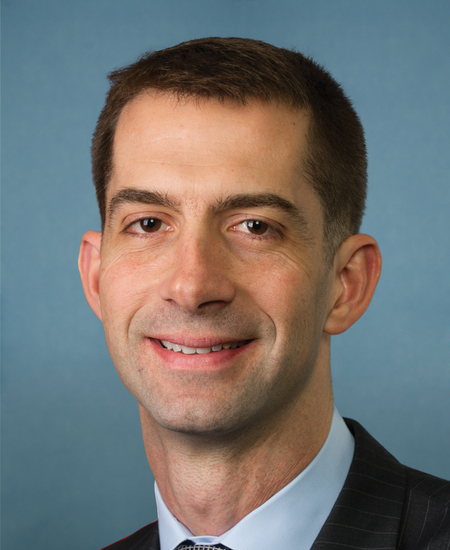
Sen. Tom Cotton
Sponsored bills
Maddy summaryThe American Workforce Act establishes a program providing paid training positions for U.S. citizens with high school diplomas (but no bachelor's degrees) in high-wage, high-demand industries. Employers receive workforce education subsidies (up to $9,000 total) to cover training costs, while being required to pay trainees at least minimum wage during the program. The program includes a $1,000 bonus for employers who hire trainees after successful completion, and requires structured on-the-job work combined with educational training leading to industry-recognized credentials. The program is overseen by a Director who reviews contracts, monitors compliance, and can impose penalties for violations. The program is scheduled to end 11 years after enactment.
Maddy summaryThe SAVE Act requires voters to provide documentary proof of U.S. citizenship when registering to vote in federal elections. It defines acceptable proof as documents like U.S. passports, birth certificates, military IDs, or government-issued IDs showing U.S. birth. States must verify citizenship through these documents or use government databases like the Department of Homeland Security's SAVE system. The bill establishes processes for voters without required documentation to submit affidavits under penalty of perjury. It aims to ensure only U.S. citizens can register to vote in federal elections.
Maddy summarySRES 673 is a commemorative Senate resolution honoring the late David Hampton Pryor, who served as a U.S. Senator for Arkansas from 1978 to 1997. The resolution expresses the Senate’s "profound sorrow" at his death and directs the Secretary of the Senate to share the resolution with the House and deliver a copy to his family. It does not create new laws or policies - it is purely ceremonial, recognizing Pryor’s career as a legislator, governor, and public servant. The resolution concludes with the Senate adjourning as a mark of respect for his legacy.
Maddy summaryThis resolution (SRES 668) is a ceremonial Senate measure honoring the late Senator Daniel Robert "Bob" Graham of Florida, who died on November 9, 2023. It formally expresses the Senate's "profound sorrow" over his death and directs the Secretary of the Senate to share the resolution with the House of Representatives and deliver a copy to his family. The resolution commemorates Graham's career as a Florida senator (1987-2005), governor (1979-1987), and his work on the 9/11 intelligence inquiry, but does not create any new laws or affect constituents. As a commemorative resolution, it serves solely to memorialize his service.
Maddy summaryThis is a commemorative Senate resolution (SRES 669), not a law. It designates October 10, 2024, as "American Girls in Sports Day" to recognize the impact of women in sports and support for Title IX protections. The resolution calls on sports organizations to protect biological women and girls in competition, referencing claims about biological differences and displacement in championships. As a symbolic resolution, it has no legal effect and does not change existing policies or laws.
Maddy summarySRES 670 is a Senate resolution condemning the rise of antisemitism on U.S. college campuses, citing a 700% increase in incidents since October 7, 2023, as tracked by Hillel International. It specifically criticizes campus administrators who enabled antisemitic activities, including protests expressing support for Hamas and targeting Jewish students. The resolution urges the Department of Education to ensure colleges comply with Title VI of the Civil Rights Act, which prohibits discrimination based on national origin - including antisemitism. It directly affects Jewish students, Israeli students, and campus administrators, while calling for enforcement of existing civil rights protections. The resolution does not create new laws but serves as a formal statement of condemnation and a call for accountability.
Maddy summaryThis bill prohibits federal student loan forgiveness for individuals convicted of crimes related to protests at colleges or universities. Specifically, it blocks loan forgiveness under the Higher Education Act or other Department of Education programs for people convicted of offenses under federal or state law tied to protest conduct at higher education institutions. It applies to federal student loans (including those under the Higher Education Act and Health Education Assistance Loans) but does not affect repayment requirements. The policy directly targets loan forgiveness eligibility, not loan repayment, for those convicted of protest-related offenses.
Maddy summaryThis bill exempts small defense contracts under $7.5 million from standard cost data requirements, directly affecting small businesses and nontraditional defense contractors. It creates a new program under federal law allowing these entities to receive simplified contracts for innovative technology projects without submitting detailed cost data. The Secretary of Defense must update procurement regulations (DFARS) to implement this streamlined process across all relevant contracts. The policy change aims to accelerate contracting for smaller, innovative projects while maintaining oversight for larger awards.
Maddy summaryThis bill creates a new federal criminal offense for assaults on law enforcement officers that cause serious injury or involve specific circumstances like crossing state lines, using interstate commerce, or employing firearms. It increases penalties to up to 10 years in prison for assaults causing serious injury, with life imprisonment if death occurs or kidnapping/killing is involved. The bill requires the Attorney General to certify federal prosecution is necessary before proceeding, unless states lack jurisdiction or have requested federal involvement. It directly affects law enforcement officers (including federal, state, and local) by establishing new federal penalties for certain assaults against them.