

Maddy summaryHR 376, the Historic Roadways Protection Act, prohibits the use of federal funds to finalize or implement specific travel management plans for certain areas in Utah during an ongoing legal period. The bill directly affects the Bureau of Land Management (BLM), blocking funding for 10 designated travel management areas (like the Henry Mountains and San Rafael Swell) and four specific plans (including the Indian Creek and San Rafael Desert plans) until all related R.S. 2477 legal cases are resolved. The restriction applies only to Utah lands and remains in effect from the bill's enactment until the Secretary of the Interior certifies the resolution of all 22 named legal cases. This is a funding prohibition, not a policy change to road access.
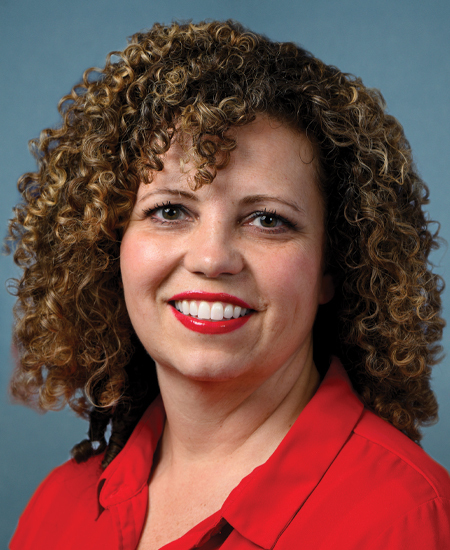
Rep. Celeste Maloy
Sponsored bills
Maddy summaryHR 300, the Daylight Act, would allow U.S. states to adopt year-round daylight saving time instead of switching clocks seasonally. It directly affects states that choose to implement this change, giving them the option to maintain daylight saving time permanently across their entire territory. The bill amends current law to remove the requirement for seasonal time changes, enabling states to apply daylight saving time for the full year rather than switching back to standard time in the fall. This change would eliminate the biannual clock adjustments for participating states.
Maddy summaryHR 8717 designates the U.S. Postal Service facility at 20 West Main Street in Santaquin, Utah, as the "SGT Bill Hooser Post Office Building." The bill updates all federal references - such as maps, documents, and regulations - to reflect this new name for the building. It does not change postal services, funding, or regulations; it only changes the building's official designation. The bill honors SGT Bill Hooser, though specific details about him are not included in the legislation. This is a ceremonial naming act with no policy or financial impact.
Maddy summaryThis bill (HR 8666) amends federal law to allow U.S. federal courts in Utah's Central Division to hold sessions in Moab and Monticello, in addition to St. George. It directly affects the operational locations of federal courts serving eastern Utah, making it easier for residents in those communities to access court services. The change is purely procedural, updating where court sessions may be held without altering legal standards or creating new rights or obligations. It was enacted as Public Law 118-250 on January 4, 2025.
Maddy summaryThe Jackie Robinson Ballpark National Commemorative Site Act designates Jackie Robinson Ballpark in Daytona Beach, Florida, as a National Commemorative Site, making it part of the African American Civil Rights Network. The bill requires the Secretary of the Interior to conduct a special resource study within two years to evaluate the site's national significance and preservation options, without designating it as a unit of the National Park System. This designation does not affect private property rights, local zoning, or current site management by its owners.
Maddy summaryThis bill creates a 4-year transitional coverage period for Medicare to automatically cover "breakthrough medical devices" - new FDA-prioritized devices approved after March 2021 - as "reasonable and necessary" for treatment. During this period, these devices qualify for additional payments under Medicare's hospital and outpatient payment systems without requiring separate approval. After the 4-year period, Medicare must develop regular coverage based on additional data, with automatic coverage for all approved uses if no action is taken within two years. The bill requires Medicare to assign unique codes for these devices within three months of FDA approval and to update payment systems regularly. It also includes special provisions for "specified breakthrough devices" that lack existing Medicare benefit categories, requiring reports on their impact and cost to Congress.
Maddy summaryThis bill amends the Colorado River Basin Salinity Control Act to adjust federal cost-sharing requirements for salinity control projects. It specifies that the federal government will cover 75-85% of costs for various salinity control units (including on-farm measures), with states covering the remaining portion. The changes apply to projects authorized under existing sections of the law, directly affecting Colorado River Basin states and landowners who implement these measures. A special provision for fiscal years 2024-2025 increases federal coverage for certain projects to 75-85% of costs.
Maddy summaryThis bill transfers specific federal lands to Utah for three state parks: Antelope Island, Wasatch Mountain, and Fremont Indian State Park. Within 180 days of enactment, the Interior and Agriculture Secretaries must convey the land (without payment) to Utah, subject to existing rights, with Utah covering all survey and administrative costs. The transfer includes provisions for water rights at Fremont Indian Park, reserved easements for Forest Service roads, and permits for livestock grazing on the transferred parcels. Utah must use the land for public park purposes, with the option for federal reversion if it stops serving that purpose.
Maddy summaryThe Great Salt Lake Stewardship Act (HR 4094) amends the Central Utah Project Completion Act to allow the Secretary to use existing federal funds for water conservation projects in the Great Salt Lake basin. It directly affects water management in the basin, which spans parts of Utah, by authorizing conservation measures like efficiency improvements without requiring new appropriations. The key provision permits using unexpended budget authority from previous allocations to conduct these measures, while ensuring they comply with the existing Definite Plan Report. This focuses on practical water-saving actions to support the lake's ecosystem, using current resources rather than creating new programs.
Maddy summaryThis bill requires the federal government to transfer approximately 200 acres of Bureau of Land Management land within Camp Williams, Utah, to the State of Utah within 90 days of enactment. The State must pay the fair market value of the land, determined through a specific appraisal process under federal land management laws. The transfer is subject to existing rights, and the land must be used for transportation or defense purposes; if misused, the land reverts to the federal government after public notice and opportunity for correction. This directly affects Utah's state government, enabling potential infrastructure development on the conveyed land.