Maddy summaryThis bill blocks the U.S. Defense Department from signing new contracts for software source code with companies having specific ties to China. It prohibits contracts with entities that own or fund AI facilities in China, share source code allowing Chinese reverse engineering, or operate data centers in China for such software. The Secretary of Defense may waive the ban for national security reasons, but the rule only applies to contracts entered into within three years of the law's enactment. It directly affects defense contractors and tech firms seeking to provide sensitive software source code to the Pentagon.
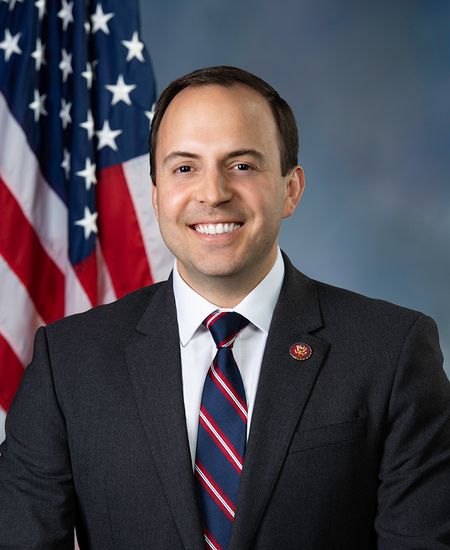
Rep. Lance Gooden
Sponsored bills
Maddy summaryHR 3787, the Emergency Spending Accountability Act, requires the Office of Management and Budget to implement mandatory spending cuts equal to 20% of all emergency spending approved in a fiscal year. These cuts would occur over five years (starting October 1 of the next fiscal year) and apply to most federal programs, though they exempt Social Security benefits, national defense (budget function 050), Department of Veterans Affairs programs, and Medicare. The bill also mandates that any congressional measure containing emergency spending must include a detailed justification explaining why the spending qualifies as "emergency" under existing budget laws. This aims to create accountability for spending that bypasses standard budget limits.
Maddy summaryThis resolution (HRES 503) is a non-binding expression of support for designating June 11, 2025, as "World Franchise Day." It does not create new laws or directly affect any individuals or businesses; instead, it symbolically recognizes franchising's economic role. The resolution cites franchising's history (tracing to Benjamin Franklin and Isaac Singer), its current scale (830,876 U.S. establishments supporting 8.8 million jobs), and its contribution to the economy (nearly 3% of GDP). It is a procedural resolution, not a policy change, meant to acknowledge franchising's significance as a business model.
Maddy summaryHR 3867, the Bankruptcy Administration Improvement Act of 2025, increases compensation for chapter 7 bankruptcy trustees from $60 to $120 per case, directly affecting these trustees who administer consumer bankruptcy cases. The bill adjusts fee distributions to fund this increase, ensuring the bankruptcy system remains self-supporting without taxpayer costs. It also extends terms for certain bankruptcy judge positions from 5 to 10 years to address caseload demands. The bill does not change filing fees or alter courts' authority to waive fees for indigent filers.
Maddy summaryHRES 481 is a symbolic resolution condemning recent antisemitic attacks in the U.S., specifically referencing the June 1, 2025, Boulder, Colorado, assault on a Jewish community gathering and other incidents like the May 2025 Washington, D.C., embassy shooting. It formally recognizes a pattern of violence targeting Jewish individuals and institutions, including attacks during religious events. The resolution calls on law enforcement to thoroughly investigate and prosecute such incidents and urges elected officials to publicly oppose antisemitism and politically motivated violence. As a non-binding resolution, it does not create new laws or allocate funding but serves to affirm congressional stance against antisemitism.
Maddy summaryThis concurrent resolution (HCONRES 36) commemorates the 100th birthday of former First Lady Barbara Pierce Bush by honoring her life, achievements, and public service, particularly her advocacy for literacy through founding the Barbara Bush Foundation for Family Literacy and supporting the National Literacy Act. It does not create new laws or policies but serves as a symbolic recognition of her contributions to public service during her time as First Lady and Second Lady of the United States. The resolution is non-binding and focuses solely on acknowledging her legacy.
Maddy summaryThe SKIM Act (HR 3810) increases penalties for fraud involving counterfeit access devices like credit cards. It requires the U.S. Sentencing Commission to raise fraud offense levels by 4 points (minimum level 14) and count all unauthorized charges from 10+ counterfeit devices toward total losses. The bill also mandates a 90-day report to Congress from the Attorney General and DHS, detailing law enforcement coordination, fraud technologies, assistance requests, and recommendations for combating such fraud. This directly affects federal courts (through sentencing changes), law enforcement agencies, and businesses vulnerable to access device fraud.
Maddy summaryHRES 472 is a symbolic House resolution condemning an antisemitic terrorist attack in Boulder, Colorado, on June 1, 2025, which targeted Jewish individuals. The resolution explicitly condemns the attack - where the perpetrator used Molotov cocktails against victims aged 52-88, including a Holocaust survivor - and calls for prosecuting the perpetrator. It also expresses concern about rising antisemitism on campuses and online, while urging Congress to secure borders and deport visa overstayers (though this is a symbolic call, not a new law). The resolution directly affects the Boulder Jewish community and victims of the attack, with no new policy changes enacted.
Maddy summaryHR 3597, the Protecting Circuit Boards and Substrates Act, creates two main incentives to boost domestic production of printed circuit boards and integrated circuit substrates. It provides a 25% tax credit for businesses purchasing US-manufactured circuit boards and substrates, and establishes a federal financial assistance program offering up to $300 million per project (with larger amounts possible with presidential approval) for manufacturing or research and development facilities in the United States. The program prioritizes small businesses, minority-owned businesses, veteran-owned businesses, and projects that expand domestic production capacity or relocate manufacturing from foreign-controlled areas. Recipients must use funds for specific covered incentives like facility construction, equipment, or workforce training programs, with strict clawback provisions for delays or inappropriate technology sharing with foreign entities of concern. The program requires coordination with multiple federal agencies and includes annual reviews by the Government Accountability Office to track outcomes.
Maddy summaryThe DEFIANCE Act of 2025 creates a new civil legal remedy for victims of non-consensual intimate digital forgeries (synthetic images or videos manipulating real people into sexual contexts without consent). It allows affected individuals to sue perpetrators in federal court for damages up to $250,000, injunctions to remove content, and privacy protections like pseudonyms. The bill specifically covers cases where forgeries are created or shared with intent to disclose, including scenarios involving sexual assault or harassment. It expands existing federal protections under 15 U.S.C. 6851 to address digital forgeries while ensuring state laws remain in effect.