Maddy summaryThis bill amends U.S. immigration law to make certain military property trespassing a basis for denying entry or deporting non-citizens. It adds to the Immigration and Nationality Act that anyone convicted of entering military, naval, or Coast Guard property without authorization (as defined under 18 U.S.C. §1382) is both inadmissible upon arrival and deportable if already in the U.S. The law directly affects non-citizens with prior convictions for this specific offense. The key mechanism is updating existing immigration grounds for inadmissibility and deportability to include unauthorized entry onto military installations.
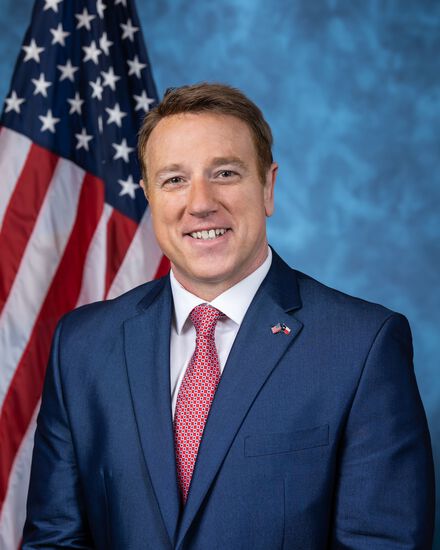
Rep. Pat Fallon
Sponsored bills
Maddy summaryHR 4132 would require the U.S. to impose sanctions on Chinese officials responsible for forced organ harvesting from Falun Gong practitioners, including blocking their property and denying visas. It mandates a report on China's organ transplant system within one year, assessing organ sources, procurement timelines, and whether persecution of Falun Gong constitutes an atrocity. The bill directs the U.S. to avoid all cooperation with China's organ transplantation system while the Chinese Communist Party remains in power. It cites findings of systemic persecution and alleged organ harvesting as justification for these policy measures.
Maddy summaryThis bill rescinds unspent funds from specific federal programs. It targets leftover money from pandemic relief (like the CARES Act and American Rescue Plan) and certain infrastructure initiatives (including education stabilization funds and transportation programs like the Congestion Mitigation Program). The rescission is limited to amounts already allocated for Israel, Ukraine, and Indo-Pacific security supplements under recent appropriations. Unspent funds must be returned to the Treasury, with no new spending created.
Maddy summaryThis concurrent resolution (HCONRES 113) is a symbolic congressional tribute honoring former President George H.W. Bush on the occasion of his 100th birthday. It recognizes his life, public service, and legacy without creating any new laws or affecting specific individuals or groups. The resolution formally acknowledges his career achievements, including his military service, presidency, and contributions to policy like the Americans with Disabilities Act, while expressing Congress's gratitude to him and his family. As a commemorative resolution, it has no binding effect or policy impact.
Maddy summaryHR 8693, the "No American Land for Communist China Act," prohibits U.S. citizens or entities from purchasing real estate adjacent to specific federal lands if owned by the Chinese government or businesses with 25%+ Chinese government ownership. It directly affects Chinese government entities and Chinese-owned businesses operating in the U.S., restricting their ability to buy land near protected federal areas. The bill requires the President to take necessary actions to block such purchases, covering lands managed by Interior, Defense, Agriculture (Forest Service), or designated Indian country. This is a policy restriction, not a funding measure, targeting land transactions near sensitive federal properties.
Maddy summaryThis bill creates a presumption that certain health conditions (myocarditis, pericarditis, thrombosis with thrombocytopenia syndrome, Guillain-Barré Syndrome, and other diseases later determined by the VA) are connected to military service for veterans who received a COVID-19 vaccine under mandatory orders between August 24, 2021, and January 10, 2023. It directly affects veterans who developed these conditions after being required to get the vaccine during that period, streamlining their path to VA disability compensation by removing the need to prove a direct link to service. The bill requires the VA to report monthly on claim statuses and outcomes for four years, including approval rates and pending cases. This changes how the VA processes claims for these specific conditions, treating them as service-connected by default for affected veterans.
Maddy summaryHR 192 prohibits noncitizens from voting in all District of Columbia elections, including for public office and ballot initiatives. It directly affects noncitizen residents of Washington D.C. who currently have voting rights under the repealed Local Resident Voting Rights Amendment Act of 2022. The bill's key mechanism is repealing that 2022 amendment, restoring the requirement that only U.S. citizens may vote in DC elections. This changes the voting eligibility rules for noncitizens living in the District. The law would take effect upon enactment, removing noncitizens from the voter rolls for all local elections.
Maddy summaryHR 5403, the CBDC Anti-Surveillance State Act, prohibits the Federal Reserve from issuing or facilitating central bank digital currency (CBDC) directly or indirectly to individuals through financial institutions. It specifically bans Federal Reserve banks from offering digital products to individuals, maintaining individual accounts, or using CBDC for monetary policy implementation. The bill also clarifies that its restrictions do not apply to existing physical cash or private, permissionless digital payment systems. This bill directly affects the Federal Reserve's ability to develop or deploy a government-run digital dollar. The law aims to prevent the Federal Reserve from creating a digital currency that could enable transaction tracking or government oversight of personal financial activity.
Maddy summaryHJRES 146 is a congressional disapproval resolution targeting a Centers for Medicare & Medicaid Services (CMS) rule published on May 8, 2024, that would have clarified eligibility for health insurance subsidies under the Affordable Care Act for Deferred Action for Childhood Arrivals (DACA) recipients and certain other noncitizens. The rule aimed to allow these individuals to access premium tax credits, cost-sharing reductions, and basic health programs through health insurance marketplaces. If enacted, this resolution would block the CMS rule from taking effect, maintaining current restrictions that prevent DACA recipients from qualifying for these subsidies.
Maddy summaryHR 8489, the Presidential Ethics Reform Act, requires Presidents and Vice Presidents to submit detailed financial disclosures at key career points: within 30 days of taking office, annually by May 15, and after leaving office with ongoing annual reports for two years. It directly affects the President/Vice President and their defined relatives (including spouses, parents, children, and siblings), mandating disclosures of gifts over $10,000, loans, foreign payments, full tax returns (with identity theft redactions), conflicts of interest involving relatives, and details about relatives accompanying them on official travel. Reports must be submitted to congressional committees and the Office of Government Ethics, then made publicly searchable online within 30 days. The bill aims to increase transparency around financial ties and potential conflicts by expanding existing ethics reporting requirements with specific, time-bound obligations.