Maddy summaryHR 137, the TCJA Permanency Act, makes permanent many tax provisions from the 2017 Tax Cuts and Jobs Act. It permanently increases the standard deduction for individual taxpayers, modifies income tax brackets, and makes permanent the child tax credit increase. The bill also permanently limits deductions for state and local taxes, mortgage interest, and miscellaneous itemized deductions. These changes affect most individual taxpayers who file federal income tax returns.
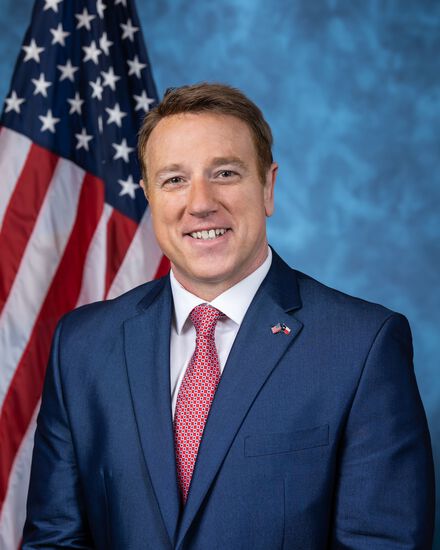
Rep. Pat Fallon
Sponsored bills
Maddy summaryHR 45 (FIND Act) requires federal government contractors to certify they do not discriminate against firearm businesses (including manufacturers, dealers, and trade associations) in their policies or practices. The bill mandates that contractors and subcontractors (for contracts over 10% of the prime contract value) certify they have no discriminatory policies and will not adopt them during the contract term. Violations could lead to contract termination and potential debarment. This applies to all federal procurement contracts awarded after the bill's enactment, excluding sole-source contracts. The law aims to ensure firearm businesses are treated equally in government contracting without restricting legitimate business criteria like creditworthiness or legal compliance.
Maddy summaryThis bill (HR 6244) designates the U.S. Postal Service facility at 1535 East Los Ebanos Boulevard in Brownsville, Texas, as the "1st Lieutenant Andres Zermeno Post Office Building." It updates all federal references to the building to reflect this new name. The bill has no policy provisions or funding changes - it solely honors 1st Lieutenant Andres Zermeno through a commemorative name designation. The building will now be officially referred to by this name in all government documents and records.
Maddy summaryThis bill names the Department of Veterans Affairs community-based outpatient clinic in Plano, Texas, as the "U.S. Congressman Sam Johnson Memorial VA Clinic." It changes the facility's official designation in all government documents, maps, and references, honoring the late Congressman Sam Johnson. The bill does not alter the clinic's services, funding, or operations - only its name. This is a ceremonial designation with no policy or programmatic impact.
Maddy summaryThis bill allows Members of Congress to use Department of Veterans Affairs (VA) facilities for meetings with veterans who are their constituents. It requires the VA Secretary to create regulations within 90 days, ensuring spaces are visible, accessible during business hours, and rented at rates similar to standard office space in the area. The regulations prohibit campaigning, political discussions, photographing patients without consent, and meetings during the 60 days before federal elections. It directly affects veterans seeking congressional assistance and Members of Congress who can now hold constituent meetings at VA locations. The bill does not change VA benefits or services but streamlines access to representatives for veterans.
Maddy summaryThis bill, HR 1097 (Everett Alvarez, Jr. Congressional Gold Medal Act of 2023), authorizes the award of a Congressional Gold Medal to Everett Alvarez, Jr., in recognition of his service as a U.S. Navy pilot and Vietnam War prisoner of war. It directly honors Alvarez, who was the first U.S. pilot shot down in the Vietnam War, spent over 8.5 years in captivity, and later served in the Peace Corps and Veterans Administration. The bill’s key mechanism is directing the U.S. Mint to strike a gold medal bearing his name and image, with bronze duplicates available for sale to cover costs. It does not create new policies or affect any group beyond the honoree.
Maddy summaryHR 7867, the REG Budgeting Act of 2024, establishes annual budget limits on "unfunded regulatory costs" that federal agencies can impose on state/local governments or businesses through new rules. The Office of Management and Budget (OMB) must set these limits by September 30 each year, requiring agencies to seek congressional approval before finalizing rules that exceed their allocated limit. Agencies must also submit detailed justifications and report on cost overruns to Congress and publish notices with specific cost impact statements. This bill directly affects all federal agencies issuing regulations with cost implications for external entities, adding new transparency and approval steps to the rulemaking process.
Maddy summaryThis bill requires federal agencies to assess whether energy policies and rules disproportionately affect at-risk communities, including low-income, minority, rural, elderly, and Native American communities. Agencies must conduct studies before actions like leasing federal land or issuing new energy rules, and include an "energy poverty statement" certifying the policy won't cause energy poverty. Within one year, the Comptroller General and OMB must jointly report to Congress on how current policies impact these communities and recommend solutions to reduce energy poverty. The law aims to prevent energy poverty by mandating concrete evaluations of policy impacts on vulnerable groups.
Maddy summaryHR 4428, the Guidance Clarity Act, requires federal agencies to include a specific statement on all guidance documents they issue. This statement must clearly state that the document has no legal force, does not bind the public or the agency, and is only for clarifying existing laws or policies. Agencies must display this statement prominently on the first page of such guidance, effective 30 days after the Office of Management and Budget issues implementing instructions. The bill directly affects federal agencies and the public receiving these documents, ensuring transparency about the non-binding nature of agency guidance.
Maddy summaryThe FOCA Act of 2023 requires federal agencies to stop mandating or banning contractor agreements with labor organizations (like union contracts) in construction project bids and contracts. It directly affects federal contractors, subcontractors, and agencies managing construction projects funded by the government. The bill prohibits favoring or penalizing contractors based on their labor affiliation status, aiming to promote fair competition and reduce costs. It also mandates updates to federal contracting rules within 60 days of enactment to implement these changes.