

Dentist and Optometric Care Access Act of 2025 or the DOC Access Act of 20 25 This bill prohibits private health insurance plans from setting rates for items and services, except for dental cleanings, provided by a doctor of optometry, of dental surgery, or of dental medicine (or an employer of such a doctor) for which the plan does not pay a substantial amount. Additionally, an agreement between a plan and such a doctor for limited scope dental or vision benefits may last longer than two years only with the prior acceptance of the doctor for each term extension. Plans also may not restrict such a doctor's choice of laboratories or suppliers. Such doctors may elect to waive the application of the payment amount and choice of laboratories provisions of this bill. The bill does not supersede state laws regarding health insurers and dental or vision benefit plans.
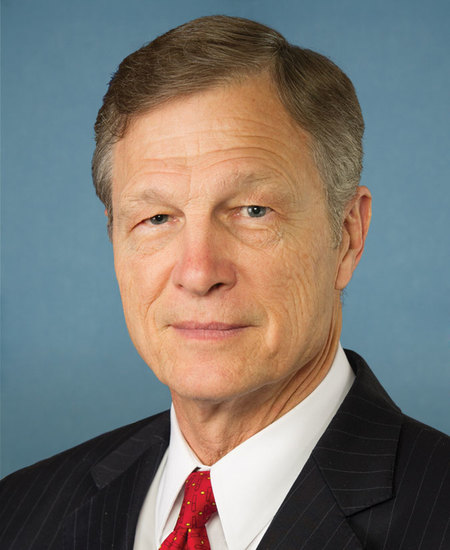
Rep. Brian Babin
Sponsored bills
Maddy summaryHR 1502 authorizes the creation of a Congressional Gold Medal to honor the volunteers and communities (primarily from Nebraska, Colorado, and Kansas) who supported the North Platte Canteen during World War II. The bill directs the Treasury Secretary to design and strike the medal, which will be presented to the individuals who contributed to the canteen’s operations and then permanently displayed at the Lincoln County Historical Museum in North Platte, Nebraska. It also permits the sale of bronze duplicates to cover production costs, with proceeds going to the U.S. Mint. This is a commemorative measure recognizing historical service, not a policy change affecting current laws or programs.
Maddy summaryThis bill prohibits U.S. government funds from being used to support organizations (both foreign and domestic) that provide, promote, or fund abortion services abroad, including referrals, counseling, or training related to abortions. It directly affects foreign NGOs, multilateral organizations, and domestic groups receiving U.S. aid if they perform or support such activities, even within programs funded by the U.S. government. The restriction includes all forms of financial support and co-location of abortion services with other funded programs, with exceptions only for abortions resulting from rape or incest, or when the mother's life is endangered. This policy change alters how U.S. foreign aid is allocated to ensure funds do not support abortion-related services.
Maddy summaryHR 1489 requires the President to determine within 90 days whether to impose U.S. sanctions on Iran Airports Company, a state-owned enterprise that operates Iranian airports and facilitates Mahan Air’s operations. The bill targets the airport company because it supports Mahan Air, an Iranian airline already sanctioned for allegedly aiding Iran’s Islamic Revolutionary Guards Corps - Qods Force by transporting fighters, arms, and funds. This bill does not impose new sanctions but mandates a formal review under existing authority (Executive Order 13224) to assess whether the airport company should face sanctions for enabling Mahan Air’s activities. It directly affects Iran Airports Company and foreign entities that assist Mahan Air, with no immediate policy change beyond the required presidential determination.
This concurrent resolution declares that Congress should not impose any new performance fee, tax, royalty, or other charge relating to the public performance of sound recordings on a local radio station for broadcasting sound recordings over the air, or on any business for such public performance of sound recordings.
Maddy summaryHR 1301, the Death Tax Repeal Act, would eliminate the federal estate tax and generation-skipping transfer tax for estates of individuals dying on or after its enactment date. It directly affects individuals inheriting significant assets, as it removes taxes on estates exceeding $10 million (adjusted for inflation) and repeals taxes on large transfers between generations. The bill modifies the gift tax by establishing a $10 million lifetime exemption with annual inflation adjustments, replacing previous tax brackets. It applies to estates, gifts, and transfers occurring on or after the bill's effective date.
Maddy summaryThe Officer John Barnes Act requires the Bureau to notify claimants of their eligibility for benefits within 270 calendar days after receiving a claim. This affects individuals or organizations applying for benefits under the Omnibus Crime Control and Safe Streets Act of 1968 by setting a specific deadline for the Bureau's decision. The key provision amends existing law to add this timeframe, ensuring timely responses without altering eligibility criteria. The bill focuses solely on streamlining the claims process through a defined administrative deadline.
Maddy summaryHR 1351, the "Promoting American Patriotism In Our Schools Act," requires public elementary and secondary schools receiving federal education funds to implement specific patriotism-related practices. The bill mandates that all students, teachers, and staff recite the Pledge of Allegiance daily (with an exception for religious or personal reasons), prominently display the American flag in every classroom and gymnasium, and incorporate age-appropriate flag history and significance into civics or history curricula. Schools must annually certify compliance with these requirements to state education agencies, which then report to the federal government. This bill directly affects all public K-12 schools receiving funds under the Elementary and Secondary Education Act.
Fighting Trade Cheats Act of 2025 This bill increases penalties for, and establishes additional enforcement mechanisms related to, fraudulent and grossly negligent violations of U.S. customs laws. Specifically, the bill increases the maximum civil penalty for a fraudulent violation to three times the domestic value of the merchandise. (Currently, the maximum penalty is the domestic value of the merchandise.) It prohibits a person who commits a fraudulent violation from importing merchandise into the United States for a five-year period. Additionally, the bill increases the maximum civil penalty for a grossly negligent violation to the lesser of (1) 3 times the domestic value of the merchandise; or (2) 10 times the lawful duties, taxes, and fees. (Currently, the maximum penalty is the lesser of the domestic value of the merchandise or four times the lawful duties, taxes, and fees.) It prohibits a person who commits a grossly negligent violation from importing merchandise into the United States for a two-year period. Further, the bill applies these importation bans to an affiliated person (e.g., a family member or employee) of the person who committed the fraudulent or grossly negligent violation. The bill establishes a private right of action for an interested party (e.g., a manufacturer) affected by customs fraud or grossly negligent violations. The bill prohibits any person (or an affiliated person) who commits a fraudulent or grossly negligent violation from participating in the U.S. Customs and Border Protection's Importer of Record program, and further requires revocation of their importer of record numbers.
Maddy summaryHR 1232, the National Right-to-Work Act, would make union membership voluntary for workers in most private-sector jobs by removing legal requirements for employees to join a union or pay dues as a condition of employment. It directly affects workers in unionized workplaces covered by the National Labor Relations Act (including most private employers) and railroad workers covered by the Railway Labor Act. The key change eliminates provisions that allowed "union security agreements" (requiring dues or membership), meaning workers could no longer be forced to pay union fees to keep their jobs. This bill does not change other labor rights or create new programs - it only modifies existing laws to allow workers to opt out of union membership and financial obligations.