Support Children Having Open Opportunities for Learning Act of 2021 or the SCHOOL Act of 2021 This bill allows certain federal funds for elementary and secondary education to follow the student to the school that they attend (i.e., public, private, or home school), regardless of whether the student is learning in person or remotely. These funds may be used for educational and instructional materials, tutoring, tuition for private school, and extracurricular activities.
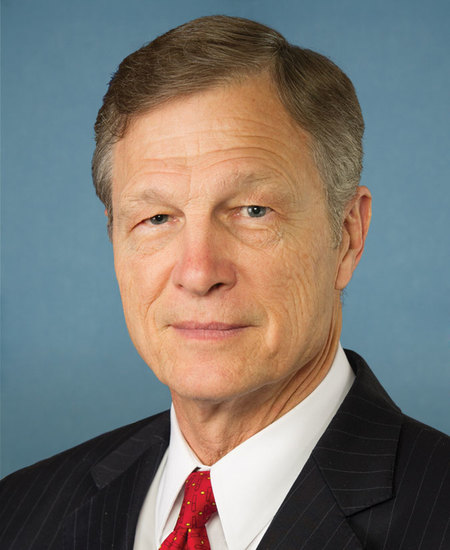
Rep. Brian Babin
Sponsored bills
This resolution supports the designation of a National FFA Week. It also (1) recognizes the important role of the National FFA Organization (Future Farmers of America) in developing the next generation of leaders who will change the world, and (2) celebrates 50 years of National FFA alumni and supporters.
This resolution expresses the sense of the House of Representatives that the United States should not export COVID-19 (i.e., coronavirus disease 2019) vaccines to foreign countries until every eligible U.S. national and permanent resident who wishes to receive the vaccine is fully vaccinated.
Updating Postal Data on Addresses for Trustworthy Elections Act or the UPDATE Act This bill requires the U.S. Postal Service (USPS) to regularly provide chief state election officials with change-of-address information. Specifically, the USPS must provide this information within 90 days and every 90 days thereafter. Additionally, the Election Assistance Commission must make payments to states to maintain their computerized voter registration lists.
Justice for Victims of Sanctuary Cities Act of 2021 This bill provides a private right of action against state and local jurisdictions with certain policies that limit cooperation with federal immigration enforcement efforts, and contains additional provisions related to such jurisdictions. Currently, such cooperation is generally not required. An individual (or certain relatives of such an individual) who is the victim of any felony for which an alien has been arrested, convicted, or sentenced to a prison term of at least one year may sue a state or local jurisdiction if the jurisdiction failed to comply with (1) certain Department of Homeland Security (DHS) requests related to arresting and detaining aliens, and (2) a DHS request to detain the alien in question or provide a notification about the release of the alien. A jurisdiction that accepts certain federal grants may not assert immunity in such a civil action. A jurisdiction (or employee of a jurisdiction) that complies with certain DHS detainer requests shall be deemed to be acting as an agent of DHS. A complying jurisdiction or employee of the jurisdiction shall not be liable in any lawsuit relating to compliance with such requests. In a lawsuit against an employee of the jurisdiction, the United States shall be substituted in as the defendant, and remedies shall be limited to provisions for bringing tort claims against the federal government.
Dismemberment Abortion Ban Act of 2021 This bill restricts the performance of dismemberment abortions. It defines the term dismemberment abortion . Specifically, the bill prohibits a physician from knowingly performing a dismemberment abortion. It provides an exception for a dismemberment abortion that is necessary to save the life of a mother whose life is endangered by a physical disorder, illness, or condition. The bill establishes criminal penalties—a fine, a prison term of up to two years, or both—for a physician who performs a prohibited dismemberment abortion. It also authorizes civil remedies for a woman or parent of a minor who undergoes a dismemberment abortion. A woman who undergoes a dismemberment abortion may not be prosecuted or held civilly liable.
Immigration Detainer Enforcement Act of 2021 This bill expands statutory provisions to authorize the Department of Homeland Security (DHS) to request a law enforcement agency to detain an individual who has been arrested for violating any law (if the individual is believed to be an unlawfully present alien), where current provisions only explicitly authorize detainer requests for individuals arrested for violating controlled substances laws. The bill also modifies other related provisions. A law enforcement agency that has received a detainer request may hold the targeted individual for up to 48 hours. DHS may enter into agreements with law enforcement agencies to indemnify such agencies against claims for wrongful detention resulting from a detainer request. No provision of federal, state, or local law may restrict any government entity from (1) providing DHS with access to databases with information relating to issued detainers, or (2) holding an individual subject to a detainer. DHS shall periodically certify to Congress as to which state or local entities have not complied with a detainer request. Such entities shall be ineligible for compensation for costs related to honoring detainer requests. State and local entities that comply with DHS detainer requests shall have prioritized access to (1) certain law enforcement-related grants, and (2) certain excess federal property.
Protecting Individuals with Down Syndrome Act This bill creates new federal crimes related to the performance of an abortion on an unborn child who has Down syndrome. It subjects a violator to criminal penalties—a fine, a prison term of up to five years, or both. It also authorizes civil remedies, including damages and injunctive relief. A woman who undergoes such an abortion may not be prosecuted or held civilly liable.
Protecting the Dignity of Unborn Children Act of 2021 This bill establishes a new criminal offense for recklessly disposing of or abandoning fetal remains in a landfill or in any navigable waters of the United States. The term fetal remains means any part (except a cremated part) of a deceased human fetus following an abortion. A violator is subject to a fine, up to three years in prison, or both.
David Dorn Act of 2021 This bill increases criminal penalties for rioting and related offenses (e.g., inciting a riot). Specifically, the bill increases the maximum prison term from 5 to 10 years. Additionally, if a fine is imposed for an offense, the bill sets a minimum fine amount of $1,000.