

Border Crisis Prevention Act of 2021 This bill imposes additional requirements on asylum seekers, increases certain time limits related to detained aliens, and addresses other immigration-related issues. The Department of Homeland Security (DHS) must detain certain aliens, such as an alien convicted of an aggravated felony or believed to be a trafficker of controlled substances, beyond certain time limits for detaining an alien. The bill also provides for additional instances when DHS may extend the 90-day removal period (generally the window in which DHS has to remove an alien after a final order of removal). An alien choosing to appeal mandatory detention or detention as part of a removal period extension may do so only by filing for a writ of habeas corpus. DHS shall establish a process to determine whether an alien not subject to mandatory detention and who has tried to comply with a removal order should be detained or released with conditions. Furthermore, under this bill, an alien's credible fear of persecution must be more probable than not in order to be eligible for asylum. DHS may also deny asylum to an applying alien and remove the alien to a country that is not the alien's country of nationality, if the alien would be safe and would be able to apply for asylum from that country. (Currently, an asylum applicant may be removed to a third country only if that country is party to an agreement allowing for such removal.) The Department of Justice may appoint 100 additional immigration judges.
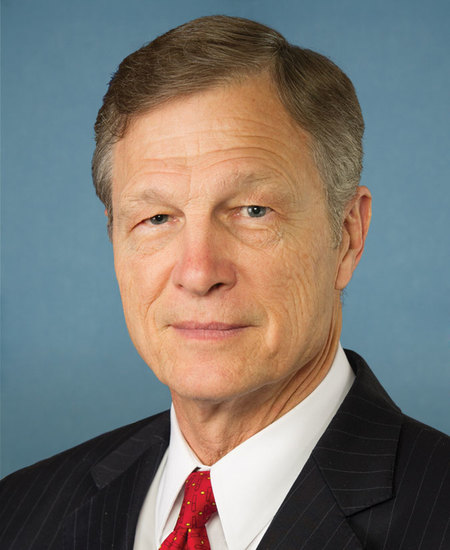
Rep. Brian Babin
Sponsored bills
Heartbeat Protection Act of 2021 This bill makes it a crime for a physician to knowingly perform an abortion (1) without determining whether the fetus has a detectable heartbeat, (2) without informing the mother of the results, or (3) after determining that a fetus has a detectable heartbeat. It provides an exception for an abortion that is necessary to save the life of a mother whose life is endangered by a physical (but not psychological or emotional) disorder, illness, or condition. A physician who performs a prohibited abortion is subject to criminal penalties—a fine, up to five years in prison, or both. A woman who undergoes a prohibited abortion may not be prosecuted for violating or conspiring to violate the provisions of this bill.
Stop Greenlighting Driver Licenses for Illegal Immigrants Act This bill prohibits a state from receiving certain federal law enforcement grants if it takes certain immigration-related actions. Specifically, a state may not receive such grants if it (1) issues a driver license to an individual who does not have proof of U.S. citizenship or lawful presence in the United States, or (2) prohibits a local or state government entity or official from sharing immigration enforcement information with the Department of Homeland Security.
Teleabortion Prevention Act of 2021 This bill restricts the use of telehealth for chemical abortions (also known as medication abortions). Specifically, it requires a provider who dispenses or prescribes medication for a chemical abortion to physically examine the patient, be physically present at the location of the chemical abortion, and schedule a follow-up visit. The bill provides an exception for a chemical abortion that is necessary to save the life of a mother whose life is endangered by a physical disorder, illness, injury, or condition. The bill establishes criminal penalties—a fine, a prison term of up to two years, or both—for a provider who does not comply with the requirements. A patient who undergoes a chemical abortion may not be prosecuted.
Born-Alive Abortion Survivors Protection Act This bill establishes requirements for the degree of care a health care practitioner must provide in the case of a child born alive following an abortion or attempted abortion. Specifically, a health care practitioner who is present must (1) exercise the same degree of care as would reasonably be provided to any other child born alive at the same gestational age, and (2) ensure the child is immediately admitted to a hospital. Additionally, a health care practitioner or other employee who has knowledge of a failure to comply with the degree-of-care requirements must immediately report such failure to law enforcement. A health care practitioner who fails to provide the required degree of care, or a health care practitioner or other employee who fails to report such failure, is subject to criminal penalties—a fine, up to five years in prison, or both. An individual who intentionally kills or attempts to kill a child born alive is subject to prosecution for murder. The bill bars the criminal prosecution of a mother of a child born alive under this bill and allows her to bring a civil action against a health care practitioner or other employee for violations.
Finding Federal Savings Committee Resolution This resolution establishes the House Committee on the Elimination of Nonessential Federal Programs to analyze underperforming or nonessential federal programs and recommend actions to modify or eliminate those programs. The resolution also establishes expedited procedures for legislation reported by the committee to eliminate programs or rescind funding. The committee shall cease to exist at the end of the 119th Congress.
This resolution urges the U.S. Capitol Police Board to direct the Architect of the Capitol to remove the fencing installed around the perimeter of the U.S. Capitol complex in response to the attacks of January 6, 2021, and it recommends the end of the National Guard's mission in the District of Columbia in response to those attacks.
Stop Shielding Culpable Platforms Act This bill modifies provisions relating to the liability of a provider or user of an interactive computer service (e.g., a social media company) for material placed on its platform by another information content provider. Under current law, a provider or user of an interactive computer service is not considered the publisher or speaker of any information provided by another information content provider. The bill specifies that a provider or user of an interactive computer service may still be treated as a distributor of such information.
Let States Cut Taxes Act This bill removes a prohibition on states and territories using COVID-19 (i.e., coronavirus disease 2019) relief funding under the American Rescue Plan Act of 2021 to offset a reduction in revenue resulting from a reduction in taxes or a delay in the imposition of a tax or tax increase.
Transparency for Confucius Institutes Act This bill requires an institution of higher education (IHE) that participates in federal student-aid programs to enter into a program participation agreement if a Confucius Institute operates on the IHE's campus. (Confucius Institutes are Chinese government-funded centers for language education and cultural programming at IHEs.) The agreement must be entered into with the Office of Chinese Language Council International (i.e., Confucius Institute Headquarters, Hanban) and be made publicly available online. Among other requirements, the Confucius Institute must be physically located apart from the IHE's own Chinese language, history, and cultural programs.